Book My Luck
Turkish Evil Eye: Where to Hang It and Why
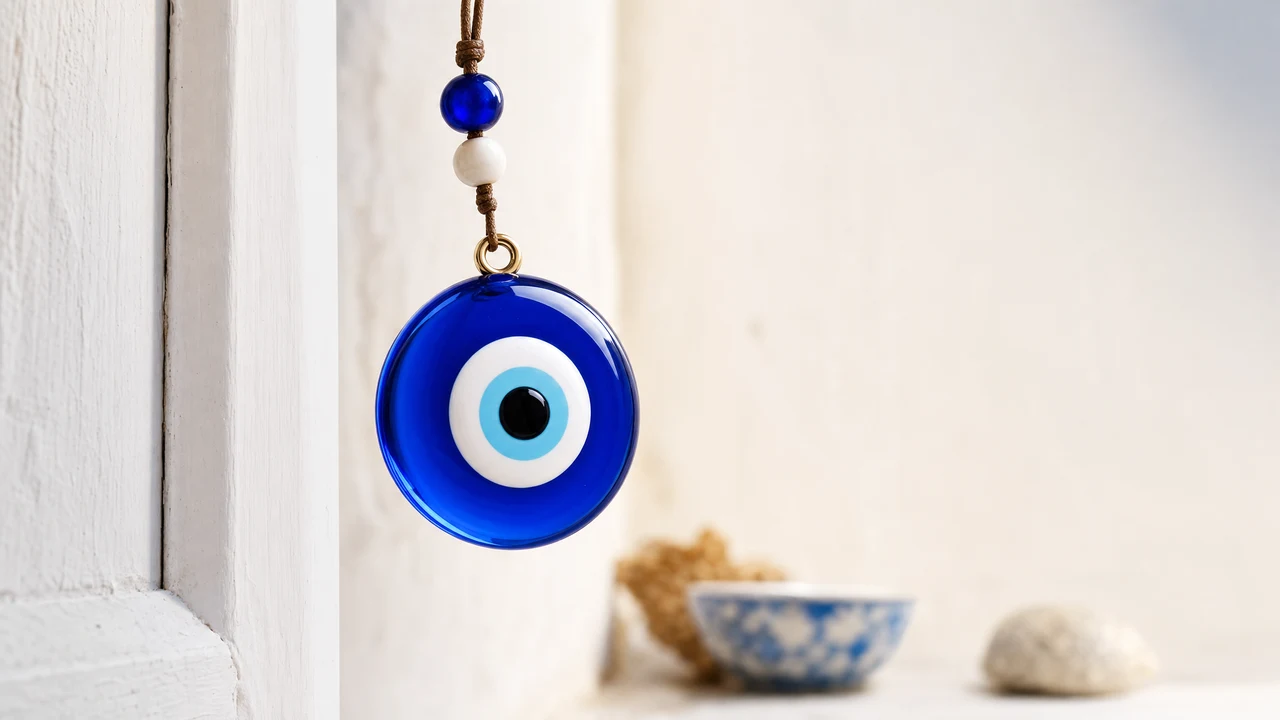
The Turkish evil eye is hung wherever people or prized things are seen: front doors, cribs, car mirrors, shop counters and office walls. The idea is that it catches an envious glance before that glance can do harm.
Most explanations stop at "it wards off bad luck." The more useful question is where to place it, because placement is most of the meaning.
Where do you hang a Turkish evil eye?
The rule of thumb is simple: put it where the thing you value is on display. Envy, in this belief, follows attention, so the charm goes where attention lands.
You hang a Turkish evil eye at any point where people or valued things are seen and admired. That is why it clusters at entrances and over the things a household is proud of.
Here are the classic spots.
- Front door or gate, so it greets every visitor and their gaze.
- Above or near a baby's crib, since a much-admired child is thought to attract the most envy.
- On a car mirror or keychain, guarding a valued possession that others see.
- At a shop counter or office wall, where success is visible and might draw ill will.
The logic is consistent: the eye goes where admiration collects. A hidden thing does not need one; a proud, visible thing does.
What is the nazar boncuğu?
The classic Turkish evil eye charm is a bead of blue glass called a nazar boncuğu. Nazar means "gaze" or "look," and boncuk means "bead," so the name is roughly "the gaze bead."
The design is deliberate: concentric circles of dark blue, light blue, white and black that form an eye looking back. It is an eye that watches for the harmful gaze and reflects it away.
The color is not an accident either. Blue glass has a long history around the Mediterranean, and the nazar boncuğu meaning piece digs into why the eye is so often blue.
The evil eye belief is far older and wider than Turkey alone. It runs across the Mediterranean, the Middle East and South Asia, which is why you will meet close cousins of the nazar in many countries.
What does it mean when a nazar cracks?
This is the detail people love, and it is worth getting right. When a glass nazar cracks or shatters on its own, tradition says it absorbed a strong dose of ill will and broke while doing its job.
So a cracked evil eye is not bad luck. It is treated as a used shield, and the usual response is to thank it and replace it with a new one.
That single custom tells you how the charm is understood. It is not thought to be indestructible; it is thought to take the hit so you do not.
If your glass nazar breaks, the traditional move is to replace it rather than mourn it. A fresh bead simply resumes the watch.
Turkish evil eye vs its cousins
The nazar is one member of a big family of protection charms. Here is how it sits next to two close relatives.
Nazar boncuğu (Turkey)
- Form: flat blue glass bead shaped as an eye.
- Job: reflects the envious gaze back.
- Placement: doors, cribs, mirrors, walls.
Hamsa (Middle East, North Africa)
- Form: an open hand, often with an eye in the palm.
- Job: protection and blessing together.
- Placement: walls, doorways, jewelry.
Cornicello (Naples, Italy)
- Form: a red, twisted horn.
- Job: guards against malocchio, the evil eye.
- Placement: worn, hung by a door, or on a keyring.
The middle eastern protection symbols piece looks at how the nazar and the hamsa often work together, and the lucky charm meanings around the world guide places all three on one map.
Why does the placement matter so much?
Here is the part that survives whether or not you hold the belief. Hanging a nazar is a way of naming what you care about.
When you place the eye over a crib, you are marking that child as precious. When you set it at a shop door, you are marking the work as something worth guarding.
That act of naming is quietly powerful. It focuses your own attention on the thing you value, which is a real effect even if the glass is just glass.
For the deeper background on the belief itself, the evil eye meaning piece explains what the nazar is thought to protect against and where the idea came from.
Keeping a nazar where you actually work
The traditional spots are physical: a doorframe, a mirror, a wall. A lot of people now spend their day looking at a Mac instead of a doorway.
A nazar on your screen can carry the same intent as one on a door. It marks the space you work in and keeps the watchful eye where your attention actually lives.
That is the plain idea behind Book My Luck, a small Mac app whose menu-bar icon is a little blue evil eye and which can hang a nazar boncuğu from the top of your screen on a thin cord. It sways with real rope physics and reacts to your cursor, and you can give it a flick the way you might touch a bead by the door.
It does not claim to protect anything. If you keep a glass nazar at home, keep it; the screen charm is for the hours your gaze is on the Mac. You can see what a one-time key costs on the pricing page.
How old is the nazar tradition?
The blue glass nazar as we know it is closely tied to the glassmaking regions of Anatolia and the wider Mediterranean. Glass beads with an eye motif have a long history there, and the craft is still practiced today.
The belief behind it is older than any bead. The evil eye appears in ancient texts and artifacts across the Mediterranean world, which tells you the fear it answers is very old indeed.
What Turkey added is a strong, distinctive glass form and a living craft tradition around it. Watching an artisan draw a molten rod into a fresh nazar is part of how the custom stays alive rather than becoming a relic.
Beware of tidy "the nazar is exactly X thousand years old" claims. The honest position is that the belief is ancient and widespread, while the familiar blue glass bead belongs to a long Mediterranean glassmaking tradition.
Because the belief is so old and so shared, the Turkish nazar is best seen as one branch of a very deep root. That is exactly why its cousins in Italy, Greece and India feel so familiar: they grew from the same ancient worry about the harmful gaze.
The respectful takeaway
The Turkish evil eye is a living tradition, not a souvenir motif. It belongs to real households and shopkeepers who hang it with real feeling.
A charm is a charm, not a promise. The nazar will not change an outcome, but it marks what you value and steadies you, which is exactly the job it has always done.
Placed with that understanding, a blue glass eye by the door, or on your screen, is less about superstition and more about attention. And attention, aimed at what matters, is worth keeping in view.
FAQ
Where should I hang a Turkish evil eye in my home?
Hang it where people and valued things are seen: the front door, near a baby's crib, or on a wall where your home's pride is on display. The custom follows attention, since envy is thought to follow admiration.
What does the nazar boncuğu mean?
Nazar means gaze and boncuk means bead, so it is "the gaze bead." The blue glass eye is designed to look back at an envious glance and reflect its harm away.
What happens when an evil eye breaks?
A nazar that cracks or shatters on its own is said to have absorbed a strong dose of ill will and broken while doing its job. It is treated as a used shield, thanked, and replaced with a new one rather than seen as bad luck.
Why is the Turkish evil eye blue?
Blue glass has a long Mediterranean history, and the deep blue with white and black forms a clear, staring eye. The color and pattern together make an eye that watches for and turns back the harmful gaze.
Is the evil eye only Turkish?
No. The evil eye belief runs across the Mediterranean, the Middle East and South Asia, with close relatives like the Italian cornicello and the Middle Eastern hamsa. The Turkish nazar boncuğu is one well-known form among many.
Does a Turkish evil eye actually protect you?
It works as a ritual and a marker, not a guarantee. Hanging one names what you value and steadies you, but it does not control real events; it is a charm, not a promise.
Hang one for the moment that matters
Book My Luck hangs a rendered charm from your Mac or Windows screen, with rope physics and manual interaction. Check the current platform release and regional price before buying.
Get Book My Luck →