Book My Luck
Evil Eye Meaning: What the Nazar Really Protects Against
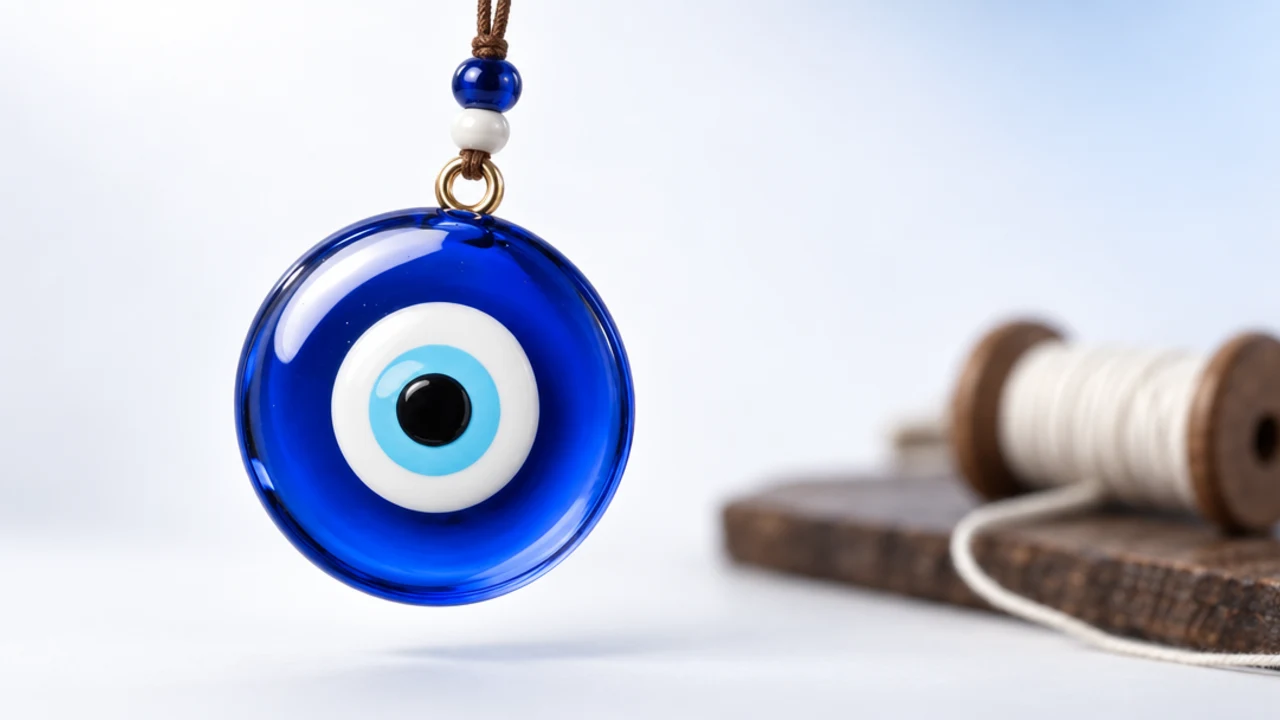
The evil eye meaning is protection, not attack: the blue nazar is a guard believed to absorb the envy or ill will in a hostile stare. It is worn or hung to keep that gaze from settling on you, your child, or your home.
Most explanations get this backward and call the charm itself "the evil eye." The charm is the shield; the evil eye is the harmful look it is meant to catch.
What is the real evil eye meaning?
Across many cultures, the belief is simple. A look given in envy, even without malice, is thought to bring bad luck to the person or thing admired.
The evil eye meaning, then, is the harm carried in that gaze. The blue bead you see everywhere is the countermeasure, a guard against envy rather than the envy itself.
This idea is old and widespread. Versions appear around the Mediterranean, the Middle East, South Asia, and beyond, which is why the same blue eye shows up on doorways from Istanbul to Mumbai.
The evil eye is the envious look. The nazar is the charm that catches it. Naming them apart clears up most of the confusion.
Why is the protective charm blue?
The classic nazar is cobalt blue glass with rings of white, light blue, and a dark center. The blue is the most recognized version, tied historically to glassmaking traditions around the eastern Mediterranean.
Blue also reads as cool and watchful, which suits a guardian object. You can read the fuller story in the nazar boncuğu meaning guide, including why glass is the traditional material.
The charm is meant to be seen. It works by being visible, drawing a look toward itself rather than the person it protects.
Who uses the evil eye, and where do they hang it?
People hang it at thresholds and points of pride. A front door, a car mirror, a new shop, a baby's cradle, a laptop lid.
The logic follows the belief. You place the guard where admiration and envy are most likely to land, which is usually on something new or something you love.
It also travels as a gift. Giving a nazar says "I want you protected," which is why it appears at housewarmings, new jobs, and births.
If you are giving one, a small hung charm at eye level near an entrance is the traditional placement. It should be easy to notice, not hidden away.
Evil eye or hamsa: what is the difference?
People often confuse the two, since both are protective and often appear together. They come from overlapping regions but do different work.
Evil eye (nazar)
- Form: a blue glass eye.
- Job: absorbs or deflects an envious gaze.
- Feel: a watchful guard that stares back.
Hamsa
- Form: an open hand, often with an eye in the palm.
- Job: a broader blessing and shield against harm.
- Feel: an open palm that says "stop."
The two pair naturally, and many charms combine them, with an eye set in the center of a hamsa. If you want the full contrast, the hamsa hand meaning piece covers palm-up versus palm-down and what each is believed to invite.
Does the evil eye charm really work?
Here is the honest answer. It is a charm, not a promise, and it will not change a test result, a diagnosis, or a rival's behavior.
What it does is real in a smaller, human way. It marks care and attention, gives a worry somewhere to sit, and turns a vague fear into a small object you can look at.
That is not nothing. A charm that reminds you someone was thinking of your safety can steady you before a nervous moment, the same way a lucky pen steadies a hand.
Cultural charms deserve respect on their own terms. The belief in the evil eye has held for thousands of years across many peoples, and it is worth describing plainly rather than mocking.
Never treat a charm as a medical, financial, or exam guarantee. Its value is in meaning and steadiness, not in outcomes it cannot control.
How the evil eye shows up on a screen
The blue nazar has moved from doorways to desktops. A lucky charm app for Mac can hang a nazar from the top of your screen, on a cord that sways and reacts, so the guard sits over your work rather than on your door.
The ritual carries over too. With Book My Luck you give the nazar a flick, the traditional gesture, and it goes back to watching quietly.
For the wider picture of protective symbols across cultures, the lucky charm meanings around the world guide places the nazar next to charms from Japan, Italy, Ireland, and India.
How do you use an evil eye charm day to day?
Beyond the front door, people keep the evil eye close to whatever they feel protective about. A car mirror, a work bag, a laptop lid, a phone case, a keychain.
The idea is portability. If the guard travels with the thing you value, it keeps watching wherever admiration and envy might find it.
Some people also give the charm a small daily gesture, a touch or a flick, the way you might straighten a photo on your desk. That tiny habit is not superstition so much as a moment of attention, a pause that says you care about what comes next.
Children are a classic focus. In many families a new baby wears a small nazar, because a much-admired child is exactly the kind of thing the belief worries about.
If you travel, a small hung nazar in the car or on a bag keeps the tradition mobile. The charm is meant to be with what you are protecting.
Does the color or design matter?
The blue eye is the most recognized form, but the charm appears in other colors and materials too. Glass is traditional, though you will also find metal, ceramic, and painted versions.
Some folk readings assign meanings to different colors, such as blue for general protection and other shades for calm or clarity. These are popular associations rather than a fixed code, so it is fair to treat them as gentle guidance rather than rules.
What stays constant is the eye. Whatever the color, the eye is the working part, since it is meant to meet and hold a hostile gaze.
A short, respectful history
The evil eye belief is documented in the ancient Mediterranean, including Greek and Roman sources that describe the harm of an envious look. Similar ideas appear independently in many other cultures.
The blue glass bead as we know it is most closely associated with Turkish and wider Mediterranean glass traditions. Dating any single origin precisely is hard, so it is fairer to say the belief is ancient and shared rather than to pin it to one year.
What stays constant is the theme. Envy is treated as a real social force, and the nazar is the community's calm, visible answer to it.
The belief has also proven remarkably portable. As people moved and traded, the blue eye traveled with them, which is why you now find near-identical beads sold in markets thousands of miles apart.
That spread is worth respecting rather than flattening. The same shape can carry slightly different local meanings, so the honest thing is to describe the shared core and leave room for regional detail.
What does the evil eye protect against?
The evil eye charm, or nazar, is believed to protect against the harm carried in an envious or admiring gaze. It guards people, children, and prized possessions by drawing that look toward itself.
Is wearing an evil eye good or bad luck?
Wearing one is considered protective, not unlucky. The blue nazar is a guard against envy, so people wear it to keep a hostile gaze from settling on them.
What does it mean when an evil eye breaks?
A common belief holds that a broken nazar has done its job by absorbing a strong dose of ill will. Many people simply replace it and carry on, treating the break as a sign it worked.
Can you give an evil eye as a gift?
Yes, and it is a warm gesture. Giving a nazar says you want the other person protected, which is why it appears at births, new jobs, and housewarmings.
Is the evil eye a religious symbol?
It is more folk belief than doctrine, and it crosses many religions rather than belonging to one. People of different faiths use it as a cultural protective charm.
Does an evil eye charm actually work?
It is a charm, not a promise. It marks care and steadies you before a tense moment, and it never claims to change a real outcome you cannot control.
Book My Luck today
Book My Luck is a desktop decoration for macOS 14+ and Windows 10/11. The desktop outside the charm remains clickable. The current Mac and Windows downloads are version 1.0.32, signed by KAK DIGITAL LLC. On Mac, Charm Centre controls size, cord length, placement, displays and motion. Collections and controls can differ between Mac and Windows.
There is no calendar integration, booked-moment scheduler or native-app free trial. Explore the website demo and regional pricing. One key activates one computer at a time; activation and license refresh require internet. Preferences are local, but purchasing, activation and website analytics use online services described in the privacy policy.
Hang one for the moment that matters
Book My Luck hangs a rendered charm from your Mac or Windows screen, with rope physics and manual interaction. Check the current platform release and regional price before buying.
Get Book My Luck →