Book My Luck
Lucky Charm Meanings Around the World
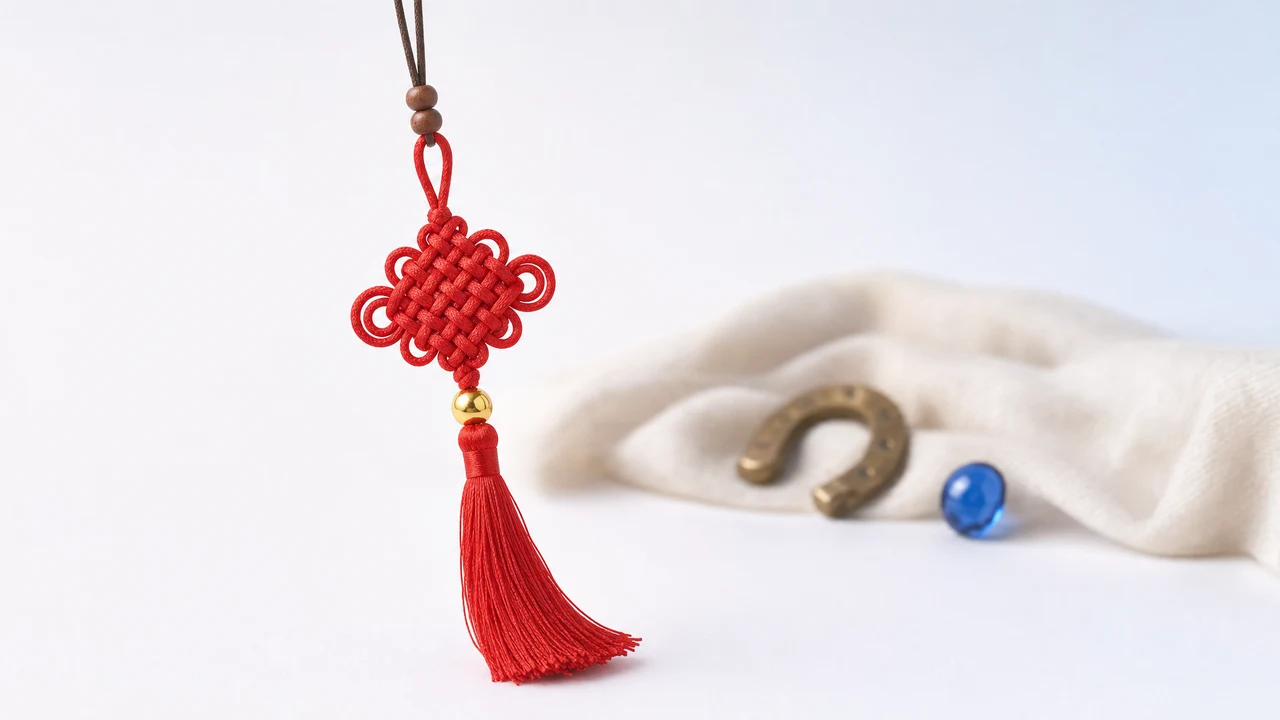
Lucky charm meanings around the world fall into two big jobs: guarding against envy, and marking a new beginning. Once you see that split, the horseshoe in Ireland and the blue eye in Turkey stop looking random and start looking like cousins.
Most lists just parade charms one after another. The pattern underneath is more interesting than any single item on the list.
What do lucky charms around the world have in common?
Across very different cultures, charms tend to do one of two things. They either deflect ill will, or they bless the start of something.
The clearest shared meaning is protection from the evil eye, the idea that admiration or envy can bring bad luck. It shows up under different names on three continents.
The second shared meaning is the blessing of a threshold: a door, a journey, a wedding, a launch. Charms cluster at exactly these edges because that is where people feel most exposed.
- Protection from envy: the Turkish nazar, the Italian cornicello, the Middle Eastern hamsa.
- Blessing a beginning: the Irish horseshoe over a door, the Indian coconut before a venture, the Japanese omamori for a journey.
- Marking effort: the Japanese daruma you paint as you chase a goal.
The evil eye belief is one of the most widespread on earth, found around the Mediterranean, across the Middle East, and through South Asia. Different names, strikingly similar idea.
A tour of the big charms
Here is a short atlas of well-known charms and the meanings commonly attached to them. Each links to a fuller story where we have one.
| Charm | Origin | Commonly held meaning |
|---|---|---|
| Nazar boncuğu | Turkey, Mediterranean | Blue glass eye that turns back the evil eye |
| Cornicello | Naples, Italy | A red horn against malocchio, the evil eye |
| Four-leaf clover | Ireland | A rare find, one leaf each for faith, hope, love and luck |
| Maneki-neko | Japan | The beckoning cat, welcome and good business |
| Hamsa | Middle East, North Africa | An open hand for protection and blessing |
| Elephant, trunk up | India, Southeast Asia | Fortune and a lifted, welcoming stance |
The turkish evil eye and italian good luck charms pieces go deep on the two Mediterranean cousins, which are close in job but quite different in look.
Why does the eye show up everywhere?
Of all the shapes, the eye is the one that travels furthest. From the blue bead of Turkey to the Eye of Horus in Egypt, cultures keep landing on the eye as protection.
The reason is simple and human. If a harmful look can bring bad luck, then an eye that looks back can send it away.
So the charm is often a mirror of the threat. You fight a bad gaze with a watchful gaze, painted, cast in glass, or drawn on a wall.
Cultures did not necessarily copy each other. The same fear, envy and the "evil eye," seems to have arisen in many places, and each one reached for a similar answer on its own.
Charms for beginnings, not just protection
The other half of the world's charms are about starting well. These gather at doorways and journeys.
The Irish horseshoe over a door, hung points up so the luck does not "run out," is a classic beginning-charm. The irish good luck symbols piece covers the horseshoe, the clover and the Claddagh together.
In India, a lemon and chilies at a shop door, or a coconut broken before a venture, marks the same kind of threshold. The good luck superstitions in India post walks through those.
In Japan, the omamori for safe travel and the daruma for a goal both bless an effort you are about to make. You can read the set in japanese good luck charms.
Are these charms superstition or something else?
It depends who you ask, and often it is both at once. A charm can be a sincere belief for one person and a comforting habit for another.
What they share is a function that survives the belief. Each one gives you something to do at a moment you cannot control.
Before an exam, a flight, a wedding speech or a launch, you cannot force the result. You can touch a charm, ring a bell, or hang a horseshoe, and that small act carries the nerves.
If you borrow a charm from a culture that is not yours, learn what it means and where it belongs. The difference between honoring a tradition and decorating with it is understanding.
Bringing the whole atlas to a screen
Most of these charms were made for a physical place: a door, a wrist, a car mirror, a shop till. A lot of us now spend our days in front of a Mac instead.
A charm on a screen can carry the same intent as a charm on a door. It marks the space you work in and gives you a small ritual before something that matters.
It does not claim to protect anything. A charm is a charm, not a promise; it marks the moment, steadies you, and gives you a story. If your home has a real nazar or horseshoe, keep it, and let the screen charm cover the hours your attention lives on the Mac. You can see what a one-time key costs on the pricing page.
Do lucky colors travel the same way?
Colors carry as much meaning as shapes, and they do not translate cleanly across borders. The same color can mean opposite things in two places.
Red is a good example. In China it means joy and celebration, filling weddings and New Year, while in parts of the Mediterranean red coral is prized as protective, which is why the Italian cornicello is red.
Blue runs the other way. Around Turkey and the Mediterranean, blue glass is the color of protection against the evil eye, which is why the nazar is that deep blue.
- Red reads as joy and warding in different cultures, from Chinese festivals to Mediterranean coral.
- Blue reads as protection in the eastern Mediterranean, the heart of the nazar tradition.
- Green often signals growth and life, as in the Irish clover and much of nature-linked folk custom.
The lesson is to check the local meaning before assuming. A color that feels lucky in one tradition may carry a different weight in another.
When borrowing a charm, do not strip its color to suit your decor. The blue of a nazar and the red of a cornicello are part of the meaning, not just a palette choice.
The respectful takeaway
The charms of the world are living traditions, not a costume box. Each belongs to real people who use it with real feeling, and each deserves to be described accurately.
Seen together, they tell one quiet story about being human. We fear being envied, we hope our beginnings go well, and we reach for a small object to hold both feelings at once.
That is the deepest shared meaning of all. A lucky charm, anywhere in the world, is a way of paying attention on purpose before a hard thing, and that is worth keeping.
What is the most common good luck charm in the world?
The evil eye, in its various forms, is among the most widespread. Known as the nazar in Turkey, the malocchio charm in Italy and drishti protection in India, the same basic idea of guarding against envy appears across the Mediterranean, the Middle East and South Asia.
Why do so many cultures have an evil eye charm?
Because the fear behind it, that admiration or envy can bring bad luck, seems to be a near-universal human worry. Many cultures arrived at a similar answer independently: an eye or a charm that looks back and turns the harm away.
Do lucky charms actually bring good luck?
They work as rituals, not guarantees. A charm marks a moment, steadies your nerves and links you to a tradition, much like a lucky pen or a pre-game routine, but it does not control real outcomes.
What lucky charm is best for a new beginning?
Many cultures use "threshold" charms for beginnings: the Irish horseshoe over a door, the Japanese omamori for a journey, or an Indian coconut broken before a venture. Choose one whose tradition and meaning you understand and respect.
Is it okay to mix charms from different cultures?
Yes, if you treat each one with respect and learn what it means and where it belongs. The line to avoid is using a sacred or devotional object, like a shrine omamori, as mere decoration.
Can I keep a cultural charm on my computer?
You can. A charm on your screen carries the same intent as one on a door, marking your workspace and giving you a small ritual, as long as it does not replace a devotional object that is meant to be treated with care.
Book My Luck today
Book My Luck is a desktop decoration for macOS 14+ and Windows 10/11. The desktop outside the charm remains clickable. The current Mac and Windows downloads are version 1.0.32, signed by KAK DIGITAL LLC. On Mac, Charm Centre controls size, cord length, placement, displays and motion. Collections and controls can differ between Mac and Windows.
There is no calendar integration, booked-moment scheduler or native-app free trial. Explore the website demo and regional pricing. One key activates one computer at a time; activation and license refresh require internet. Preferences are local, but purchasing, activation and website analytics use online services described in the privacy policy.
Hang one for the moment that matters
Book My Luck hangs a rendered charm from your Mac or Windows screen, with rope physics and manual interaction. Check the current platform release and regional price before buying.
Get Book My Luck →