Book My Luck
Good Luck Superstitions in India, Explained
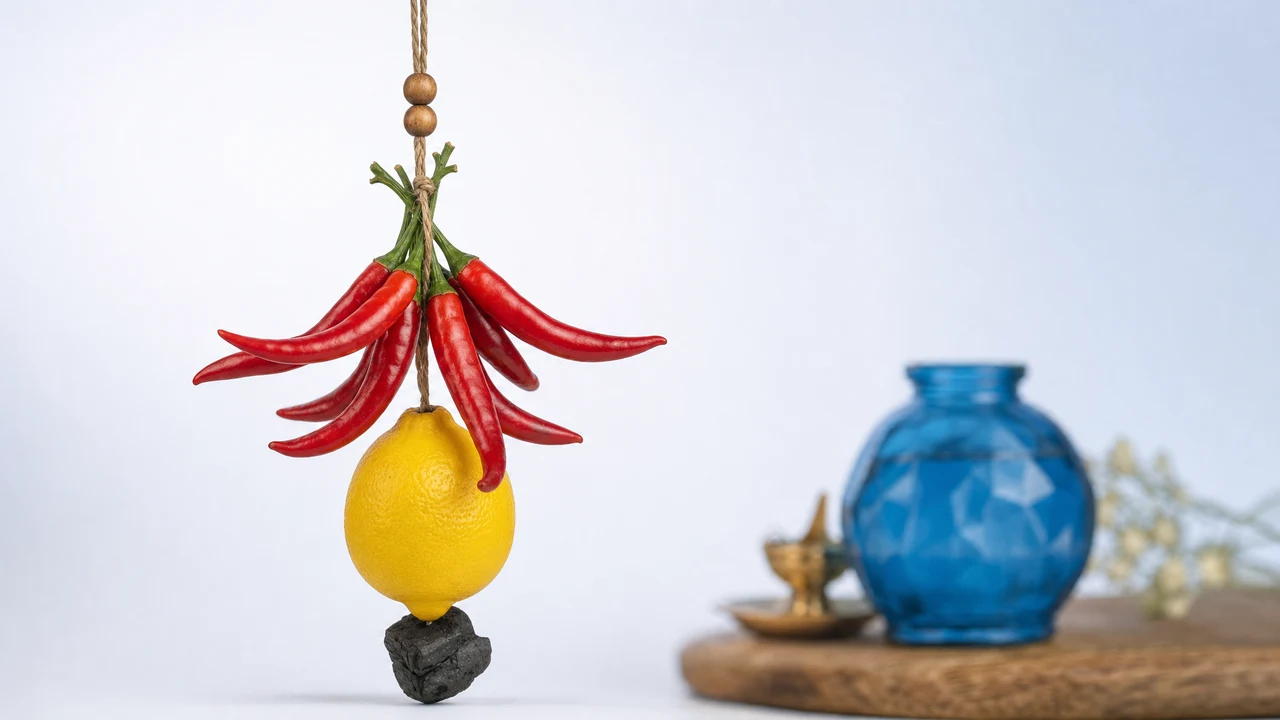
Good luck superstitions in India are mostly about two things: keeping the evil eye away and marking a fresh start with care. A lemon and chilies at a shop door, a black dot on a baby's cheek, a coconut broken before a journey; each one is a small act of protection.
Most write-ups list these customs like trivia. The point is missed unless you see that nearly all of them are ways of paying attention at a moment that matters.
What are the most common good luck superstitions in India?
India is not one culture, so these vary widely by region, religion and household. Still, a handful show up across much of the country.
The most common good luck superstitions in India cluster around doorways, journeys and new beginnings. That is not an accident, since those are the moments when people feel most exposed.
Here are a few you will see often, with the meaning families commonly attach to them.
- Nimbu-mirchi at a door or vehicle: seven chilies and a lemon on a string, believed to absorb ill will and keep a business or home from harm.
- Drishti or nazar protection: a black dot of kohl on a child, a black thread on a wrist, or a small mark to spoil a "too perfect" look that might attract envy.
- Breaking a coconut before a new venture, a build, or a long drive, offered so the beginning goes smoothly.
- A rangoli or kolam at the threshold each morning, a welcome that is also thought to draw good fortune inward.
None of these are guarantees, and honest practitioners will tell you so. They are gestures of care, repeated because the care itself feels steadying.
India spans many faiths and regions. What one family treats as essential, another may not practice at all, and that variety is part of the picture, not a flaw in it.
Why so many charms point at the evil eye
A lot of Indian luck customs are really about the evil eye, known widely as nazar or drishti. The belief is that admiration or envy, even unspoken, can bring bad luck to whoever or whatever is being looked at.
That is why a proud parent might place a black dot on a beautiful baby. The dot is meant to break the perfect picture so it draws less envy.
The same logic explains the lemon and chilies at a thriving shop. A visible business attracts attention, and the charm is hung to soak up whatever ill will comes with it.
The evil eye is not seen as a curse someone casts on purpose. It is more like a side effect of being admired, which is why the charms feel humble rather than aggressive.
If you want the deep version of one of these, the nimbu mirchi meaning piece walks through the lemon-and-chilies custom on its own.
A quick guide to a few Indian luck charms
Here is a short comparison of common charms and where each one usually goes. Placement is a big part of the meaning.
| Charm | Where it goes | Commonly held meaning |
|---|---|---|
| Nimbu-mirchi | Door, shop, vehicle | Absorbs ill will, protects the space |
| Drishti bommai | Roofline, gate, corner of a build | A guardian face that takes the evil eye |
| Kolam or rangoli | Threshold, floor at the entrance | Daily welcome that invites good fortune |
| Toran of leaves | Above a doorway | Marks a home as auspicious and open |
The drishti bommai meaning post covers the guardian face in more detail, including why it is often painted with a fierce expression.
Are these superstitions or just habits?
The honest answer is both, and the line is blurrier than people admit. A custom can be a genuine belief for one person and a comforting habit for another in the same family.
What they share is a job. Each one gives a person something to do at a moment when there is nothing else to control.
Before an exam, a journey, or a new job, you cannot force the result. You can light a lamp, break a coconut, or touch a charm, and that small action carries the nerves.
That is the same reason a modern worker might keep a lucky pen or a pre-meeting routine. The lucky charm meanings around the world guide shows how many cultures land on the same idea from very different starting points.
If you adopt a charm from a tradition that is not yours, learn what it means and where it is meant to go. Respect is the difference between honoring a custom and decorating with it.
Bringing an old custom to a modern desk
Plenty of people who grew up with these customs now spend their days at a laptop, far from the doorway where the lemon used to hang. The charm does not have to be left behind.
A charm on a screen can carry the same intent as a charm on a door. It marks the space you work in and gives you a small ritual before something that matters.
If a physical nimbu-mirchi or a drishti face is part of your home, keep it. A screen charm is for the hours when your attention lives on the Mac, not instead of the real thing. You can see what a one-time key costs on the pricing page.
For the regional cousin of these customs, the tamil good luck customs piece looks at the vel, the kolam and drishti in Tamil homes specifically.
Do these customs change from region to region?
They change a great deal, which is easy to forget when "India" is treated as one thing. A custom that is central in Tamil Nadu may be unknown in Punjab, and the reverse.
Take the doorway. In much of the south you will see a daily kolam in rice flour, while in the north a toran of leaves or marigolds is more common over the door.
Protection charms shift too. The lemon-and-chilies string is widespread, but the guardian face and the exact drishti rituals vary by community, town and family.
- Language and deity shape which charms appear, from Murugan's vel in the Tamil south to regional forms elsewhere.
- Faith matters, since Hindu, Muslim, Christian, Sikh and Jain families keep different customs.
- Family habit is the smallest and strongest unit, so two neighbors may practice quite differently.
The tamil good luck customs piece is a good example of how one region's customs have their own texture rather than being a subset of a single national tradition.
Avoid saying "Indians believe" as if the country were uniform. It is more accurate, and more respectful, to say a custom is common in a particular region or community.
The respectful takeaway
These are living traditions, not quaint relics. They belong to real families who practice them with real feeling, and they deserve to be described accurately.
A charm is a charm, not a promise. It marks a moment, steadies a person, and links them to a line of people who did the same before an exam, a wedding, or the opening of a shop.
Treated that way, a good luck superstition in India is less about magic and more about attention. And attention, paid on purpose before a hard thing, is worth keeping around.
What is the meaning of nimbu-mirchi at a door?
It is a string of seven chilies and a lemon hung at a door, shop or vehicle. It is commonly believed to absorb ill will and the evil eye, keeping the space and its work from harm; families replace it with a fresh garland when it dries.
Why do Indians put a black dot on babies?
The black dot, often a smudge of kohl on the cheek or forehead, is meant to guard against the evil eye. A very cute or admired baby is thought to attract envy, and the dot spoils the "perfect" look so it draws less of that attention.
What does breaking a coconut before a journey mean?
Breaking a coconut is offered at the start of a venture, a build or a long trip so the beginning goes smoothly. It is a way of marking a threshold and asking for a clear path, common across many Indian communities.
Are Indian good luck superstitions religious?
Some are tied to specific faiths and rituals, while others are folk customs practiced across religions. India is very diverse, so the same charm can carry a devotional meaning in one home and a purely cultural one in another.
Do good luck charms in India actually work?
They work as rituals, not guarantees. Like a lucky pen or a pre-game habit, they steady a person at a stressful moment and connect them to tradition, but they do not control exam results, health or any real outcome.
Can I use an Indian charm if I am not Indian?
Yes, if you learn what it means and treat it with respect, including where it is meant to be placed. The difference between honoring a custom and just decorating with it is whether you understand and value what it stands for.
Book My Luck today
Book My Luck is a desktop decoration for macOS 14+ and Windows 10/11. The desktop outside the charm remains clickable. The current Mac and Windows downloads are version 1.0.32, signed by KAK DIGITAL LLC. On Mac, Charm Centre controls size, cord length, placement, displays and motion. Collections and controls can differ between Mac and Windows.
There is no calendar integration, booked-moment scheduler or native-app free trial. Explore the website demo and regional pricing. One key activates one computer at a time; activation and license refresh require internet. Preferences are local, but purchasing, activation and website analytics use online services described in the privacy policy.
Hang one for the moment that matters
Book My Luck hangs a rendered charm from your Mac or Windows screen, with rope physics and manual interaction. Check the current platform release and regional price before buying.
Get Book My Luck →