Book My Luck
Japanese Good Luck Charms: Omamori and More
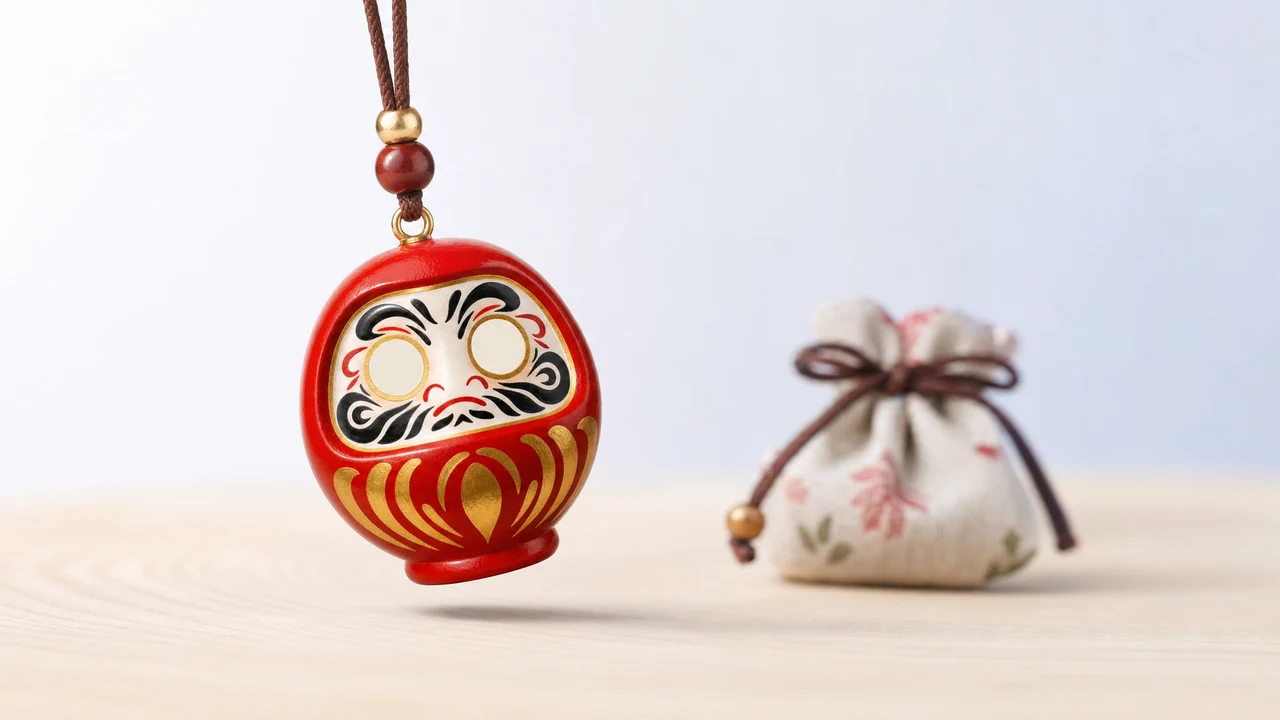
Japanese good luck charms are unusually practical: most are made for a single, named wish rather than luck in general. An omamori pouch for safe travel, a daruma doll for a goal you are chasing, a maneki-neko cat waving customers into a shop; each has a clear job.
Guides often lump them together as cute souvenirs. The more useful view is that Japanese charm culture is built around effort and intent, not passive hoping.
What are the main Japanese good luck charms?
Three come up again and again, and they work in quite different ways. Knowing the difference is the whole point.
The main Japanese good luck charms are the omamori amulet, the daruma doll and the maneki-neko cat. One is kept and carried, one is painted as you work toward a goal, and one greets people at a door.
Here is the short version of each before we go deeper.
- Omamori: a small brocade pouch sold at shrines and temples, each for a specific blessing such as study, health, love or safe driving.
- Daruma: a round, weighted doll modeled on Bodhidharma, used to hold a goal in mind.
- Maneki-neko: the beckoning cat with a raised paw, a symbol of welcome and good business.
Omamori are usually tied to Shinto shrines and Buddhist temples, so they carry real religious weight. They are best treated as devotional objects, not just decorations.
How does an omamori work?
An omamori is a cloth amulet containing a blessing, and the custom is that you do not open it. Opening it is said to let the protection out, so people carry it sealed, on a bag, a phone or a car.
Each omamori is bought for a purpose. A student heading into exams might carry a gakugyō-jōju omamori for academic success, while a new driver keeps a kōtsū-anzen one for road safety.
They are also seasonal in a sense. Many people return an old omamori to a shrine after about a year, often around New Year, and receive or buy a new one.
The rule most visitors get wrong: do not open the pouch to peek inside. The whole idea rests on keeping it closed and treating it with care.
Daruma and maneki-neko: two active charms
Where the omamori is carried quietly, the daruma and the cat are more hands-on. They ask you to do something.
Daruma doll
- What it is: a round, red, weighted doll with blank white eyes, based on the monk Bodhidharma.
- The ritual: you paint one eye when you set a goal and the other when you achieve it.
- Why it works: the half-painted face sits on your desk as a daily reminder of a promise you made to yourself.
Maneki-neko
- What it is: the "beckoning cat," often ceramic, with one paw raised in a waving gesture.
- The detail: the raised paw matters, and so does the color, with different versions linked to money, customers or general luck.
- Why it works: placed at an entrance or a till, it reads as welcome, turning a doorway into an invitation.
The daruma doll meaning piece covers the one-eye ritual in full, and the maneki neko meaning post explains which paw does what.
Which charm suits which moment?
Because these charms are so specific, choosing one is really about the moment you are in. Here is a quick match.
| Moment | Charm | Why |
|---|---|---|
| Studying for an exam | Omamori for study | Carried quietly, a reminder of the goal |
| Chasing a personal goal | Daruma doll | You paint the second eye when you win |
| Opening or growing a business | Maneki-neko | Welcomes customers, marks the space |
| Starting a big journey | Omamori for safe travel | A blessing kept close for the road |
The daruma is a favorite among people who like a visible target, since the blank eye nags at you in the best way until you finish.
Why do Japanese charms feel so grounded?
Part of the answer is that they are tied to action. A daruma asks you to name a goal and finish it, and a maneki-neko is placed where work actually happens.
Even the omamori, quiet as it is, is chosen deliberately for a real need. You do not buy a generic luck charm; you buy the one for the exam, the road or the pregnancy you are hoping for.
That practicality travels well. Many people who work at a screen all day keep the same spirit: a small object that names an intent and sits where they can see it.
That is the plain idea behind Book My Luck, a small Mac app that hangs a chosen charm from the top of your screen. You can keep a daruma or a beckoning cat up top and even paint the daruma's eye in the app when a goal lands, so the ritual fits a desk instead of a shelf.
If you buy a real omamori, treat it as a devotional object: keep it closed, keep it clean, and consider returning it to a shrine after a year rather than throwing it away.
Where do these charms come from?
Each of the three has a different root, which is part of why they feel so distinct. Knowing the origin makes the custom easier to respect.
The daruma is modeled on Bodhidharma, the monk credited with founding Zen Buddhism. Legend says he meditated so long that his limbs withered, which is why the doll is round and legless, and why it rights itself when tipped, a picture of getting back up.
The maneki-neko rose to fame in the Edo period, with several folk tales behind it. The most repeated tells of a cat that beckoned a lord out of the path of a lightning strike, after which the cat became a symbol of good fortune and welcome.
Omamori grow directly from Shinto and Buddhist practice at shrines and temples. They are not a marketing invention; they are part of how people carry a blessing away from a sacred place.
Because omamori come from active religious sites, avoid treating them as generic lucky trinkets. Buying one is closer to receiving a blessing than picking up a souvenir, and it is best handled with that care.
That mix of Buddhist roots, folk tale and shrine practice is why Japanese charms feel both playful and serious at once. The daruma can sit on a startup founder's desk and still carry a monk's story of persistence.
The respectful takeaway
Japanese luck charms are living customs, not props. Omamori in particular come from active shrines and temples, and they carry meaning for the people who use them.
A charm is a charm, not a promise. A daruma will not pass your exam and a cat will not fill your shop, but they mark the intent and steady the effort, which is exactly what they were always for.
If you want to see how these customs rhyme with charms from Ireland, Turkey and India, the lucky charm meanings around the world guide lays them side by side. The chinese good luck symbols piece is a natural next read, since the two traditions share more than a border. You can see what a one-time app key costs on the pricing page.
FAQ
What is an omamori and how do you use it?
An omamori is a small cloth amulet from a Japanese shrine or temple, each made for a specific blessing like study, health or safe travel. You carry it closed on a bag, phone or car, and many people return it to a shrine after about a year for a new one.
Why should you not open an omamori?
The blessing is believed to live inside the sealed pouch, so opening it is said to release the protection. Keeping it closed is the whole custom, which is why the contents are never meant to be seen.
What is the difference between a daruma and a maneki-neko?
A daruma is a goal charm you paint one eye at a time as you work toward and achieve a wish, while a maneki-neko is a beckoning cat placed at a door or till to welcome people and good business. One is about personal effort, the other about welcome.
Which paw does the maneki-neko raise?
It varies. A raised left paw is often linked to drawing in customers or people, and a raised right paw to money or luck, though meanings differ by maker and region, so treat it as commonly held rather than a fixed rule.
Are Japanese good luck charms religious?
Omamori are, since they come from Shinto shrines and Buddhist temples and are treated as devotional objects. Daruma and maneki-neko are more folk and commercial, though the daruma has Buddhist roots in the monk Bodhidharma.
Do Japanese good luck charms work?
They work as rituals of intent, not as guarantees. A daruma keeps a goal in front of you and an omamori marks a hope you carry, but none of them control real outcomes like exams, health or sales.
Hang one for the moment that matters
Book My Luck hangs a rendered charm from your Mac or Windows screen, with rope physics and manual interaction. Check the current platform release and regional price before buying.
Get Book My Luck →