Book My Luck
Nimbu Mirchi Meaning: Lemon and Chilies at the Door
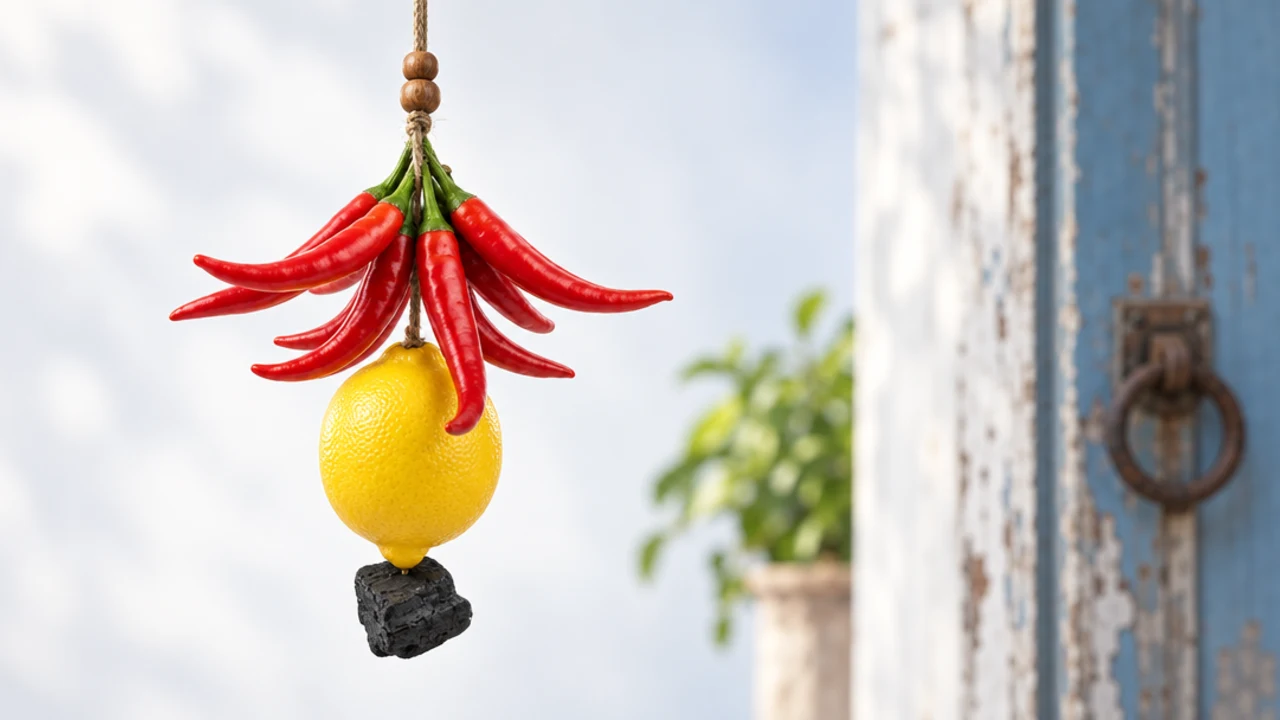
The nimbu mirchi meaning is protection at the threshold: a single lemon strung above seven chilies, hung at a door to keep bad luck and the evil eye out of a home or shop. The nimbu mirchi meaning also has a folk logic to it, since the sour lemon and sharp chilies are said to satisfy misfortune before it can step inside.
Most people in India have seen this garland a thousand times without asking why the numbers and the order are what they are. The details are the interesting part.
What is nimbu mirchi?
Nimbu mirchi is a small hanging charm made of everyday kitchen things: one lemon and, most commonly, seven green chilies threaded onto a length of cotton. It hangs from the top of a doorway, a shopfront, or the front of a truck or auto-rickshaw.
You will also hear it called a nimbu-mirch totka, where totka means a small folk remedy or charm. One lemon, seven chilies is the standard recipe, though the exact count can vary by region and habit.
The order matters to the look. The lemon usually sits at the top or bottom of the string, with the chilies lined up in between, so the whole thing dangles like a little sour-and-spicy pendant.
What does nimbu mirchi protect against?
The plain answer is buri nazar, the evil eye, and general misfortune. It is hung to guard the people, the earnings and the goods behind the door.
The most common folk explanation involves Alakshmi, described in tradition as the sister or opposite of Lakshmi, the goddess of wealth. Where Lakshmi brings fortune, Alakshmi brings loss, poverty and quarrels.
The story goes that Alakshmi is fond of sour and pungent tastes. By hanging something sour and sharp at the very entrance, a household is said to give her what she likes at the threshold, so she is content to stay outside and never crosses in.
This is folk belief, not scripture, and versions differ from street to street. Some tell it as feeding Alakshmi, others simply as warding off the evil eye. Take it as a widely held custom rather than a fixed doctrine.
There is a gentler, practical reading too. Lemon and chili were once tied to insects and freshness, and some people frame the custom in those homely terms rather than divine ones.
Why seven chilies, and when do you replace it?
Seven is the number you see most often, though it is not a strict law. Seven carries weight across many Indian traditions, and the odd number is generally preferred for such charms.
The garland is not meant to last. As the lemon and chilies dry, shrivel and darken, the charm is thought to have done its work and absorbed what it needed to.
A fresh garland is the whole point, so people take the old one down and hang a new one on a regular cycle. Many families and shopkeepers do this weekly, and Saturday is a common day because of its link to Shani and to Alakshmi in popular belief.
If you keep a nimbu mirchi, treat replacing it as the ritual, not the object. The act of taking down the tired string and hanging a fresh one is a small weekly reset, a moment to notice the week turning over. A desk ritual works the same way, which is to say the repetition is where the calm comes from.
The dried charm is usually discarded quietly, sometimes thrown away rather than kept, because its job is finished.
How does it compare to other doorway charms?
The nimbu mirchi is one of several guardians people hang at an Indian threshold. Here is how it sits next to two others you will often see nearby.
| Charm | What it is | Where it hangs |
|---|---|---|
| Nimbu mirchi | Lemon and seven chilies on thread | Home and shop doors, vehicles |
| Drishti bommai | A painted guardian face or figure | Homes, buildings under construction |
| Toran | A decorative band of leaves or beads | Across the top of a doorway |
Each has its own flavour of protection. The nimbu mirchi is the working-day guardian, cheap, quick to make and refreshed often, while a drishti bommai is a longer-standing watcher that takes the first look for you.
Together they belong to a wider set of good luck superstitions in India, where the door is treated as the most important line in the house. What crosses it, and what is stopped at it, is taken seriously.
Why do shops and vehicles use it so much?
You see the nimbu mirchi on shopfronts and trucks even more than on homes, and there is a reason. Both are places where money, strangers and risk meet all day long.
A shopkeeper's earnings are exposed to the street and to every customer's glance, so a guard at the door fits the anxiety of the trade. A guard for the takings is really what it is for a small business.
On trucks, autos and buses, the charm rides at the front, facing the road and its dangers. The driver's day is long and uncertain, and the garland is a small daily comfort against that.
If you run a shop or a stall, treat the weekly change of the garland as a moment to also glance over the week's numbers and the state of the place. Pairing the ritual with a real review turns a superstition into a useful habit.
The charm is cheap, which is part of its genius. Anyone can afford to protect their doorway, so the custom cuts across every level of income.
Carrying the idea to a screen
A lemon-and-chili string protects a physical doorway, but so much of modern life has no doorway at all. The moment you are anxious about often arrives through a laptop: a results page, a video interview, a launch you are watching load.
That is where a small screen charm earns its place. Book My Luck is a Mac menu-bar app that hangs a charm from the top edge of your display on a thin cord with real rope physics, and it clicks straight through so your work is never blocked.
The honest line holds for every charm, this one included. It is a charm, not a promise. A nimbu mirchi marks the threshold and steadies the household mood, the way a lucky pen or a pre-game ritual does. It does not decide who succeeds or how a day unfolds.
Why doorways matter across cultures
The nimbu mirchi is India's version of an idea you find everywhere, which is that the entrance is where protection belongs. The Italian horn, the Turkish nazar over a doorframe and the horseshoe above a barn door all say the same thing in different accents.
The threshold is the line every one of these charms is drawn to. It is the point where the outside world meets the space you are trying to keep safe.
Seen against the full range of lucky charm meanings around the world, the lemon and chilies are not quaint at all. They are one careful, practical answer to a very human question about how to guard what you value.
What does hanging lemon and chilies mean?
Hanging a lemon with seven chilies, called nimbu mirchi, is a folk charm to ward off the evil eye and misfortune from a home, shop or vehicle. In the most common telling it satisfies Alakshmi, the goddess of misfortune, at the doorway so she does not enter.
How many chilies go in a nimbu mirchi?
Seven green chilies is the most common count, strung together with a single lemon. The number is not a strict rule, but odd numbers and seven in particular are widely preferred for this charm.
How often should you change nimbu mirchi?
Many households and shops replace it weekly, and Saturday is a popular day because of its association with Shani and Alakshmi in folk belief. The idea is that once the lemon and chilies dry out, the charm has done its work and a fresh one should take its place.
What do you do with the old nimbu mirchi?
The dried, shrivelled garland is usually taken down and discarded quietly, since its job is considered finished. The ritual lies in replacing it, not in keeping the old one.
Is nimbu mirchi linked to a goddess?
Folk tradition links it to Alakshmi, described as the opposite of Lakshmi and associated with poverty and misfortune. Because Alakshmi is said to like sour and pungent things, the sour lemon and sharp chilies are hung at the door to keep her satisfied outside.
Does nimbu mirchi actually bring good luck?
No charm can guarantee an outcome, and an honest answer says so. The nimbu mirchi is a charm, not a promise; it marks the threshold and steadies the mood of a household, but it does not control what happens inside.
Book My Luck today
Book My Luck is a desktop decoration for macOS 14+ and Windows 10/11. The desktop outside the charm remains clickable. The current Mac and Windows downloads are version 1.0.32, signed by KAK DIGITAL LLC. On Mac, Charm Centre controls size, cord length, placement, displays and motion. Collections and controls can differ between Mac and Windows.
There is no calendar integration, booked-moment scheduler or native-app free trial. Explore the website demo and regional pricing. One key activates one computer at a time; activation and license refresh require internet. Preferences are local, but purchasing, activation and website analytics use online services described in the privacy policy.
Hang one for the moment that matters
Book My Luck hangs a rendered charm from your Mac or Windows screen, with rope physics and manual interaction. Check the current platform release and regional price before buying.
Get Book My Luck →