Book My Luck
What Is a Desk Ritual? Small Habits Before Big Work

A desk ritual is a short, repeated action you do at your desk right before focused work, so your mind learns that this action means it is time to begin. It works the way a pianist flexes their hands or a bowler taps the crease: the gesture is small, but it opens the door to the work.
Most productivity writing treats the start of work as a willpower problem. A desk ritual treats it as a signalling problem, which is a far easier one to solve.
What is a desk ritual, exactly?
Strip it back and a desk ritual has three parts. A trigger, an action, and a payoff you can feel.
The trigger is when you do it, usually the moment you sit down or open the laptop. The action is the ritual itself, kept deliberately small. The payoff is the shift in state, the sense that scattered attention has gathered into one point.
None of this is superstition. It is the same principle behind a warm-up, a tuning note, or a chef's mise en place: a boundary between not-working and working.
A desk ritual is not the work and it is not a reward. It is the threshold you cross to reach the work.
The Om, cast in brass and let to glow, is a fitting emblem for this. In its tradition it is the first sound, the note struck before anything else begins. A desk ritual is your own first sound, sounded before the real task.
Why does a desk ritual actually work?
The honest answer is association, repeated until it becomes automatic. Do the same small thing before focus enough times, and the thing starts to summon the focus.
Psychologists call the general idea anchoring, where a repeated cue gets tied to a state you want on demand. The fuller version of that mechanism is in anchoring habit cue, but the short form is simple.
Your brain is always looking for patterns. Hand it a clear, consistent cue, and it stops treating "start work" as a decision to agonise over and starts treating it as a step that just follows the cue.
There is a second, quieter benefit. A ritual gives your hands something to do while the anxious part of you settles, which is why the run-up to hard tasks feels less jagged with one.
Consistency beats cleverness. A dull ritual you do every single day works far better than an elegant one you do twice.
What makes a good desk ritual?
Not every habit qualifies. A good desk ritual has a few traits that keep it alive and effective.
Short. Seconds, not minutes. If it feels like a task, it will get skipped on the days you most need it.
Physical. Something you touch, ring, or watch move outperforms a thought you are meant to think. The body is a more reliable trigger than the mind.
Single-purpose. It should mean one thing, "begin", and nothing else. A ritual that also checks email is no longer a ritual.
Repeatable anywhere. The best ones do not depend on a perfect setup, so they survive travel, cafés, and bad days.
A handful of examples, each explored more fully elsewhere:
| Ritual | What it signals |
|---|---|
| Ring a bell once | Sound as a hard start line |
| Flick or watch a charm | A visual cue that work is live |
| Clear the desk to bare wood | A clean field for one task |
| Three slow breaths, then type | Body settles, then begins |
The bell has its own piece in ring a bell before work, a longer menu sits in pre-work ritual ideas, and the focus-specific version is in focus ritual.
How do you build your own desk ritual?
Start with one cue and one action, and resist the urge to stack five habits on day one.
Choose the trigger. Decide the exact moment: laptop open, coffee down, chair pulled in. Same moment every time.
Choose one action. Pick a single small gesture. Ring, flick, breathe, clear. One only.
Do it for two weeks without judging it. The first few days feel silly. That passes, and then the cue starts pulling the focus in on its own.
Keep it, or swap it, but never scatter it. If it is not landing after a fair trial, replace it with one other action. Do not run three at once.
A desk ritual steadies you and marks the moment. It does not guarantee good work or good luck, the same way a lucky pen does not write the sentence. Treat it as a doorway, and it will do its quiet job.
Can an object carry the ritual for you?
Yes, and this is often the easiest way to make one stick. When the cue lives in an object, you do not have to remember to perform it; the object is there, waiting.
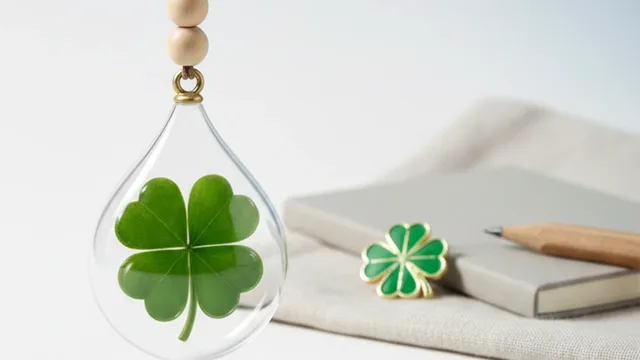
That is the idea behind Book My Luck. It hangs a charm from the top edge of your Mac screen on a thin cord with real rope physics, so it sways and reacts to the cursor while everything beneath it clicks straight through and never blocks your work.
When is the best time to start one?
At the start of a fresh stretch, not in the middle of a chaotic week. A ritual takes a couple of weeks of repetition to set, so it needs a run of ordinary days to bed in.
The beginning of a month, a new project, or a return from a break all work well. What you want is a clean patch of routine the habit can attach to, rather than a fortnight of interruptions that keep breaking the chain.
Do not wait for the perfect moment, though. The perfect moment rarely comes, and a desk ritual is forgiving; if the first attempt gets disrupted, you simply pick the cue back up and carry on. The habit does not punish a missed day, only a missed month.
Start the ritual on a Monday or the first of the month if you can. A tidy start date is easier to remember and gives the habit a clear birthday to count from.
Is a desk ritual just superstition dressed up?
It shares DNA with superstition, and pretending otherwise would be dishonest. The difference is what you expect from it.
A superstition promises an outcome; a desk ritual only promises a boundary. It will not make the report good, but it reliably makes starting the report easier, which is a real and defensible claim.
The traditions these gestures borrow from, ringing a bell, striking a first note, hanging a charm, are treated with respect here, not as tricks. What they teach is that a marked beginning helps humans do hard things, and that has never needed magic to be true.
What is a desk ritual?
A desk ritual is a short, repeated action you do at your desk right before focused work, such as ringing a bell, flicking a charm, or clearing the surface. Its purpose is to signal to your brain that focus is about to begin.
How long should a desk ritual take?
A few seconds is ideal. The shorter and more physical it is, the more likely it survives busy days, and consistency matters far more than length or cleverness.
Do desk rituals actually improve focus?
They help by association: a consistent cue done before focus starts to summon that focus on its own. It is the same mechanism athletes and performers use, and it steadies nerves as a bonus rather than promising any specific result.
Can I have more than one desk ritual?
You can, but start with one. Running several at once tends to dilute the signal, so it is better to keep a single cue until it is automatic before adding another.
Is a desk ritual the same as a focus ritual?
They overlap heavily. A desk ritual is the broad category of starting cues, while a focus ritual is the version aimed specifically at dropping into deep, distraction-free work.
Book My Luck today
Book My Luck is a desktop decoration for macOS 14+ and Windows 10/11. The desktop outside the charm remains clickable. The current Mac and Windows downloads are version 1.0.32, signed by KAK DIGITAL LLC. On Mac, Charm Centre controls size, cord length, placement, displays and motion. Collections and controls can differ between Mac and Windows.
There is no calendar integration, booked-moment scheduler or native-app free trial. Explore the website demo and regional pricing. One key activates one computer at a time; activation and license refresh require internet. Preferences are local, but purchasing, activation and website analytics use online services described in the privacy policy.
Hang one for the moment that matters
Book My Luck hangs a rendered charm from your Mac or Windows screen, with rope physics and manual interaction. Check the current platform release and regional price before buying.
Get Book My Luck →