Book My Luck
Four-Leaf Clover Meaning: One Leaf for Each Wish
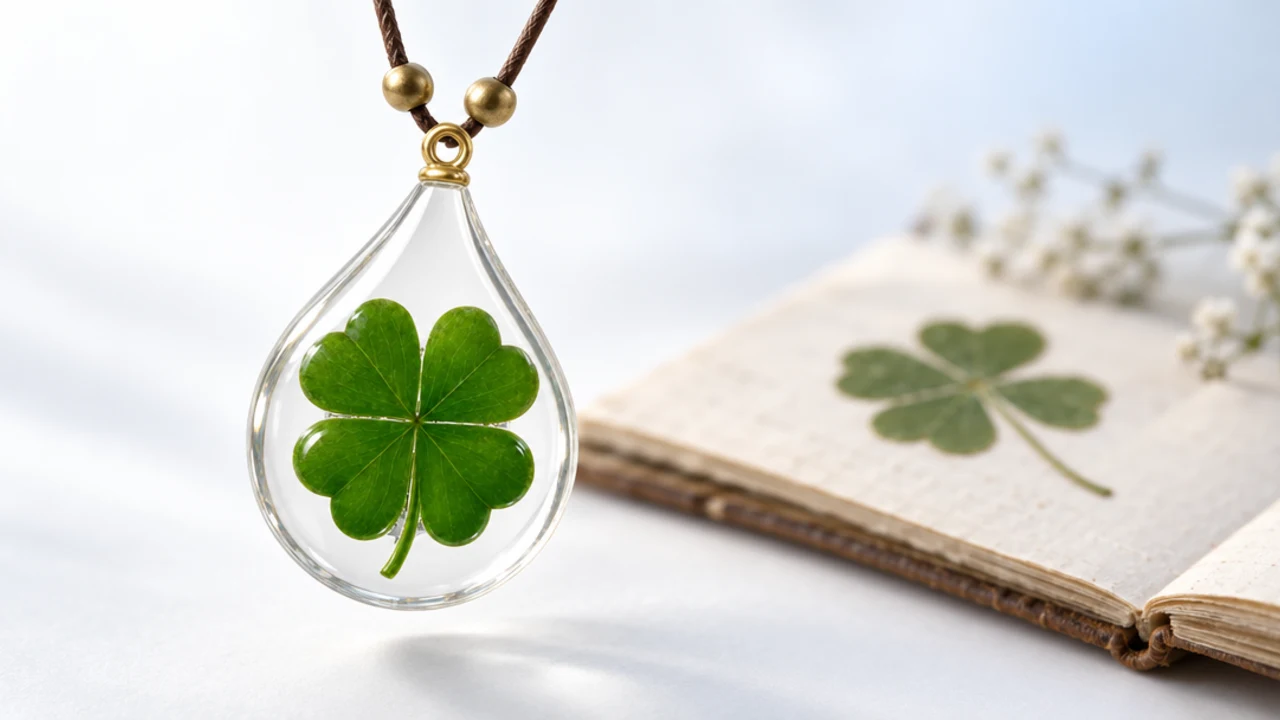
The four-leaf clover meaning is luck earned by a rare find, with each of the four leaves commonly said to stand for its own gift: faith, hope, love, and luck. The rarity is the point, since a fourth leaf is an uncommon mutation among ordinary three-leaf clovers.
Most explanations skip the best part, which is that the clover's luck is tied to the act of finding it. You are not buying fortune; you are being rewarded for noticing.
What is the four-leaf clover meaning?
At its heart, it is a symbol of good luck through rarity. A normal white clover has three leaves, so a fourth is scarce enough that spotting one feels like a small gift from the field.
The most repeated reading assigns a meaning to each leaf. One for faith, one for hope, one for love, and the fourth for luck, so a single find holds four blessings at once.
This four-part reading is folklore rather than doctrine, and versions vary. What stays constant is the theme of a lucky find that rewards attention.
Three leaves is common, four is rare. The four-leaf clover meaning rides on that rarity: finding one is the luck.
Is a shamrock the same as a four-leaf clover?
No, and this trips people up constantly. The shamrock is a three-leaf clover and a national symbol of Ireland, tied to a story about Saint Patrick using its three leaves to explain a religious idea.
The four-leaf clover is the lucky one, and it is not specifically the shamrock. So the shamrock is about Irish identity, and the four-leaf clover is about luck.
They get blended because both are clovers and both are associated with Ireland. Keeping them apart clears up most of the confusion.
If you want the luck symbol, look for four leaves. If you want the Irish national emblem, that is the three-leaf shamrock.
Why do the four leaves each get a meaning?
Assigning a gift to each leaf turns a plant into a little story you can hold. Faith, hope, and love are a familiar trio, and adding luck as the fourth completes the set neatly.
Some tellings swap in fame, wealth, or health, which shows the reading is flexible rather than fixed. The four gifts are a folk memory device more than a strict list.
That flexibility is a feature. It lets a finder attach the meaning they most need on the day they find one.
Four-leaf clover or horseshoe: which luck suits you?
Both are staples of European good-luck lore, so people often choose between them. They carry different feelings.
Four-leaf clover
- Luck by: a rare, personal find.
- Feel: quiet, earned, gentle.
- Best for: someone who likes noticing small things.
Horseshoe
- Luck by: iron, forging, and a protective shape.
- Feel: sturdy, threshold-guarding.
- Best for: a doorway or a home.
If you like the sturdier one, the horseshoe points up or down guide explains both hanging traditions. Between the two, the clover fits a personal desk while the horseshoe fits a door.
Does a four-leaf clover really bring luck?
Here is the honest answer. It is a charm, not a promise, and it will not change an exam, a deal, or a match.
Its value is in the noticing. Finding a four-leaf clover rewards paying attention to the ground under your feet, which is a small, real, grounding habit.
Pressing one in a book and keeping it turns a walk into a memory. That is the genuine gift, closer to a keepsake than to a force that bends outcomes.
The tradition is European folklore, especially associated with Ireland, and it deserves plain description. Precise origins are hard to date, so it is fairer to say the belief is old and widely held than to invent a source.
It is a charm, not a promise. Never treat a clover as a guarantee of any outcome. Its worth is in the finding and the keeping.
The clover on your screen
The lucky leaf has moved from fields to desktops. A lucky charm app for Mac can hang a four-leaf clover from the top of your screen, on a cord with real rope physics, so it sways and reacts to your cursor.
You can see how that works and what it costs on the pricing page. A clover on screen becomes a tiny desk ritual, a glance up before you begin.
For where the clover sits among charms from Turkey, Japan, and India, the lucky charm meanings around the world guide lines them up with care.
How do you actually find a four-leaf clover?
The people who find them regularly say the secret is not searching harder. It is a relaxed, scanning gaze over a patch, letting the odd one break the pattern of threes.
Your eye is good at spotting things that do not match. So rather than checking each plant, you soften your focus and wait for a fourth leaf to stand out from the rhythm of three-leaf clovers.
Clover grows low in lawns, verges, and fields, often in dense patches. A patch that has produced one four-leaf clover sometimes produces more, since the trait can cluster, so it can be worth lingering where you found the first.
Once you find one, pressing it flat in a heavy book preserves it. In a few weeks you have a keepsake that holds the memory of the walk, which is the real reward.
Look on a calm day with time to spare, not when you are rushing. The find comes easier to a relaxed glance than to a hard hunt.
Is a lucky clover the same as a shamrock necklace?
People often buy a "shamrock" pendant expecting luck, then wonder why it has three leaves. The three-leaf shamrock is about Irish identity, so a shamrock necklace is a national symbol rather than a luck charm.
If luck is what you want, look for the four-leaf version. It is the rarity of the fourth leaf that carries the good-fortune meaning, not the plant in general.
Both are lovely to wear, and there is no harm in either. Knowing the difference just means you get the meaning you intended.
How rare is a four-leaf clover, really?
Estimates vary widely and depend on the patch, so it is fair to say a fourth leaf is uncommon rather than to quote a precise ratio. The mutation does occur naturally, and some patches produce them more than others.
People who find them often say the trick is a relaxed, scanning gaze rather than a hard search. That soft attention is part of why finding one feels calming.
Clovers can also carry more than four leaves, though each extra leaf is rarer still. Five and six-leaf clovers turn up occasionally, and finders sometimes attach their own added wishes to them.
The gentle takeaway is the same regardless of leaf count. A lucky clover rewards slowing down and looking closely, which is a small, grounding habit worth keeping whether or not you find one.
It is also why the clover suits a desk so well. A charm about noticing pairs naturally with a moment of pause before you start something that matters.
Children take to the search especially easily. Sending a child out to look for a four-leaf clover is a gentle way to teach patience and close attention, with a small prize at the end.
For adults, the same walk becomes a short break from a screen. Even without a find, the act of scanning the grass for a few minutes is a quiet reset worth having.
What do the four leaves of a clover mean?
The most common reading gives each leaf its own gift: faith, hope, love, and luck. Some versions swap in fame, wealth, or health, so the exact list varies while the theme of blessings holds.
Is a four-leaf clover the same as a shamrock?
No. The shamrock is a three-leaf clover and a national symbol of Ireland, while the four-leaf clover is the rarer, luck-bringing find.
Why is a four-leaf clover lucky?
Its luck comes from rarity. A normal clover has three leaves, so a fourth is uncommon, and finding one feels like a small reward for noticing.
How rare is it to find a four-leaf clover?
It is uncommon rather than impossible, since the fourth leaf is a natural mutation. Some clover patches produce them more often than others.
What should I do with a four-leaf clover I find?
Many people press it in a book to keep it, which turns the find into a lasting keepsake. That preserving is part of the charm's meaning.
Does a four-leaf clover actually bring good luck?
It is a charm, not a promise. It rewards attention and makes a lovely keepsake, and it never claims to change a real outcome you cannot control.
Book My Luck today
Book My Luck is a desktop decoration for macOS 14+ and Windows 10/11. The desktop outside the charm remains clickable. The current Mac and Windows downloads are version 1.0.32, signed by KAK DIGITAL LLC. On Mac, Charm Centre controls size, cord length, placement, displays and motion. Collections and controls can differ between Mac and Windows.
There is no calendar integration, booked-moment scheduler or native-app free trial. Explore the website demo and regional pricing. One key activates one computer at a time; activation and license refresh require internet. Preferences are local, but purchasing, activation and website analytics use online services described in the privacy policy.
Hang one for the moment that matters
Book My Luck hangs a rendered charm from your Mac or Windows screen, with rope physics and manual interaction. Check the current platform release and regional price before buying.
Get Book My Luck →