Book My Luck
Scarab Beetle Meaning: Egypt's Sign of Renewal
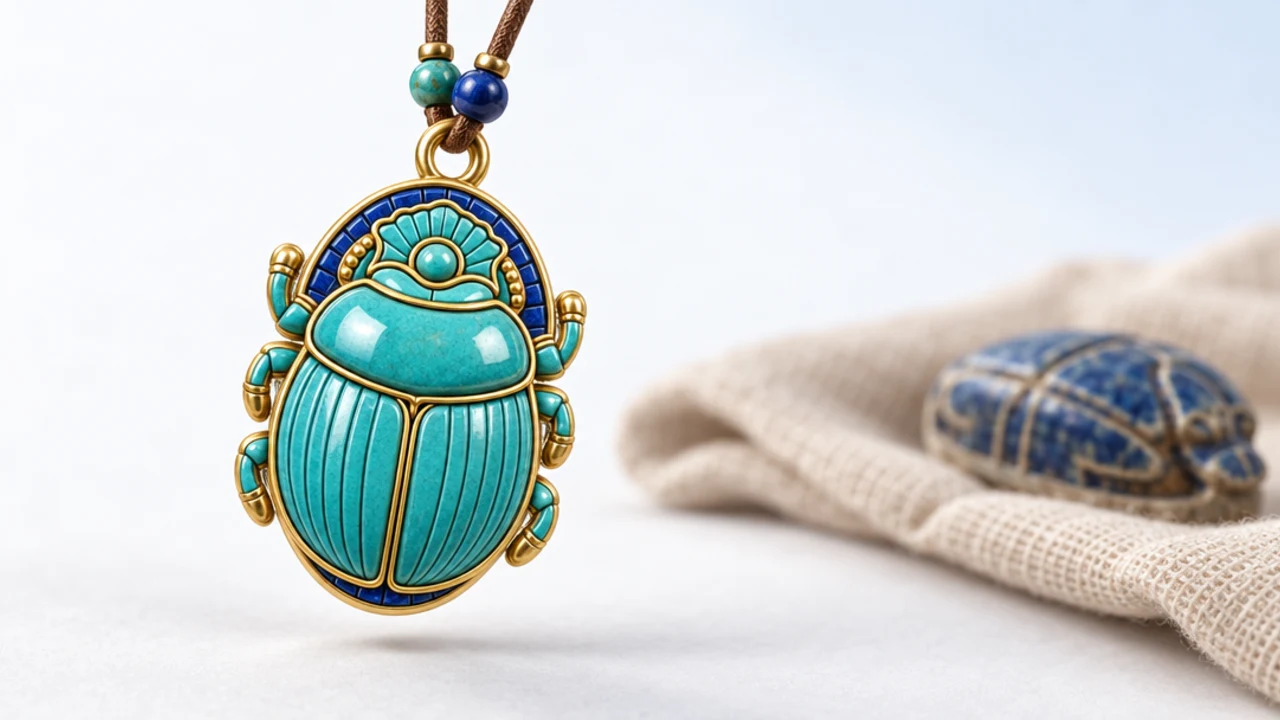
The scarab beetle meaning is renewal: in ancient Egypt the scarab stood for rebirth, transformation and the rising sun that returns every morning. The scarab beetle meaning grew from something the Egyptians watched in nature, a beetle rolling a ball across the ground, which they read as an image of the sun being rolled across the sky.
Most people meet the scarab as a pretty blue amulet in a museum case. The idea behind it is far bigger than the object, and it is worth knowing before you keep one near your work.
What did the scarab beetle mean in ancient Egypt?
The scarab was one of Egypt's most powerful symbols of coming back to life. It carried the sense of a fresh start, a self-renewing cycle that never quite ends.
That meaning was fixed to the morning sun. Each dawn was understood as the sun being reborn, and the scarab became the emblem of that daily return.
Rebirth and the rising sun is the core of it. Where other cultures might picture renewal as a phoenix, Egypt pictured it as a humble beetle at work on the ground.
Why a dung beetle, of all things?
The scarab is a dung beetle, the kind that rolls a ball of dung across the earth and lays its eggs inside it. To the Egyptians, that ball and its journey looked like the sun's own path across the sky.
They connected the beetle to Khepri, a form of the sun god associated with the morning and with creation. The name is linked to a word meaning to come into being, which fits a god of beginnings.
There was another detail that struck them. Young beetles seemed to emerge from the ball as if from nowhere, which read as life appearing from itself, a natural picture of self-creation and rebirth.
Egyptian religion changed across a very long span of time, so beliefs were not identical in every era or place. The scarab-as-rebirth idea is the widely held core, but treat any single precise date you read about its origin with caution.
How were scarab amulets used?
Scarabs were everywhere in Egyptian life. People wore them as amulets, seals and rings, carved from stone, faience, glazed in that famous blue-green, or made from precious materials for the wealthy.
They were worn by the living for protection and good fortune, and they were placed with the dead. The heart scarab was a special, larger amulet set over the heart of a mummy, meant to help the person in the passage to the next life.
You will also see the winged scarab, the beetle shown with outstretched wings, a motif of protection and of the sun taking flight. That spread-wing pose is the one that reads as the charm coming alive.
If you keep a scarab today, let it stand for the fresh start rather than the tomb. It suits the beginning of a new project, a new job, or the morning of a hard day, which is exactly the kind of renewal the Egyptians had in mind.
For the wider family of Egyptian charms it belongs to, the ancient Egyptian amulets guide sets the scarab beside the ankh and the Eye of Horus.
Scarab, ankh and Eye of Horus at a glance
The scarab is one of three Egyptian symbols most people can name, and they are easy to mix up. Here is the plain difference between them.
| Symbol | What it stands for | Common form |
|---|---|---|
| Scarab | Rebirth, renewal, the rising sun | A carved beetle, often glazed blue-green |
| Ankh | Life itself | A cross with a loop at the top |
| Eye of Horus | Protection and healing | A stylised eye with markings below |
Each answers a different wish. The ankh is about life, the Eye of Horus is about protection, and the scarab is about starting again, which is why it is the one to reach for at a beginning.
What were scarabs made from, and why blue?
Scarabs were made in almost every material the Egyptians worked, from common stone to precious stone and gold. The most familiar version is the glazed blue-green one, made from faience, a moulded quartz paste with a bright glaze.
That blue-green was not a random taste. Blue-green glaze echoed the colours of new plant growth, the sky and water, all of which fit the scarab's meaning of life and renewal.
Many scarabs were also carved on the flat underside with names, titles or short protective texts, which meant they doubled as seals. Pressed into clay or wax, a scarab could mark a document or a jar as yours.
If you keep a scarab today, the blue-green faience style is the one that best carries the original meaning of renewal. It is also the version most people recognise, which makes it a thoughtful gift for someone starting something new.
So a single scarab could be an amulet, a seal and a small statement of identity at once. That density of use is part of why they survive in such enormous numbers.
Bringing renewal to a working day
An ancient amulet belongs in a case, but the idea it carries is portable. The scarab is really about the moment you begin again, and that moment happens most often at a desk, at the start of something.
That is where a small screen charm fits. Book My Luck is a Mac menu-bar app that hangs a charm from the top edge of your display on a thin cord, and the scarab is one of its twenty named charms, its ritual a slow spread of the wings.
You can book a moment, so the scarab comes forward right as you start a new sprint or push to production, spreads its wings, and settles again. It clicks straight through so it never blocks your work, and it lives quietly in the menu bar with no account and no telemetry.
The honest line is important with a symbol this old. It is a charm, not a promise. A scarab marks a fresh start and steadies you, the way a lucky pen or a pre-game ritual does. It does not renew a career or fix a codebase; it only helps you begin the next thing with a clearer head.
Developers in particular seem to like the scarab, which is why the ritual for shipping code guide reaches for it too. There are twenty named charms plus any emoji you like, sold as a single one-time purchase with no subscription.
Renewal as a charm the world understands
Egypt is not alone in wanting a symbol for starting over. The idea of daily rebirth, of the sun that always returns, turns up in cultures far from the Nile.
Beginning again is one of the oldest wishes people have carved into charms. The scarab is simply the most vivid version, because it turned a beetle at work into a picture of the cosmos.
Placed against the full range of lucky charm meanings around the world, the scarab reads as the charm of second chances. A small desk ritual built around it, done each morning, borrows exactly that spirit.
FAQ
What does the scarab beetle symbolise?
The scarab symbolises rebirth, renewal and transformation, tied closely to the rising sun in ancient Egyptian belief. It represented the fresh start of each morning and, by extension, the hope of new life.
Why did Egyptians consider the dung beetle sacred?
They watched the beetle roll a ball of dung across the ground and saw in it an image of the sun being rolled across the sky. They connected it to Khepri, the morning sun god, and to the idea of life coming into being on its own.
What is a heart scarab?
A heart scarab is a larger scarab amulet placed over the heart of a mummy during burial. It was meant to help the deceased in the passage to the afterlife, part of the scarab's strong link to rebirth.
What does a winged scarab mean?
The winged scarab shows the beetle with outstretched wings and is a motif of protection and of the sun in flight. It combines the scarab's meaning of renewal with the sense of the sun rising and taking to the sky.
Is a scarab good luck today?
Many people keep a scarab as a charm for fresh starts and protection. It is best understood as a symbol of renewal rather than a guarantee of fortune, since it is a charm, not a promise.
How is the scarab different from the ankh?
The scarab stands for rebirth and the rising sun, while the ankh stands for life itself and is shaped like a looped cross. They are related in spirit but distinct symbols, and Egyptians used them for different wishes.
Hang one for the moment that matters
Book My Luck hangs a real lucky charm from the top of your Mac screen. It sways, clicks through, and drops in on cue for the moments you book. One purchase, no subscription.
Get Book My Luck →