Book My Luck
Pre-Work Ritual Ideas That Take Under 30 Seconds
The best pre-work ritual ideas are short, physical, and identical every time, so your brain learns the cue and starts focus on command. Under thirty seconds is the sweet spot: long enough to feel like a threshold, short enough that you never skip it.
Most lists of rituals are secretly lists of chores. This one keeps to gestures you can finish before the coffee cools, because a ritual that feels like work defeats the purpose.
What makes a pre-work ritual worth doing?
A pre-work ritual is not the work and not a warm-up in the muscular sense. It is a signal, a small repeated action that tells your mind the next stretch is for focus.
Three qualities separate the ones that last from the ones that fade. Miss these and even a lovely idea will quietly die.
Fast. Under thirty seconds. A ritual competes with the urge to just start, and a slow one loses.
Physical. Touch, sound, or movement beats a thought. The body is a more honest trigger than intention.
Consistent. Same cue, same way, every time. The power is in the repetition, not the choice.
A pre-work ritual earns its keep by being the same, every single time. Novelty is the enemy here, not the goal.
The deeper reasoning behind why this works sits in desk ritual. What follows is the practical menu.
Which quick pre-work rituals actually work?
Here are twelve ideas grouped by what they use, sound, movement, surface, or breath. Pick one. The mistake is trying several at once.
Rituals that use sound
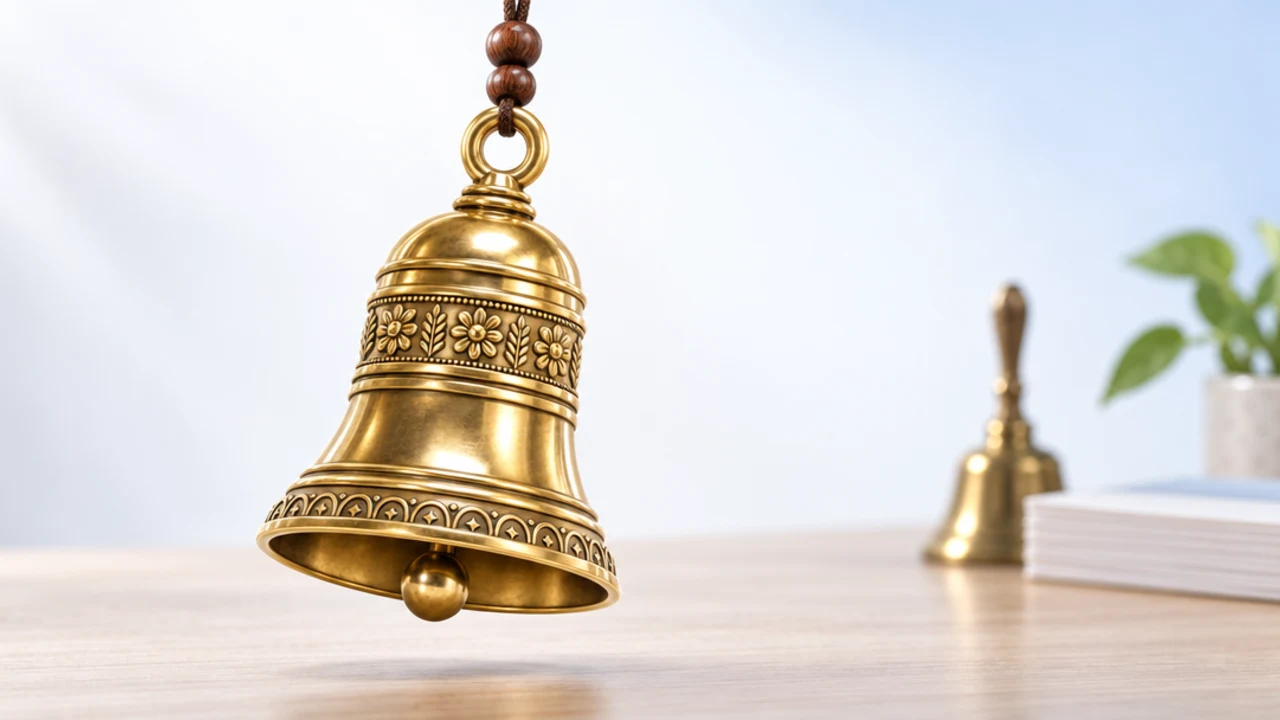
- Ring a small bell once and let it fade before you type.
- Play the same three-second sound as a start tone, nothing longer.
- Say the one word for today's task out loud, then begin.
Rituals that use movement
- Flick a charm on your screen and watch it settle.
- Roll your shoulders back twice and plant your feet.
- Turn a small object a quarter-turn, the way you might a ring.
Rituals that use the surface
- Clear the desk to bare wood, leaving only what this task needs.
- Set one card with the single next action face-up beside the keyboard.
- Close every tab that is not the task, in one sweep.
Rituals that use breath
- Three slow breaths, then hands to the keys on the fourth.
- One long exhale while you read the task title.
- Breathe in for four, out for six, once, then start.
| Cue type | Best for | Time |
|---|---|---|
| Sound | A hard, unmistakable start line | 2 to 5 sec |
| Movement | Restless energy that needs somewhere to go | 5 to 10 sec |
| Surface | A cluttered desk or a scattered mind | 15 to 30 sec |
The bell idea has a full piece in ring a bell before work, and the version tuned for deep concentration is in focus ritual.
How do you pick the right one for you?
Match the ritual to the problem you actually have, not to the one that looks nicest on a list.
If you struggle to start, choose a sound cue. A clear tone is a firm line that says now, and it cuts through hesitation better than a gentle gesture.
If you are wired and restless, choose movement. Giving the nervous energy a small job, a flick, a turn, a shoulder roll, settles the rest of you.
If your mind is cluttered, choose the surface. Clearing the desk clears a surprising amount of the mental noise with it.
Whatever you pick, decide the exact trigger moment in advance, laptop open, or coffee set down. A ritual with a fuzzy start time is a ritual you will forget.
Can a charm carry the ritual so you do not have to remember?
Yes, and it removes the one weak point in every ritual: memory. If the cue lives in something on your screen, the object does the remembering for you.
Book My Luck hangs a charm from the top edge of your Mac screen on a thin cord with real rope physics. It sways, reacts to your cursor, and can be grabbed and flicked, while everything under it clicks straight through so your work is never blocked.
For a pre-work ritual, the movement cue is built in: you flick the charm and watch it settle before you begin. You can also book a moment, so the charm comes forward on its own at the minute a task starts, then settles back. A ghanta, the Indian bell rung to mark a beginning, is a natural fit; you can ring it, or choose any of the twenty named charms, or an emoji you like.
A pre-work ritual steadies you and marks the start. It does not promise good work or good luck, just as a lucky pen writes nothing on its own. Keep your expectations honest and the habit does its real, modest job.
It lives in the menu bar with no Dock icon, no account, and no telemetry, so the ritual stays yours. If a one-time charm to carry your starting cue appeals, the pricing page has the plain numbers.
How do you stack a ritual onto an existing habit?
The most reliable way to keep a pre-work ritual is to bolt it onto something you already do without thinking. You are not building a new habit from nothing; you are hitching a small one to a strong one.
Find an anchor that already happens every work day, opening the laptop lid, setting down the first coffee, sitting in the chair. Then attach the ritual to the tail of it, so the anchor becomes the trigger. The old habit pulls the new one along until the new one can stand alone.
The wording that helps is "after I do X, I will do Y". After I open the laptop, I flick the charm. After I set down the coffee, I ring the bell once. The specificity is what makes it stick, because a vague "sometime in the morning" is a ritual that never quite happens.
Pick an anchor that only happens once, at the start. Tying the ritual to something you do many times a day, like checking your phone, blurs the signal until it means nothing.
Do pre-work rituals help outside of work?
They do, and the same rules carry over. A cue that marks the start of any focused activity, studying, practising an instrument, writing in a journal, works exactly the way a work cue does.
Students use them before revision, musicians before scales, runners before a warm-up. The activity changes but the shape of the ritual stays the same: one short, physical, consistent gesture that says the real thing is about to begin.
That portability is a quiet argument for keeping the ritual simple. A cue that depends on your desk cannot follow you to the library or the studio, while a flick, a breath, or a single word travels anywhere you need to start something.
What if none of them stick?
Then you are almost certainly making it too big. The failure mode is nearly always length, not choice of ritual.
Cut it in half, tie it to something you already do without thinking, and drop the pressure to do it perfectly. A wobbly two-second ritual done daily beats a polished one done twice. For goal-shaped rituals with a longer arc, daruma goal setting is a gentler on-ramp than a daily cue.
The other common trap is treating a missed day as a failure that ends the whole thing. It is not. A ritual is not a streak you can break; it is a habit you keep returning to, and picking it back up the next morning costs nothing. Judge it over a month, not a day, and the odd gap will not matter at all.
FAQ
What is a good pre-work ritual?
A good pre-work ritual is short, physical, and done the same way every time, like ringing a bell once, flicking a charm, or clearing your desk to bare wood. It should signal the start of focus without feeling like a task itself.
How long should a pre-work ritual take?
Under thirty seconds is ideal, and a few seconds is even better. The shorter it is, the more reliably you will do it on the days you most need it.
Do pre-work rituals really help focus?
They help by association: a consistent cue done before focus begins starts to summon that focus on its own. They also give restless energy somewhere to go, which settles nerves before a hard task.
What is the easiest pre-work ritual to keep up?
One tied to something you already do, such as flicking a charm the moment you open the laptop. When the cue rides on an existing habit, you rarely have to remember it separately.
Can a Mac app remind me to do my pre-work ritual?
Yes. Book My Luck lets you flick a charm on your screen or book a moment so it comes forward at the start of a task, then settles, with no account and no notification to clear.
Hang one for the moment that matters
Book My Luck hangs a real lucky charm from the top of your Mac screen. It sways, clicks through, and drops in on cue for the moments you book. One purchase, no subscription.
Get Book My Luck →