Book My Luck
A Ritual for Shipping Code Without Superstition
A ritual for shipping code is a short, fixed habit you run in the seconds before you push to production, so you slow down enough to think. It is not a good-luck spell; it is a way to move your full attention to the one action that can break things for real users.
Most advice on shipping talks about pipelines and rollbacks and forgets the human at the keyboard. The keyboard is where the mistake actually happens.
Why does a shipping ritual matter at all?
The dangerous deploys are rarely the hard ones. They are the routine ones you do half-awake, mid-conversation, at 6pm on a Friday when you just want to be done.
A ritual breaks that autopilot. It turns a reflex back into a deliberate decision, which is the whole difference between a considered push and a careless one.
Think of a surgeon scrubbing in or a pilot reading a pre-flight card aloud. The steps are partly practical and partly a way to arrive fully in the moment before the moment starts, so the body knows something real is about to happen.
Your version can be tiny. A breath, a glance at the diff, a spoken "shipping now" so your own ears confirm it before your finger does.
The research on habit is blunt about this. Attention is not free, and it does not arrive on time by itself; a ritual is how you summon your attention on demand rather than hoping it shows up.
The ritual does not make the code correct. It makes you present for the ten seconds when being present matters most.
What does a good ritual for shipping code look like?
The best ones are short enough to survive a busy week and specific enough that skipping them feels wrong. Anything longer than about thirty seconds gets dropped the first time you are in a hurry, and a ritual you skip under pressure is worse than none.
Here is a shape that works for a lot of engineers. Adapt the words to your own stack, but keep the bones.
# The 20-second pre-ship pass, said out loud
git status          # nothing stray staged
git diff --staged   # read it like a stranger wrote it
# 1. Is this the branch I think it is?
# 2. Who breaks if this is wrong?
# 3. Can I undo it in one command?
Notice what this is not. It is not a replacement for tests, review, or a staging check.
It is the last layer, the one between "the machine says it is fine" and "I am about to make it real for everyone." A wider deploy ritual covers the whole run-up; this is the sharp final second of it.
The three questions matter more than they look. The first catches the wrong-branch push, the most common self-inflicted outage. The second forces you to picture a real person on the other end. The third is a quiet insurance check: if you cannot answer it, you are not ready to press enter.
Say the three questions aloud. Speaking forces a different part of your brain online than silent skimming does, and it catches the "wrong branch" mistake more often than you would guess.
The ritual versus the superstition
There is a real line between a habit that steadies you and a belief that the habit controls the outcome. Staying on the right side of it keeps the ritual honest and keeps you from blaming a broken build on a skipped step.
The steadying habit
- What it does: gathers your attention, forces a last read, marks the transition.
- What you believe: the pause makes me more careful.
- When it fails: you notice, because the checklist itself flagged nothing new.
- Cost of skipping: you shipped on autopilot, which is the actual risk.
The superstition
- What it does: promises a clean deploy in exchange for a gesture.
- What you believe: the gesture protects the code.
- When it fails: you feel betrayed or double down on the gesture.
- Cost of skipping: none, really, though it may not feel that way.
The habit is worth keeping forever. The superstition quietly shifts responsibility away from the checklist, which is exactly where it belongs, so it is the one thing to guard against as your ritual grows familiar.
A useful test: if you would still run the ritual on a day you knew the deploy could not fail, it is a habit. If you only run it because you are scared, it has drifted toward superstition, and it is time to trim it back.
Can a charm be part of the ritual honestly?
Yes, as long as you are clear about what it does. A charm is a marker, not a mechanism, and used that way it can make the pause land more reliably than a mental note that you forget under pressure.
Here is the honest version. A lucky charm works the way a lucky pen or a pre-game stretch works: it marks the moment, steadies you, and gives you a small story to tell yourself. It does not change the diff.
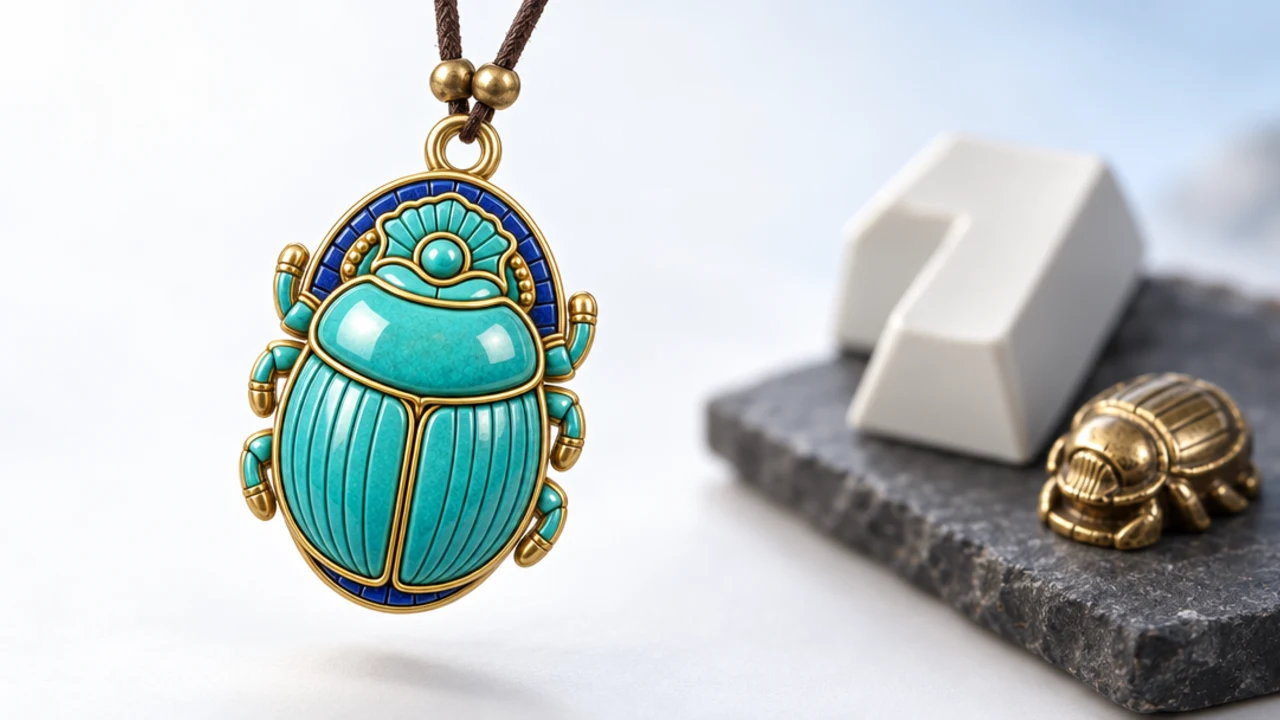
That is where a tool like Book My Luck fits for people who work at a Mac all day. It hangs a small charm from the top edge of your screen, and you can trigger it with a gesture or a hotkey so the charm comes forward the instant you are about to ship.
For a shipping ritual, a lot of engineers like the scarab, the Ancient Egyptian symbol of renewal and starting again. When you trigger it, the scarab spreads its wings, holds for a beat, and settles back, and that single held beat is the entire ritual.
You do not need an app to do this. A physical bell, a coin you flip, a keychain you touch all work just as well. The digital version only means the cue lives on the same screen where the deploy happens, so there is nothing to forget on your desk. If you want the cue tied to the machine itself, see how a git hook ritual can summon the charm on every push.
Never let the charm carry the weight of the safeguards. If the ritual ever starts to feel like protection rather than a pause, drop it for a week and lean back on your tests and reviews. The ritual should make you calmer, not more dependent.
Building your own in one sitting
You can define a shipping ritual in about five minutes, and it will outlast most of your tooling. Keep it to three parts so it stays memorable and hard to bloat.
| Part | The question it answers | Example |
|---|---|---|
| The cue | What starts it? | Hand moves to the deploy key |
| The act | What do I do? | Read the diff, say the three checks aloud |
| The close | How do I know it is done? | A flick of the charm, then press enter |
Write those three lines somewhere you will see them for the first week. After that they run on their own, the way tying your shoes does.
The cue is the part people get wrong. Pick something that already happens every single time you ship, so the ritual attaches to an event you cannot skip rather than to your memory. This is the same idea behind any desk ritual: anchor the new habit to an old, reliable one.
If you want the close to be a sound rather than a sight, a two-second chime works well and is hard to ignore. That is the whole idea behind choosing to ring a bell before work, moved to the moment of release, and it suits open-plan desks where a spoken line feels awkward.
Once the shape is set, resist the urge to add to it. A ritual grows heavy the moment it has four steps, and a heavy ritual gets skipped exactly when you are rushed, which is when you needed it. Keep it short enough to survive a bad week and it will still be with you a year from now.
Book My Luck is a one-time purchase, not a subscription, if you decide the on-screen version suits your setup; the pricing is a single payment for the Mac you install it on.
FAQ
What is a ritual for shipping code?
It is a short, fixed habit you run right before pushing to production, so your attention catches up with your hands. It usually includes a last read of the diff and a clear cue that says the moment has started.
Does a shipping ritual actually reduce bugs?
Indirectly. It does not change the code, but it interrupts autopilot deploys, which are where a lot of avoidable mistakes come from. The tests and reviews still do the real catching.
How long should the ritual take?
Under thirty seconds, ideally around ten. Anything longer gets dropped the first time you are in a hurry, and a ritual you skip is worse than none because it teaches you that skipping is fine.
Isn't a lucky charm just superstition?
Only if you believe it controls the outcome. Used as a marker for the moment, a charm is the same kind of tool as a pre-game stretch: it steadies you and gives the pause a shape, and it makes no promises about the build.
Can I automate the ritual so I never forget it?
Yes. You can tie the cue to the deploy command itself with a git hook, or trigger an on-screen charm from a script, so the moment announces itself instead of relying on memory.
What charm suits a deploy?
Many engineers pick the scarab for its meaning of renewal and starting again, since a deploy is a fresh beginning. Any charm works; choose the one whose story fits the moment for you.
Hang one for the moment that matters
Book My Luck hangs a rendered charm from your Mac or Windows screen, with rope physics and manual interaction. Check the current platform release and regional price before buying.
Get Book My Luck →