Book My Luck
How to Start a Focus Ritual at Your Desk
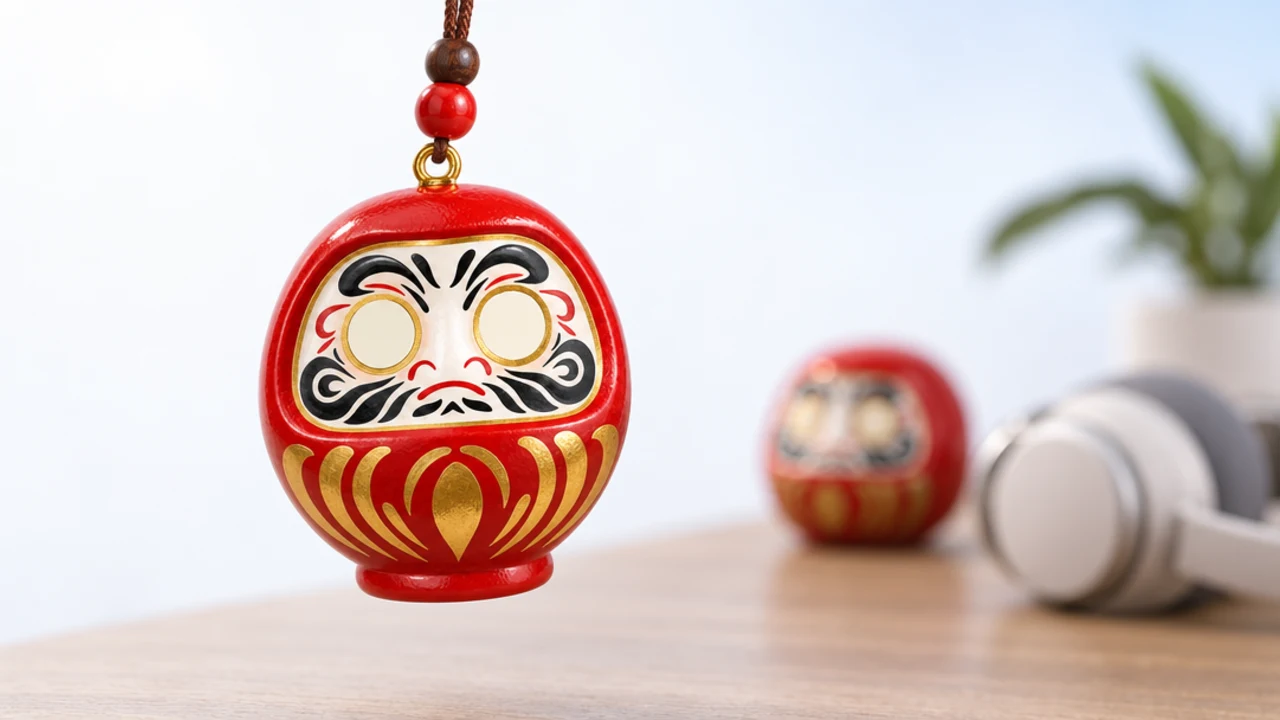
To start a focus ritual, pick one small physical cue, do it at the exact moment you begin deep work, and repeat it daily until the cue itself pulls you into focus. Within a couple of weeks the gesture stops being a reminder and becomes the on-switch.
Most advice on concentration is about removing distractions. A focus ritual works the other way: it gives your attention a clear place to gather, so it has somewhere to go once the noise is gone.
What is a focus ritual?
A focus ritual is a single, repeated action you perform right before deep work, tied so tightly to that work that it starts to trigger the state on its own. It is a narrower cousin of the broader desk ritual, aimed specifically at dropping into concentration.
The mechanism is association, the same one behind a musician's tuning note or a diver's pause on the board. Do the cue enough times before focus, and the cue begins to summon the focus.
What makes it a focus ritual, rather than a general starting one, is that it also clears the field. The gesture and the removal of distraction happen together, so the cue means one thing only: deep work starts now.
A focus ritual is a promise you make to your attention: after this cue, nothing else gets a vote for a while.
How do you start a focus ritual in three steps?
You do not need an elaborate system. Three steps, and most of the work is repetition.
Step one: choose one trigger moment. Decide the precise instant the ritual fires, headphones on, or the second the document opens. Same moment every time, no exceptions.
Step two: choose one action, and one only. Ring a bell, flick a charm, take three slow breaths, or turn a small object a quarter-turn. Pick a single gesture and commit to it.
Step three: repeat it daily for two weeks before judging it. The first days feel self-conscious. That fades, and the cue starts doing the pulling for you.
That is the whole build. The temptation is to stack five habits at once; resist it, because a stacked ritual dilutes the signal until it means nothing.
Do the ritual even on days you do not feel like focusing. Skipping it on hard days teaches your brain the cue is optional, which is exactly the lesson you do not want.
What separates a focus ritual from a plain habit?
A plain habit can be anything you repeat. A focus ritual has to do two jobs at once, and both matter.
The signal job
- What it is: the cue that says deep work begins now.
- How it works: through repetition, until the gesture triggers the state.
- Kept alive by: doing it the same way, every single time.
The guard job
- What it is: the act of clearing distractions in the same motion.
- How it works: by pairing the cue with closing tabs, silencing pings, or hiding clutter.
- Kept alive by: never letting the ritual coexist with a glance at your inbox.
A ritual that only signals but never guards will lose to the first notification. A ritual that only guards but never signals is just tidying. You want both, folded into one short action.
The Daruma doll captures this doubling neatly. You paint one eye when you set a goal and the other when it is met, so the object holds a beginning and an end at once, present the whole way through.
How do you protect the ritual once it works?
A working focus ritual is fragile in one specific way: it dies when the cue starts meaning more than one thing.
Keep it single-purpose. The moment your "start focus" gesture also becomes "check messages", the signal blurs and the state stops arriving. Guard the meaning ruthlessly.
Pair it with a real distraction cut, not a hoped-for one. Silence the phone, close the tabs, put the ritual and the removal in the same beat so they arrive together. The theory of why a paired cue lands harder is in anchoring habit cue.
A focus ritual steadies you and marks the start of deep work. It will not manufacture ideas or guarantee output, the way a lucky pen writes nothing by itself. What it reliably does is make beginning easier, and that is enough.
Can a charm on your screen be the focus cue?
Yes, and it solves the ritual's one weakness, which is remembering to perform it. When the cue lives in something visible, the object prompts you rather than the other way round.
Book My Luck hangs a charm from the top edge of your Mac screen on a thin cord with real rope physics. It sways, reacts to your cursor, and can be grabbed and flicked, and everything under it clicks straight through, so it never blocks the work you are trying to focus on.
How does a focus ritual fit with time-blocking?
A focus ritual and a timed work block are natural partners. The block decides when you focus; the ritual handles the crossing into focus, which is the part most people fumble.
Set a block, say fifty minutes, and let the ritual be the doorway at the front of it. You ring the bell or flick the charm, the timer starts, and the cue and the clock start together, so there is no soft, uncertain lead-in where you drift back to email.
The ritual can bookend the block too. A second, quieter gesture at the end, closing the laptop lid, marking the charm, tells your brain the deep stretch is over and it is allowed to relax. A block with a clear start and a clear stop is far easier to repeat than an open-ended slog, because a defined edge is what the mind will come back for.
Do the ritual before you start the timer, not after. A cue that fires while the clock is already running teaches your brain the two are unrelated, which slowly drains the ritual of its meaning.
What if the ritual stops working after a while?
Usually it has quietly picked up a second meaning, or you have started skipping it on hard days. Both blur the signal.
Strip it back to one action and one moment, and do it for a week without exception, including the days you resent it. If it still does not land, swap the single action for one other, rather than adding more. The fix is almost always subtraction.
It is also worth checking whether the block itself has grown too long. A ritual can only carry you across the threshold; it cannot hold you in a two-hour stretch of grinding focus that your attention was never going to survive. Shorten the block, keep the ritual, and the cue starts working again because there is something achievable on the other side of it.
How do I start a focus ritual?
Choose one small physical cue, perform it at the exact moment you begin deep work, and repeat it daily for about two weeks. The cue will gradually stop being a reminder and start pulling you into focus on its own.
How long before a focus ritual works?
Most people feel the shift within two weeks of daily repetition. Consistency matters far more than the length or cleverness of the ritual, so doing a dull cue every day beats a fancy one done occasionally.
What is the difference between a focus ritual and a desk ritual?
A desk ritual is any starting cue for work, while a focus ritual is the narrower version aimed at deep, distraction-free concentration. A focus ritual also clears distractions in the same motion, so the cue means only one thing.
Can a focus ritual really improve concentration?
It helps you start and settle by association, and it guards attention by pairing the cue with cutting distractions. It will not create ideas or guarantee output, but it reliably makes dropping into deep work easier.
Book My Luck today
Book My Luck is a desktop decoration for macOS 14+ and Windows 10/11. The desktop outside the charm remains clickable. The current Mac and Windows downloads are version 1.0.32, signed by KAK DIGITAL LLC. On Mac, Charm Centre controls size, cord length, placement, displays and motion. Collections and controls can differ between Mac and Windows.
There is no calendar integration, booked-moment scheduler or native-app free trial. Explore the website demo and regional pricing. One key activates one computer at a time; activation and license refresh require internet. Preferences are local, but purchasing, activation and website analytics use online services described in the privacy policy.
Hang one for the moment that matters
Book My Luck hangs a rendered charm from your Mac or Windows screen, with rope physics and manual interaction. Check the current platform release and regional price before buying.
Get Book My Luck →