Book My Luck
Lucky Charms List: Symbols and Their Traditions
This list introduces symbols represented in the website collection. Their meanings are traditional associations, not claims that an object can change an outcome. Availability in the desktop app depends on the platform and release.
Most charm lists blur the origins together or invent tidy meanings. This one keeps each charm to its real home and its real custom, because the story is the part that actually helps.
What makes something a lucky charm?
A lucky charm is an object a culture has long agreed carries good fortune or protection. The agreement is what matters, not any hidden power in the object itself.
Charms tend to do one of three jobs. Some guard against harm, some invite fortune, and some steady your nerve before a hard moment.
Knowing which job you want makes the choice easy. You are not looking for the "most powerful" charm; you are looking for the one whose meaning matches your day.
A charm is not a promise. It works like a lucky pen or a pre-game routine: it marks the moment, settles you, and gives you a story to hold. Any real outcome is still yours to earn.
Symbols in the collection
These are brief associations; customs vary across communities and should not be treated as universal rules.
| Charm | Where it is from | What it means |
|---|---|---|
| Nazar boncuğu | Turkey and the Mediterranean | Blue glass evil eye that reflects an envious glance |
| Hamsa | Middle East and North Africa | An open hand that blocks and turns away harm |
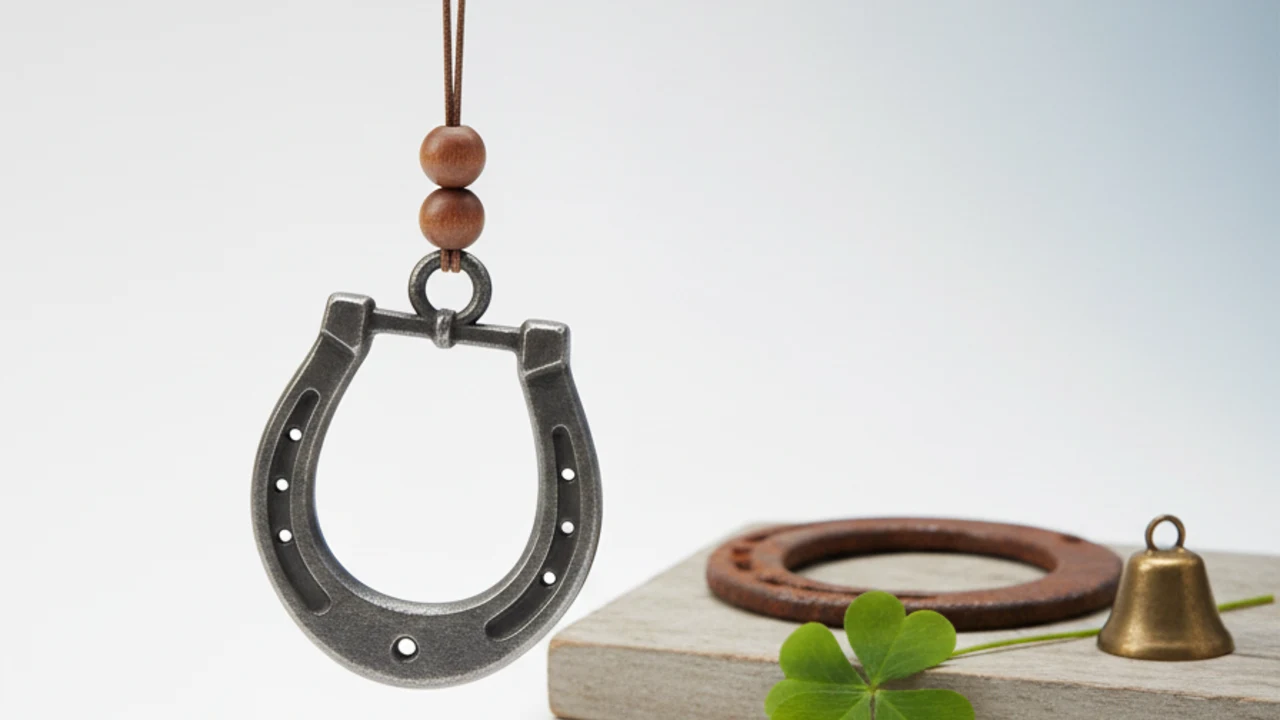
| Horseshoe | Europe and the Americas | Iron luck, hung points up to hold fortune in |
| Four-leaf clover | Ireland | A rare find, one leaf each for hope, faith, love, luck |
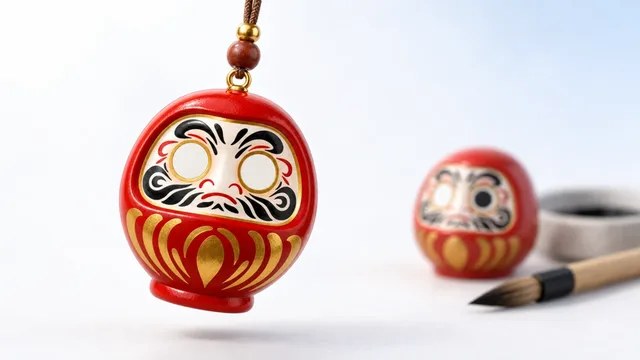
| Daruma | Japan | A goal doll; paint one eye on the wish, the other when it comes true |
| Maneki-neko | Japan | The beckoning cat whose raised paw invites fortune |
| Drishti bommai | South India | A guardian face that absorbs the harsh gaze |
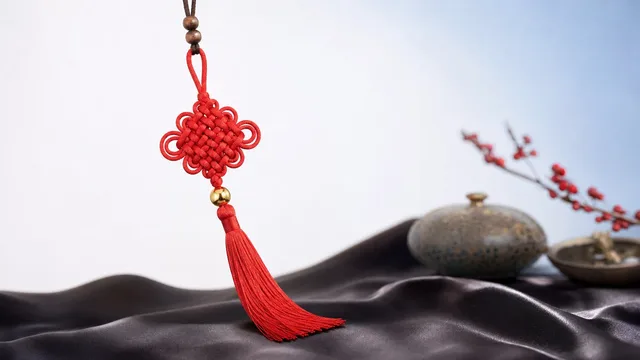
| Pánchāng jié | China | The endless knot, luck without beginning or end |
| Elephant | India and Southeast Asia | Wisdom and strength, luckiest with the trunk up |
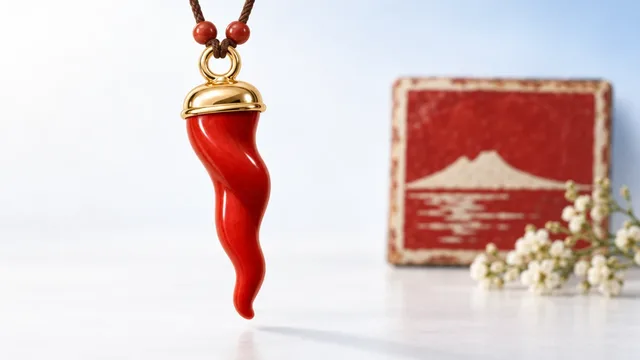
| Cornicello | Naples | A red horn against the malocchio, the envious eye |
| Nimbu-mirchi | India | Seven chilies and a lemon hung to keep trouble out |
| Ghanta | India | A bell rung to mark a clean beginning |
| Scarab | Ancient Egypt | The beetle of renewal and the rising sun |
| Himmeli | Finland | A straw mobile tied to light and a good harvest |
| Om | India | The first sound, cast in brass, a settling hum |
| Dreamcatcher | Ojibwe, North America | A web that sorts the night's dreams |
| Lucky bamboo | China | Green stalks whose number carries the wish |
| Ladybug | Europe | A landing counted as a small piece of good luck |
| Murugan | Tamil Nadu | The vel and peacock, courage before a climb |
| Karuppu | Tamil Nadu, South India | Inspired by Karuppaswamy, associated with guardianship in Tamil traditions |
| Peacock | India | Beauty, good news and divine favour |
Plus one more that is not on any old list: any emoji you like, treated as a charm of your own choosing.
Which charms are for protection?
Several on the list exist mainly to guard. If your worry is envy, an "eye" on your work, or a threshold you want to keep safe, start here.
The nazar and the cornicello both answer the envious stare, one with a reflecting bead and one with a red horn. The hamsa raises a hand, and the drishti bommai wears a face that soaks up the glance before it reaches what you value.
At Indian doorways the nimbu-mirchi does the same job with a lemon and seven chilies. Protection charms all share one instinct: put a guardian between you and harm.
The whole family, including how "the eye" travelled so far, is set out in the evil eye meaning.
For a new home or new project, a protection charm at the entrance fits the tradition best. It is the threshold you are guarding, not the room.
Which charms invite fortune or good news?
A second group is about welcoming good things in. These suit new ventures, shops, launches and any hopeful start.
The maneki-neko beckons with its raised paw, and the endless knot ties luck into a loop with no end. The horseshoe holds fortune when hung points up, the scarab carries renewal, and lucky bamboo grows the wish in green.
The clover and the ladybug are the gentle, everyday members of this group. A found clover or a landed ladybug is luck you stumble on rather than luck you summon.
If you want the number rule behind the bamboo, the wider lucky charm meanings around the world covers how stalk counts carry different wishes.
Which charms are for courage and focus?
The third group works on you rather than on the world. These are for the moment before you begin.
The Murugan vel is nerve sharpened to a point, and the peacock is confidence you can see. The ghanta clears the air with a single ring, the Om settles the mind with a hum, and the daruma turns a goal into a promise you paint into being.
The daruma is the clearest example of a charm that is really a habit. You paint one eye when you set the goal and the other when you reach it, so the doll keeps the goal in sight.
The full custom, which is genuinely useful for makers, is in the daruma doll meaning.
The dreamcatcher and the himmeli sit a little apart. The dreamcatcher, from the Ojibwe people, is about the night rather than the day, and the himmeli is a Finnish straw mobile tied to light and harvest. Both deserve to be named with respect for the cultures that made them.
How do you pick one from the list?
Match the charm to the moment, not to a ranking. Work down the lucky charms list and decide first whether you want protection, fortune, or courage, then choose the one whose story you like best.
The horseshoe is a fine default, which is partly why it shows up everywhere. If you are unsure how to hang it, the horseshoe points up or down debate is a small but real one worth settling.
Once you have a charm you like, the last question is where it lives. A physical charm goes on a wall or a keyring; a digital one can hang on your screen where the moment actually happens. In Book My Luck all twenty of these are named charms on a Mac, plus any emoji you want to add, each with its own short ritual.
Keep it light and keep it honest. The right charm is simply the one whose meaning steadies you before the thing you have to do.
Do these charms come from real traditions?
Every named charm on this list has a genuine home, which is the whole point of keeping the origins honest. The nazar belongs to the Mediterranean and the Middle East, the daruma and maneki-neko to Japan, the dreamcatcher to the Ojibwe people, and so on.
That matters because a made-up meaning helps no one. A charm works partly because a real culture has trusted it for a long time, and that trust is what you are borrowing.
It also asks something of you. Using a living tradition means naming it correctly and never treating it as a costume, especially charms tied to specific peoples and faiths.
Where a precise date or story is uncertain, it is better to say what is commonly held than to invent detail. Many of these customs are older than any written record of them, and that antiquity is part of their appeal.
A few charms here belong to specific communities, such as the dreamcatcher and the drishti bommai. Keep those especially close to their real meaning rather than flattening them into generic "good luck."
How do you keep a charm from becoming a superstition?
The healthy version of a charm is a cue, not a rule. It should help you begin something calmly, not become a thing you cannot begin without.
A simple test is whether you could sit the exam, give the talk or make the move if you forgot the charm at home. If the honest answer is no, the charm has drifted from comfort into crutch.
Keep it light and it stays useful. A charm is a friend who walks you to the door, not a lock on the door.
The same modesty is why none of these can promise an outcome. They steady the person; the person still does the work, and that is exactly how it should be.
What is the most popular lucky charm?
Popularity varies by place, but the horseshoe, the four-leaf clover and the evil eye bead are among the most widely recognised worldwide. The "best" one is the charm whose meaning matches your moment, not the most famous.
Which lucky charm is best for protection?
For guarding against envy or harm, the nazar bead, the hamsa, the cornicello and the drishti bommai are the classic protective charms. At a doorway, the Indian nimbu-mirchi does the same job.
Which charm is good for setting a goal?
The Japanese daruma doll is made for exactly that. You paint one eye when you set a goal and the other when you achieve it, keeping the goal visible the whole way through.
Are lucky charms from different cultures interchangeable?
Their meanings differ, so treat each with respect for where it comes from rather than swapping them freely. Choose one whose story you understand and honour, and never use a living tradition as mere decoration.
Do lucky charms really work?
They work as rituals rather than guarantees. A charm steadies your nerves and marks a moment, much like a warm-up before a match. The calm and focus are real; the outcome is still yours to earn.
Book My Luck today
Book My Luck is a desktop decoration for macOS 14+ and Windows 10/11. The desktop outside the charm remains clickable. The current Mac and Windows downloads are version 1.0.32, signed by KAK DIGITAL LLC. On Mac, Charm Centre controls size, cord length, placement, displays and motion. Collections and controls can differ between Mac and Windows.
There is no calendar integration, booked-moment scheduler or native-app free trial. Explore the website demo and regional pricing. One key activates one computer at a time; activation and license refresh require internet. Preferences are local, but purchasing, activation and website analytics use online services described in the privacy policy.
Hang one for the moment that matters
Book My Luck hangs a rendered charm from your Mac or Windows screen, with rope physics and manual interaction. Check the current platform release and regional price before buying.
Get Book My Luck →