Book My Luck
Maneki-neko Meaning: Which Paw Is Raised and Why
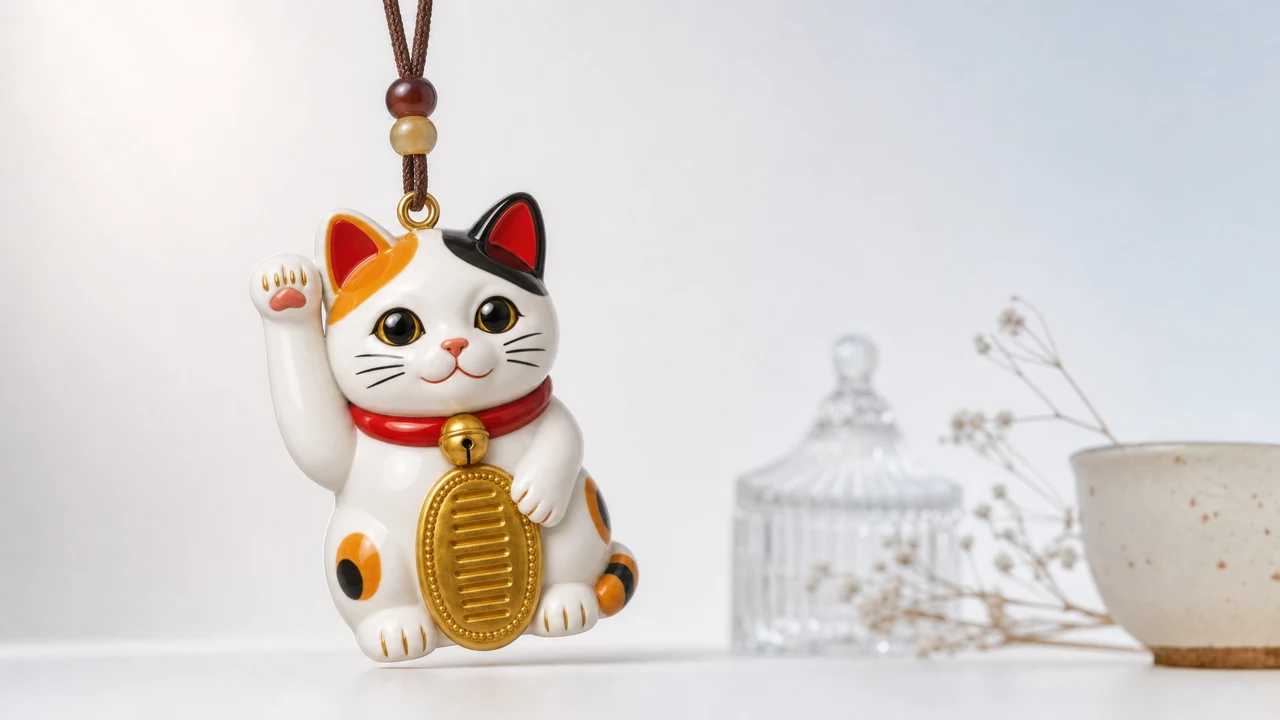
The maneki-neko meaning is a beckoning cat that waves good fortune toward you, and the raised paw is a genuine invitation rather than a wave goodbye. A left paw is commonly linked to drawing in people and customers, while a right paw is linked to drawing in money and luck.
Most visitors read the raised paw as the cat saying farewell. In Japan the gesture is the opposite, a "come here" beckon, which flips the whole meaning.
What is the maneki-neko meaning?
Maneki-neko translates roughly as "beckoning cat," from the verb to beckon and the word for cat. The classic figure is a seated cat with one paw raised at ear height.
The gesture is the point. That raised paw is a Japanese beckoning motion, palm down, which invites good fortune, people, or money to come closer.
You see them most at the entrances of shops and restaurants, often near the register. The cat is welcoming you in and, by extension, welcoming prosperity to the business.
The raised paw is not a goodbye wave. It is a Japanese "come here" beckon, so the maneki-neko is inviting fortune toward you.
Left paw or right paw: what changes?
This is the question people actually ask, so here is the plain version. The raised paw shifts what the cat is inviting.
Left paw raised
- Invites: people and customers.
- Best for: shops, cafes, and social spaces.
- Feel: "come in, everyone is welcome."
Right paw raised
- Invites: money and general good luck.
- Best for: a home, a desk, a place of saving.
- Feel: "may fortune find its way here."
Both are traditional, and some cats raise both paws for both. The left draws people, the right draws money, which is the most widely held reading.
There is variation by region and maker, so treat this as the common convention rather than an ironclad rule. If a shop wants footfall, the left paw is the usual pick.
Choosing for a business? Left paw for customers, right paw for takings. For a home desk, a right paw suits a wish for general good fortune.
What do the colors and details mean?
Color adds a second layer. The classic calico, white with orange and black patches, is considered the luckiest, tying back to prized real-life calico cats.
Other colors carry their own wishes in popular use, such as white for purity, black for warding off harm, and gold for wealth. These are folk associations rather than fixed doctrine, so readings vary.
The cat often holds a koban, an old oval coin, which reinforces the wish for prosperity. A bib, bell, and collar echo the look of a well-kept, valued cat.
Maneki-neko or daruma: which should you keep?
Both are Japanese good-luck figures, so people weigh them together. They do different jobs.
Maneki-neko
- Job: beckon fortune, people, or money.
- Ritual: the raised paw waves.
- Feel: an ongoing, friendly welcome.
Daruma
- Job: hold a single goal until met.
- Ritual: paint one eye, then the other.
- Feel: a patient, watching promise.
If you want a general welcome of good fortune, the cat fits. If you have one specific goal, the daruma doll meaning guide explains the eye-painting ritual.
Does the lucky cat actually bring fortune?
Here is the honest answer. It is a charm, not a promise, and a waving paw will not fill a shop or a bank account on its own.
Its value is human and warm. A maneki-neko makes a space feel welcoming, sets a friendly tone at a threshold, and gives owners and visitors a small shared good wish.
That warmth is real, even though the cat does nothing to the numbers. It is closer to a friendly host than to a force that bends luck.
The tradition is Japanese, with several origin legends about a cat that beckoned someone to safety or fortune. Those tales vary, so it is fairer to say the cat has more than one origin story than to state a single date.
It is a charm, not a promise. Never treat a maneki-neko as a guarantee of money or success. Its worth is in the welcome it creates.
The lucky cat on your screen
The beckoning cat has moved from the counter to the desktop. A lucky charm app for Mac can hang a maneki-neko from the top of your screen, on a cord with real rope physics, so it sways and reacts to your cursor.
The ritual carries over. With Book My Luck the raised paw waves, keeping the friendly beckon in view while you work.
You can see how that works and what it costs on the pricing page. For where the cat sits among charms worldwide, the lucky charm meanings around the world guide lines them up with care.
What do the coin, bell, and bib mean?
Look at a maneki-neko and you will spot several small details, each with its own reading. The oval object in one paw is a koban, an old gold coin, which reinforces the wish for prosperity.
The bell and collar echo the look of a pampered, well-kept cat. In old Japan a cat with a bell and a fine collar signaled a valued household pet, so the details add a sense of comfort and care.
The bib is thought to trace back to the same idea of a cherished animal. Together, the coin, bell, and bib turn the figure into a picture of a lucky, well-loved cat rather than a stray.
None of these are strict requirements, and versions vary widely by maker. What stays constant is the raised paw, which is always the working gesture that beckons fortune in.
If prosperity is your specific wish, choose a cat holding a koban with a right paw raised. The coin and the paw point in the same direction.
Where do the origin stories come from?
The maneki-neko has more than one legend behind it, which is part of its charm. Several tales describe a cat that beckoned a person out of danger or toward good fortune, and the figure grew from those stories.
Because the legends vary and the exact origin is hard to pin down, it is fairer to say the cat has a cluster of origin tales than to name a single source. What they share is a cat whose gesture led to a lucky turn.
Over time the beckoning cat spread from Japan across much of Asia and beyond. Today it is one of the most recognized good-luck figures anywhere, which speaks to how warmly the gesture reads.
Why the cat suits social moments
The maneki-neko is about welcome, which makes it a natural companion before anything social. A sales call, an interview, a first meeting.
Glancing at a beckoning cat before you open a conversation is a way to set a friendly frame. It reminds you that the goal is to invite, not to impress.
Shopkeepers have understood this for generations. A cat by the register is partly a wish for good business and partly a warm signal to whoever walks in, which is a nice thing to borrow for a call.
You can carry the same idea into a video meeting. A lucky cat in the corner of your screen is a small, private cue to lead with warmth before you get to the hard part.
That is the honest appeal of the maneki-neko. It does not change who says yes, but it can change the tone you bring to asking.
What does the maneki-neko mean?
It means "beckoning cat," a figure that waves good fortune, people, or money toward you. The raised paw is a Japanese "come here" gesture, so the cat is inviting luck closer.
Does the left or right paw mean money?
The right raised paw is commonly linked to money and general good luck, while the left is linked to inviting people and customers. Both are traditional, and some cats raise both.
Why is the maneki-neko waving?
It is not waving goodbye. The palm-down raised paw is a Japanese beckoning motion, so the cat is inviting fortune toward the space it sits in.
What do maneki-neko colors mean?
The calico is considered the luckiest, with white read as purity, black as warding off harm, and gold as wealth. These are popular folk associations rather than fixed rules.
Where should I put a lucky cat?
Traditionally near an entrance or a register, facing the door to welcome fortune in. At home, a desk or shelf where you will see it works well.
Does a maneki-neko actually bring luck?
It is a charm, not a promise. It makes a space feel welcoming and sets a friendly tone, and it never claims to change money or outcomes you cannot control.
Book My Luck today
Book My Luck is a desktop decoration for macOS 14+ and Windows 10/11. The desktop outside the charm remains clickable. The current Mac and Windows downloads are version 1.0.32, signed by KAK DIGITAL LLC. On Mac, Charm Centre controls size, cord length, placement, displays and motion. Collections and controls can differ between Mac and Windows.
There is no calendar integration, booked-moment scheduler or native-app free trial. Explore the website demo and regional pricing. One key activates one computer at a time; activation and license refresh require internet. Preferences are local, but purchasing, activation and website analytics use online services described in the privacy policy.
Hang one for the moment that matters
Book My Luck hangs a rendered charm from your Mac or Windows screen, with rope physics and manual interaction. Check the current platform release and regional price before buying.
Get Book My Luck →