Book My Luck
Good Luck Rituals Before an Exam That Calm Nerves
Good luck rituals before exam day calm nerves by giving your fear a small, fixed routine to follow instead of spiraling. The ones that work are simple and physical: a steady night before, a calm walk in, and a clear signal in the first thirty seconds at your desk.
Most exam advice is about studying harder, which matters but comes too late on the morning itself. The gap it leaves is what to do with your body and your breath in the hours when the knowing is already done.
Why do good luck rituals before exam day calm nerves?
Nerves are your body preparing for a threat, and a blank exam hall reads as a threat. Left alone, that alarm narrows your thinking and hides facts you actually know.
A ritual gives the alarm somewhere to go. When you repeat the same small actions, your brain reads the pattern as safety and lets the panic settle.
This is why athletes bounce the ball the same number of times before a serve. The routine is not superstition; it is a switch that tells your nervous system the moment is under control.
A ritual is not a promise. It cannot add knowledge or change the paper. It can stop nerves from stealing the knowledge you spent weeks building.
The night before: set the stage
Good luck rituals before exam day start the evening before, not at the gate. The night's job is to protect your sleep and lower the noise.
Lay out everything you need for the morning so nothing is a decision at 7am. Pen, ID, water, the room number, the clothes: all ready, all visible.
Then stop revising at a fixed time and do something dull and calm. Cramming past your cut-off trades a little knowledge for a lot of sleep, which is a bad trade.
Pack a "lucky" item you have used all through revision, like a trusted pen. Familiar objects in your bag make the strange room feel a little more like your desk at home.
The walk in: breathe on a count
The walk to the hall is where nerves usually peak. Give them a job so they cannot run loose.
Breathe on a slow count: in for four, hold for four, out for six. The long out-breath is the part that actually calms you, so let it be the longest.
Do this for the last two or three minutes before you go in. Pair it with one plain sentence you repeat, such as "I have done the work, now I just show it."
If you want the mechanics of why a single repeated signal settles the mind, ring a bell before work explains the two-second reset in more detail.
The first thirty seconds: a clear "begin"
When the paper lands, resist the urge to write immediately. The first thirty seconds are a ritual of their own.
Read the instructions, take one slow breath, and let your eyes scan the whole paper before your pen moves. This tells your brain the shape of the task and stops the panic of the first hard question.
Then start with a question you can definitely answer, not the first one on the page. An early win convinces your nerves the exam is survivable, and everything after gets easier.
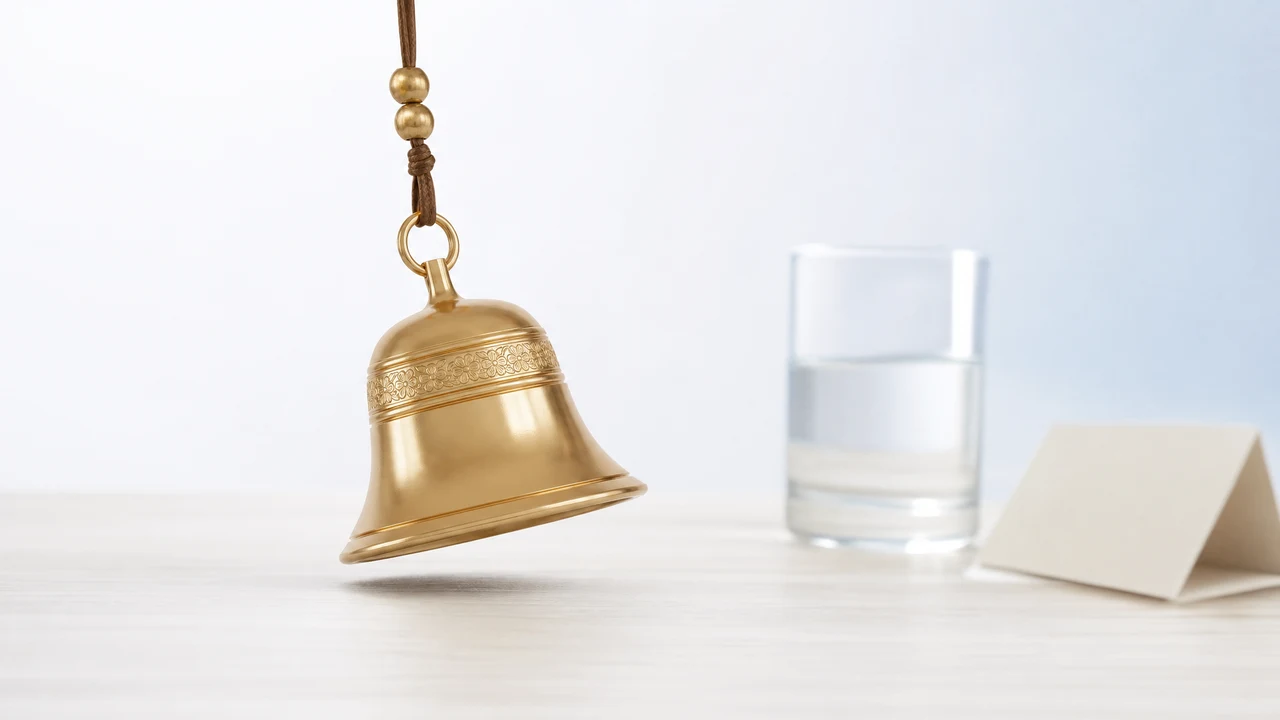
Ringing something, literally or in your head, is an old and lovely way to mark a beginning. The ghanta bell meaning explains why a single note has cleared the air before important starts for a very long time.
A simple pre-exam sequence you can copy
If you want one routine to follow, here it is as three short stages. Adjust the timings to suit you, but keep the order.
The night before
- Do: pack your bag fully, set a hard stop on revision, sleep
- Skip: last-minute cramming and new material
- Cue: put your lucky pen in the bag as the final act
The last few minutes
- Do: breathe in four, hold four, out six, and repeat your one sentence
- Skip: comparing notes with panicking friends at the door
- Cue: touch your charm or token as the signal to walk in
The desk
- Do: read all instructions, breathe once, scan the whole paper
- Skip: writing before you have read
- Cue: start with a question you know cold
Used together, this is really a desk ritual shaped for one high-pressure hour. The same anchoring that helps you focus on a normal work day helps even more when the stakes are high.
Can a charm be part of the ritual?
Yes, and it often makes the sequence easier to keep. A charm gives the routine a fixed object to hang on, which is exactly why a lucky charm for exams is so common among students.
The charm's only role is to be the "start now" signal. Touch it, breathe, begin: the object carries the meaning you have practised into the room.
For students who revise and sit mocks on a Mac, this can live on the screen. In Book My Luck you can book a charm to come forward at the minute your exam begins, so the "begin" cue arrives on time and then settles quietly out of your way.
Hold all of it lightly. The rituals steady the student; the student writes the paper, and a calm one writes a better one than a scared one ever could.
What rituals should you avoid before an exam?
Not every habit helps, and some make things worse. The rituals to drop are the ones that feed anxiety instead of settling it.
Comparing answers and predictions with panicking classmates at the door is the classic mistake. Their fear is contagious, and a last-minute "did you revise this?" can undo an hour of calm in seconds.
Heavy caffeine is another trap. A little is fine, but too much turns steady nerves into a jittery heart and a racing mind, which is the opposite of what you want.
New material on the morning is the third. Learning something fresh in the final hour mostly teaches your brain how much you do not know, which is a cruel thing to do to yourself before a test.
If a ritual only works when it goes perfectly, it is too fragile. A good pre-exam habit should still calm you if the bus is late, the pen runs out, or the room is cold. Build in slack.
How do you keep the ritual working over a whole exam season?
A single exam is easy; a month of them is where routines break down. The key is to keep the ritual short enough to survive fatigue.
Use the same sequence for every paper, even the ones you feel calm about. Consistency is what keeps the cue strong, and skipping it on "easy" days weakens it for the hard ones.
Between exams, protect your recovery as much as your revision. A season is a series of sprints, not one long grind, and the calm ritual only holds if you are not running on empty.
If one exam goes badly, run the exact same ritual for the next. The routine is a reset button, and its whole value is that it does not care how the last paper went.
That steadiness across days is the real prize. A student who keeps the same calm habit through a whole season arrives at the last exam as settled as they were at the first.
FAQ
What is a good ritual to do right before an exam?
Breathe slowly with a long out-breath for a couple of minutes, repeat one calm sentence, and touch a familiar object as your signal to begin. Then read all the instructions before you write a single word.
How can I calm my nerves before an exam quickly?
Slow your breathing with a four-in, six-out count, since the long exhale is what triggers calm. Combine it with a fixed phrase and a familiar item. A minute or two of this can noticeably lower the panic.
Do pre-exam rituals actually improve results?
They improve results indirectly by reducing anxiety, which lets you recall more of what you studied. They add no knowledge, but a calmer mind performs closer to its real ability, so the effect on marks is real if modest.
Should I study on the morning of the exam?
A light review of summaries can help you feel warmed up, but avoid new material and heavy cramming. Protecting your calm and your sleep usually helps more than a few extra facts learned in a panic.
What should I do in the first minute of the exam?
Read the instructions carefully, take one slow breath, and scan the whole paper before writing. Start with a question you are confident about, so an early success settles your nerves for the rest.
Is it superstitious to use a lucky charm for an exam?
Only if you treat it as magic. Used as a cue, a charm is a practical tool for calm, like an athlete's routine. A charm is not a promise, but the steadiness it brings is genuinely useful.
Hang one for the moment that matters
Book My Luck hangs a real lucky charm from the top of your Mac screen. It sways, clicks through, and drops in on cue for the moments you book. One purchase, no subscription.
Get Book My Luck →