Book My Luck
Ghanta Bell Meaning: Why a Bell Marks a Start
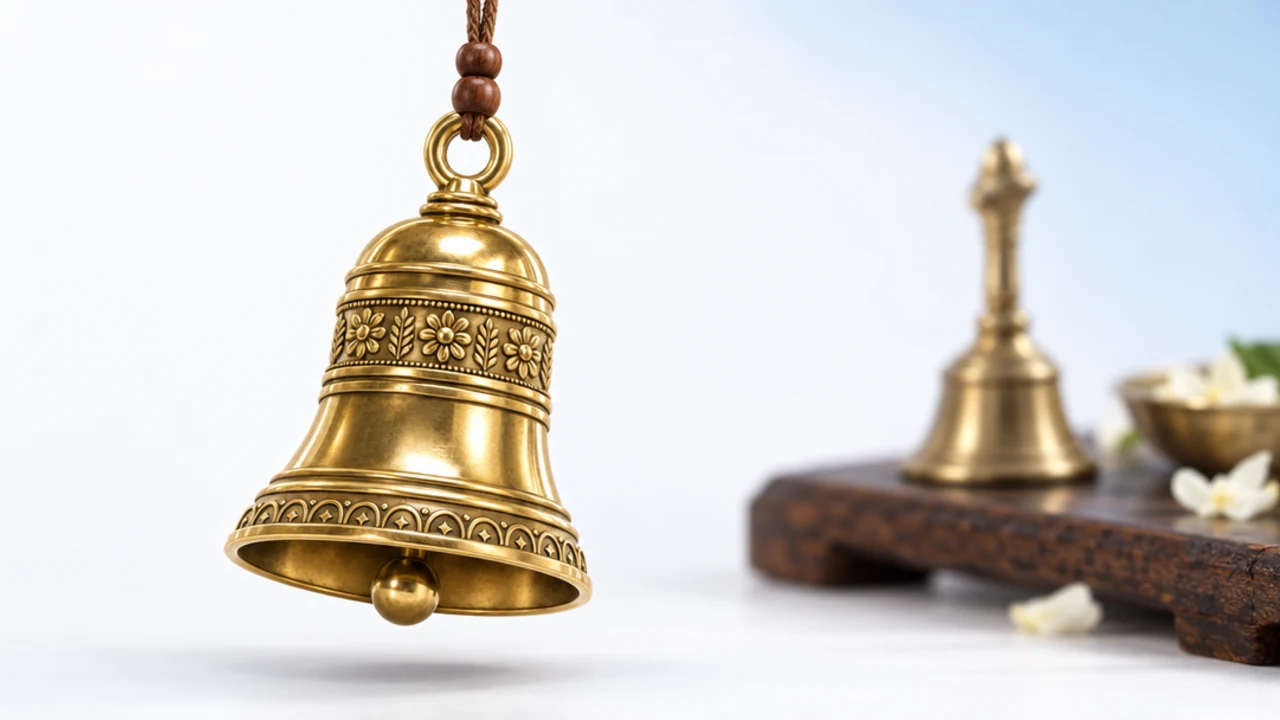
The ghanta bell meaning is the sound of beginning: it is a ritual bell rung to open worship, call attention to the moment and clear the mind of noise. The ghanta bell meaning is less about luck than about a clean start, which is why the bell is rung first, before anything else happens.
Most people hear a temple bell as pretty background sound. The tradition treats it as a deliberate line drawn between before and after.
What is a ghanta?
A ghanta is a hand bell used in Hindu and Buddhist ritual, cast in brass or bronze, with a handle on top and a clapper inside. It is one of the oldest and most widespread tools of worship in India.
The handle is often shaped, sometimes topped with a small figure such as Garuda or Nandi depending on the tradition and the deity honoured. A cast brass bell of this kind is a fixture in temples and home shrines alike.
You ring it by hand, usually a short, clear peal rather than a long clang. The point is the moment the sound begins, not how long it rings.
Why is the bell rung at the start?
In a puja, the ghanta is typically the first thing sounded. Ringing it is understood as inviting the presence of the divine and asking for attention, both the worshipper's own and that of whatever is being honoured.
There is a second, very human function. The clear tone cuts across whatever chatter was in the room and in your head, and it resets the space to quiet.
A clean start is really what the bell delivers. The sound says: the ordinary is paused, and something deliberate is about to begin.
Many people also ring a temple bell as they enter, before stepping toward the shrine. That, too, is a threshold act, a way of leaving the street behind.
Details vary by tradition and region, so treat this as the common understanding rather than one fixed rule. What is consistent across versions is the timing: the bell opens the moment.
What does the sound of the bell mean?
The tone of the ghanta is often connected to Om, described in Indian thought as the primordial sound from which the universe unfolds. The lingering hum after the strike is sometimes heard as a small echo of that sound.
If that idea interests you, the om symbol meaning guide explains the sound and the symbol in fuller detail. The bell and the syllable are close relatives, both pointing at sound as a beginning.
There is also a practical, meditative reading. The bell gives the mind one clear thing to rest on for a second, which is exactly what a person needs before they start something that matters.
You do not need a shrine to use the idea. Ringing any small bell, or even tapping a glass, before you sit down to focus works as a cue: this is where the real work starts. A desk ritual built on a single clear sound is one of the easiest to keep.
A bell, a chime, a charm: what marks a beginning?
Cultures reach for different objects to mark a start, but the instinct is shared. Here are three ways people draw the line between idle and ready.
The ghanta
- What it is: a brass ritual bell, rung by hand
- When: at the opening of worship, or on entering a temple
- What it marks: the shift from ordinary time into deliberate time
The workday chime
- What it is: any small sound you make on purpose before focusing
- When: at your desk, before deep work
- What it marks: the boundary of a focus session
The screen charm
- What it is: a charm hung from the top of your Mac that comes forward at a set minute
- When: the moment you booked, like an exam or a deploy
- What it marks: the start of a moment you decided in advance mattered
All three do the same job, which is to make a beginning feel like a beginning. The ring a bell before work idea is the plainest version, and the ghanta is its oldest ancestor.
Why does a bell work so well as a cue?
There is a plain, human reason the bell has lasted thousands of years, beyond any belief attached to it. Sound reaches you instantly and completely, in a way a sight or a note on paper does not.
A bell cuts through whatever you were thinking and lands in the present moment. Sound lands at once is the whole trick, and it is why bells open everything from worship to school days to boxing rounds.
There is also the matter of the body. A clear tone tends to make people pause and take a breath, and that small reset is exactly what you want before a demanding task.
A cue only works if it stays special. If you ring a bell for every tiny thing, it stops meaning anything, so save it for the moments you genuinely want to mark. Scarcity is what keeps the signal sharp.
Used sparingly, a single sound before an important task becomes a reliable switch. Your mind learns that the tone means focus, and over time it flips almost on its own.
Bringing the bell to a working day
A brass ghanta belongs to a shrine, and that is where it should stay. But the thing it does, marking a start, is exactly what a person needs at a desk before a hard task.
This is the idea behind Book My Luck, a small Mac menu-bar app that hangs a charm from the top edge of your screen on a thin cord. The ghanta is one of its twenty named charms, and its ritual is the one you would expect: ring the bell.
You can book a moment, so the charm swings forward at the exact minute your interview or deploy begins, rings, and then settles back. Everything under it clicks straight through, so the charm never blocks your work, and it lives quietly behind a small icon in the menu bar with no account and no telemetry.
The honest line matters most with a ritual bell, because the bell was never a spell. It is a charm, not a promise. Ringing it marks the moment and steadies you, the way a lucky pen or a pre-game routine does. It will not pass the exam or ship the code for you; it only helps you begin with a clear head.
There are twenty named charms plus any emoji you like, sold as a single one-time purchase with no subscription. The bell in a temple and the bell on your screen do the same small thing, which is to say: pay attention now.
Where the ghanta sits among the world's charms
The bell is India's answer to a question every culture asks, which is how to mark the edge of a sacred or serious moment. Church bells, the shofar, gongs and singing bowls all belong to the same family.
Sound as a threshold is the shared idea underneath. A tone that everyone in earshot hears at once turns a private moment into a shared one.
Set against the full spread of lucky charm meanings around the world, the ghanta stands out because it is not an object you keep so much as an action you take. It is luck as a verb, a thing you do to open the moment well.
FAQ
What does ringing a temple bell mean?
Ringing a temple bell, or ghanta, is understood as inviting the presence of the divine and calling attention to the start of worship. It also clears the mind and the space of distraction, marking a clean line between ordinary time and the ritual about to begin.
Why is the ghanta rung before a puja?
The ghanta is typically the first thing sounded because it opens the ritual and asks for attention, both the worshipper's and the deity's. On a practical level the clear tone resets the room to quiet so the puja can begin with focus.
What does the sound of the ghanta represent?
The bell's tone is often connected to Om, described as the primordial sound from which creation unfolds. The lingering hum after the strike is heard by some as a small echo of that sound, which is why the bell is treated as a beginning.
Can I use a bell as a focus ritual at my desk?
Yes, and many people do. Ringing a small bell or making any single clear sound before you start deep work acts as a cue that the real work begins now, which is the same job the ghanta does before worship.
What is the handle on top of a ghanta?
The handle is often shaped and sometimes topped with a small figure, such as Garuda or Nandi, depending on the tradition and the deity being honoured. The exact form varies by region, so it is best understood as a common feature rather than a fixed rule.
Does ringing a bell bring good luck?
A bell is a charm, not a promise, and an honest answer says so. Ringing it marks a moment and steadies you before something important, but it does not control the outcome of what follows.
Hang one for the moment that matters
Book My Luck hangs a real lucky charm from the top of your Mac screen. It sways, clicks through, and drops in on cue for the moments you book. One purchase, no subscription.
Get Book My Luck →