Book My Luck
Elephant Trunk Up Meaning: Luck at the Door
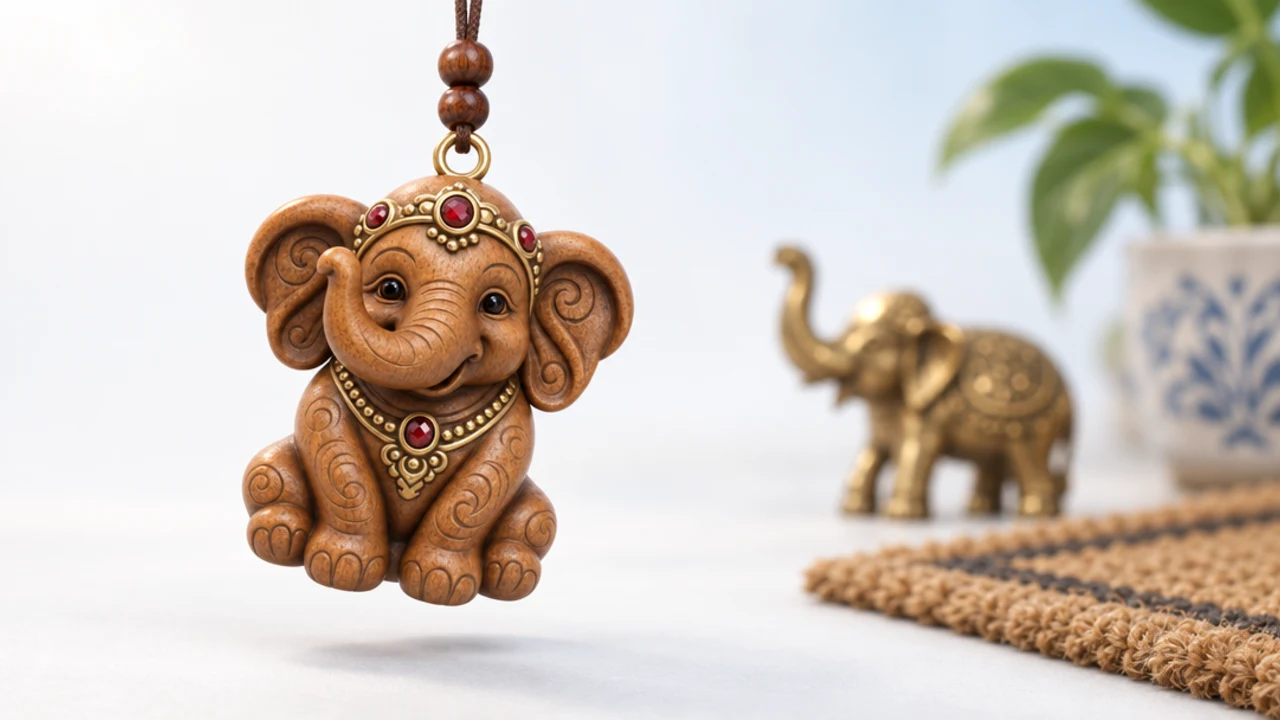
The elephant trunk up meaning is simple: a raised trunk is read as the animal scooping up good fortune and showering it over the room. Most traditions treat the elephant trunk up as a sign of luck, energy and welcome, which is why the figure so often sits by a door.
That is the short answer, and it is where most people stop. The longer story is more interesting, because the elephant means different things in different places, and the trunk is only one small part of it.
What does an elephant with its trunk up mean?
A trunk pointing skyward is the pose people call lucky. The gesture looks like a spray of water, and water has long stood for blessing and abundance.
A raised trunk is the detail collectors ask about first. It reads as active, generous, giving something out rather than holding it back.
You will also see elephants with the trunk curled down or resting. That pose is often linked to calm, patience and the slow storing of strength, and it is not a bad omen.
There is no single global rulebook here. Trunk up as "showering luck" is a widely held modern reading, especially in decor and gift-giving, rather than an ancient decree carved in one place.
Think of the two poses as two moods. One is the elephant in celebration, the other is the elephant at rest, and both are welcome company.
Why the elephant carries so much meaning
The elephant is not a small symbol you can sum up in a line. Across India and Southeast Asia it stands for memory, wisdom, loyalty and quiet power.
In India the elephant is bound up with Ganesha, the elephant-headed deity known as the remover of obstacles. People commonly turn to him at the start of anything new, from a wedding to a shop opening to an exam.
In Thailand, Laos and neighbouring countries the elephant is treated with deep respect, and the white elephant in particular is held sacred. Buddhist tradition tells that the Buddha's mother dreamed of a white elephant before his birth, which is one reason the animal is honoured.
Strength without cruelty is the thread running through all of it. The elephant is enormous, yet it is remembered for patience and care for its herd, and that is the quality the charm points at.
So when you keep a lucky elephant nearby, you are borrowing a very old idea. You are asking for steadiness and the calm removal of whatever is in the way.
Where do you place a lucky elephant?
The most common advice is to set the elephant near the entrance. A doorway is the point where energy, guests and news arrive, so it is the natural place for a guardian.
Some people face a pair of elephants inward, as if welcoming everyone who steps through. Others face them out to watch the street, and neither is wrong.
On a desk, the elephant sits well next to the thing you are nervous about. A monitor, a stack of papers, a phone that is about to ring with a decision.
If you cannot decide where a physical elephant should go, put it where your eye lands when you look up from work. A charm you never see does nothing; a charm in your line of sight does the small job of reminding you.
There is a screen version of the same instinct, which I will come to. The point of the placement is contact, not magic.
Trunk up or trunk down: a quick comparison
People shopping for an elephant figure almost always ask which trunk to choose. Here is the plain version of what each pose is commonly taken to mean.
| Pose | Common reading | Good for |
|---|---|---|
| Trunk up | Showering luck, energy, welcome | A doorway, a launch, a new start |
| Trunk down | Storing strength, patience, longevity | A study, a calm corner, steady work |
| Pair, facing in | Protection and welcome together | An entrance you share with others |
Neither pose is unlucky. The trunk up simply reads as louder and more outward, while the trunk down reads as grounded and inward.
If you are buying a gift, trunk up is the safer choice, because the "showering luck" meaning is the one most people recognise. If the elephant is for your own quiet corner, trunk down suits the mood of long, patient work.
Does a pair of elephants mean something different?
Elephants are often kept in pairs, and the pairing carries its own reading. Two elephants can stand for partnership and family, and a mother-and-calf pair is a well-loved symbol of care and protection.
A pair set at an entrance, one on each side, echoes the temple gateways of India and Southeast Asia, where carved elephants have long flanked the doors. A pair at the door reads as a welcome and a guard at once.
Tusks come up as a question too. A figure with prominent tusks reads as strength and status, while a smoother figure reads as gentler, and neither is more or less lucky.
If you are buying a physical elephant, real ivory is illegal in most places and tied to the killing of these animals. Choose brass, wood, resin or stone, which carry the same meaning without the harm.
The material and the pose are yours to choose. What matters is that the elephant means something to you when you look at it.
How a charm on your screen fits in
A brass elephant on a shelf is lovely, but it lives in one room. A charm on your Mac travels with you to every desk, café and hotel where you open the laptop.
That is the idea behind Book My Luck, a small Mac menu-bar app that hangs a charm from the top edge of your screen on a thin cord. The elephant sways with real rope physics, reacts to your cursor, and can be grabbed and given a flick, while everything under it clicks straight through so your work is never blocked.
The honest line matters here. It is a charm, not a promise. A lucky elephant works the way a lucky pen or a pre-game ritual works: it marks the moment, steadies your hands and gives you a story to carry in. It will not pass an exam or close a deal for you.
The elephant among other charms
The elephant is one of many doorway guardians, and it helps to see it in company. In South India the drishti bommai plays a similar guardian role, watching the threshold and taking the first look so you do not have to.
Across the wider set of lucky charm meanings around the world, the elephant sits alongside the horseshoe, the clover and the evil eye as a symbol people reach for at the start of something. What they share is not power but focus.
Within India itself the elephant is part of a broader web of good luck superstitions, from the lemon-and-chili garland at a shop door to the bell rung before a puja. Each one is a small, deliberate act that says: this moment counts.
A shared vocabulary is really what these charms are. Different animals, different origins, the same human wish to feel ready.
Is trunk up or trunk down luckier for an elephant?
Trunk up is the pose most people call lucky, because a raised trunk looks like it is showering fortune over the room. Trunk down is not unlucky at all; it is commonly linked to patience, longevity and stored strength, which suits a calm workspace.
What does the elephant symbolise in India?
In India the elephant is tied to wisdom, memory, loyalty and royal strength, and above all to Ganesha, the elephant-headed deity known for removing obstacles. People often invoke that idea at the start of anything new, which is why a lucky elephant appears at weddings, shop openings and study desks.
Where should I keep a lucky elephant at home or work?
The doorway is the traditional spot, since it is where guests and news arrive. On a desk, keep it in your line of sight next to whatever you are nervous about, because a charm you actually see does the small job of reminding you to steady yourself.
Does the elephant have to be a specific colour or material?
There is no single rule, and elephants appear in brass, wood, stone and cloth depending on the region. Choose the one you like looking at, because the material matters far less than the fact that you notice it and it means something to you.
Can a lucky elephant really change my luck?
No, and any honest answer says so. A lucky elephant is a charm, not a promise; it steadies your nerves and marks a moment, the way a small ritual does, but it does not control outcomes.
What is the elephant's meaning in Southeast Asia?
In Thailand, Laos and nearby countries the elephant is deeply respected, and the white elephant is held sacred. Buddhist tradition connects the animal to the Buddha's birth, so it carries a weight of reverence beyond simple good fortune.
Book My Luck today
Book My Luck is a desktop decoration for macOS 14+ and Windows 10/11. The desktop outside the charm remains clickable. The current Mac and Windows downloads are version 1.0.32, signed by KAK DIGITAL LLC. On Mac, Charm Centre controls size, cord length, placement, displays and motion. Collections and controls can differ between Mac and Windows.
There is no calendar integration, booked-moment scheduler or native-app free trial. Explore the website demo and regional pricing. One key activates one computer at a time; activation and license refresh require internet. Preferences are local, but purchasing, activation and website analytics use online services described in the privacy policy.
Hang one for the moment that matters
Book My Luck hangs a rendered charm from your Mac or Windows screen, with rope physics and manual interaction. Check the current platform release and regional price before buying.
Get Book My Luck →