Book My Luck
Good Luck Charm for Moving House
A good luck charm for a new home is a small object or hung token that marks the threshold and helps a fresh space start to feel like yours. It does not decide how life there unfolds; it settles the nerves and gives the move a warm beginning.
Most advice treats a moving charm as a guarantee of happiness under the new roof. The truer reading is gentler: moving is unsettling, a new place feels strange for a while, and a charm is a small way to claim it.
What does a charm do on moving day?
Moving day is chaos, and the new home feels like someone else's until you make a mark on it. A charm at the door or on a shelf is one of the first of those marks.
You hang it or set it down, you breathe, and the strangeness eases a little. The space starts to answer to you rather than the previous owner.
The charm does not fix the plumbing or the neighbours. It gives the move a threshold moment, a small act that says this is ours now.
A good luck charm for a new home works the way housewarming customs do everywhere. It marks a beginning and steadies you; it makes no promise about the years ahead.
Why is the nimbu-mirchi hung at the door?
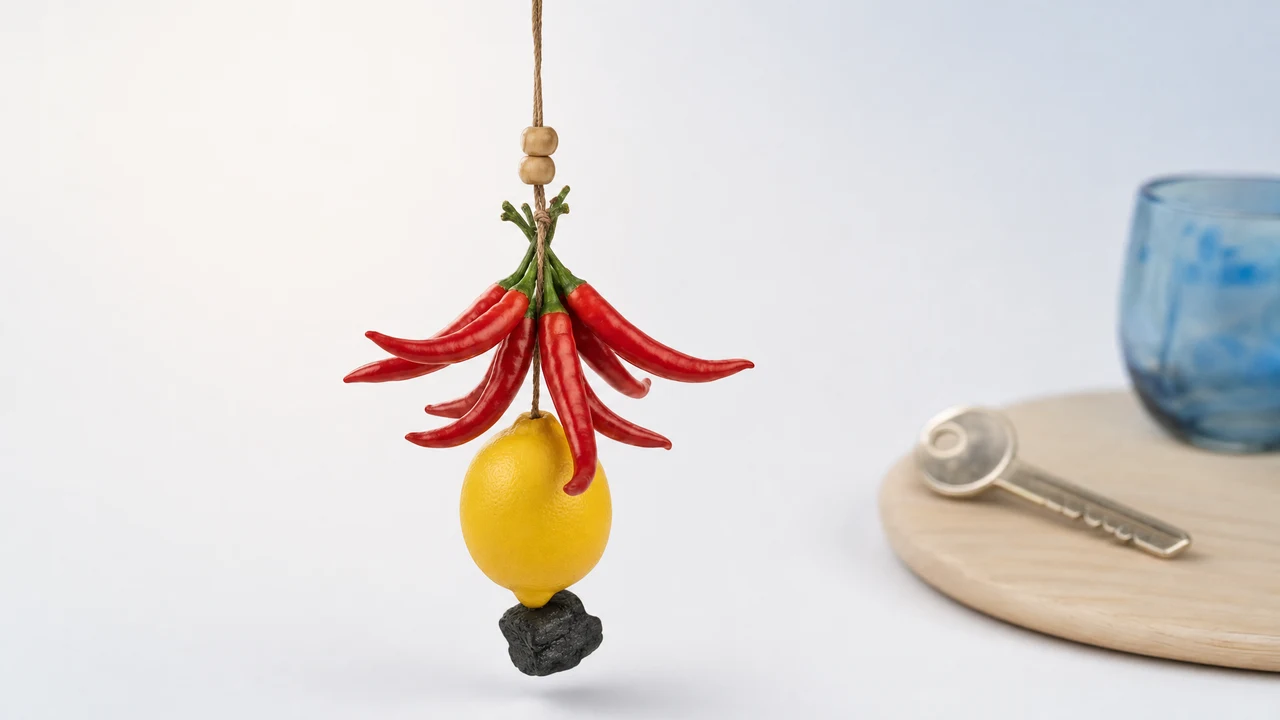
The nimbu-mirchi is a familiar Indian charm: a fresh lemon strung with seven green chilies, hung at the entrance of homes and shops. The common custom is to replace it with a new garland regularly, so the charm at the threshold is always fresh.
It is a doorway charm by design, which is exactly what a new home wants. Hanging one on the first day is a tidy way to bless the entrance and settle in.
You do not need to share every belief attached to it to appreciate the gesture. A fresh garland at the door is a small, cheerful ritual of arrival.
The nimbu-mirchi is described here with respect for its Indian origin as a doorway charm. The custom of replacing it with a fresh garland is part of what keeps the ritual alive.
How do I use a charm in a new home?
Keep the first-day ritual short and let the charm be part of it. The point is to make one deliberate mark before the boxes take over.
A simple sequence for the first evening.
- Hang or place the charm at the entrance or on a shelf.
- Take a slow breath and look around the room.
- Give yourself one plain line: this is home now, and it starts today.
Doing it before you unpack everything makes the space feel claimed early. The charm becomes the first thing that is truly yours in the new place.
Pick the spot for the charm before you decide anything else, even furniture. Choosing where luck lives is a small way to start feeling in charge of the room.
The steadying idea is the same one behind a desk ritual or a calming token before a presentation. The scale is bigger here; the mechanism, a deliberate act that settles you, is identical.
Which charms suit a new home?
The nimbu-mirchi is a natural doorway pick, but several charms fit a fresh start. Each has a real story behind it.
Nimbu-mirchi
- Origin: India, a lemon and seven chilies.
- The idea: a doorway charm, replaced with a fresh garland to keep it alive.
- Why it fits: it is made for a threshold, which is what a new home offers.
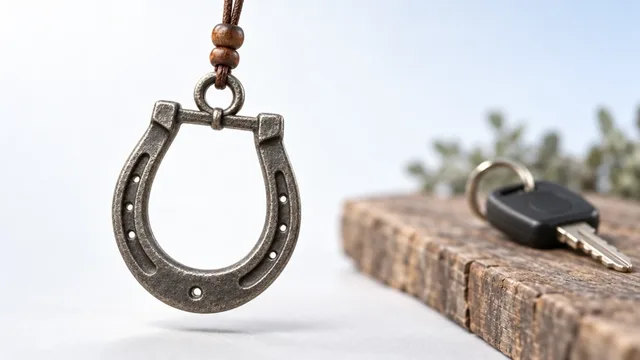
Horseshoe
- Origin: Europe and the Americas, hung points up.
- The idea: iron and protection at a doorway, luck held like a cup.
- Why it fits: it is a classic thing to hang over a new front door.
Elephant, trunk up
- Origin: India and Southeast Asia.
- The idea: the raised trunk is a sign of good fortune and welcome.
- Why it fits: it is a warm, grounded emblem for settling in.
Pick the story you like, or the one that matches your family's custom. A charm with meaning makes the new place feel a little more yours.
Does a charm make a home happier?
Not directly, and it would be false to claim it. A charm changes how you feel about the space, not the space itself.
A home starts to feel like home when you mark it, tend it, and fill it with small routines. The charm is one of those first routines, and it helps the settling begin sooner.
So treat it as a gesture of arrival, not a guarantee. Good neighbours, care, and time make a happy home; the charm just opens the door warmly.
A charm is no substitute for the practical side of a move. Sort the safety checks, the locks, and the paperwork first, and let the charm be the nice part on top.
Keeping the ritual going
The nicest thing about a doorway charm is that it invites a small, repeated ritual, like swapping the nimbu-mirchi for a fresh one. That gentle upkeep keeps the new-home feeling alive past the first week.
Format is a matter of taste. A garland at the door and a charm on your Mac both offer a small ritual of arrival and care, which is what a moving charm is for.
A short comparison of charm placements
| Placement | Best for | The catch |
|---|---|---|
| At the front door | A traditional threshold charm | Needs the right fixing and upkeep |
| On a shelf inside | A quiet marker in a lived-in room | Less of a doorway blessing |
| On your Mac | A weekly reset you will not forget | Lives on the screen, not the wall |
None is more correct than another. Choose the placement that fits your home and your habits.
What if the new place still feels strange?
Give it time, because a house becomes a home through use, not on the first night. The strangeness fades as your routines fill the rooms, and the charm is a small early nudge in that direction.
Do one ordinary thing on purpose: cook a proper meal, make the bed properly, sit with a coffee where you plan to sit every morning. Each small habit tells the space it is lived in, and routine is what turns a house into home.
The charm marks the threshold; your daily life does the rest. Keep tending it, swap a fresh nimbu-mirchi when it wilts, and let small acts of care accumulate until the place answers to you without thinking.
What is a good luck charm for a new home?
It is a small object or hung token used to mark the threshold and settle a move, such as a nimbu-mirchi at the door, a horseshoe, or an elephant. Its real job is to help a strange space start feeling like yours, so a story you connect with matters.
Why is a lemon and chilies hung at the door?
The nimbu-mirchi is a traditional Indian doorway charm made of a lemon and seven chilies, hung at entrances and replaced with a fresh garland. It is a threshold charm by design, which suits the entrance of a new home.
Do lucky charms make a new home happier?
They help indirectly by giving you a warm first ritual and marking the space as yours, which speeds the settling in. A charm cannot guarantee happiness; care, time, and good neighbours do that work.
What is a good housewarming charm to give?
A small doorway charm such as a nimbu-mirchi, a horseshoe, or an elephant makes a thoughtful gift, offered as a warm gesture rather than a promise. A short note about a fresh start lifts any of them.
Where should I put a good luck charm in a new home?
The entrance is traditional for threshold charms like the nimbu-mirchi and the horseshoe, while a shelf suits quieter tokens. Choosing the spot early is itself a small way to start feeling in charge of the space.
Can an app be my new-home charm?
Yes. A screen charm can hang on your Mac and be set for a weekly reset, giving you the same small ritual of care as swapping a fresh garland at the door.
Book My Luck is a one-time purchase with no subscription, and you can read the full pricing before deciding. It is a charm, not a promise: it will not furnish the place, but it can give the move a warm, deliberate beginning.
Book My Luck today
Book My Luck is a desktop decoration for macOS 14+ and Windows 10/11. The desktop outside the charm remains clickable. The current Mac and Windows downloads are version 1.0.32, signed by KAK DIGITAL LLC. On Mac, Charm Centre controls size, cord length, placement, displays and motion. Collections and controls can differ between Mac and Windows.
There is no calendar integration, booked-moment scheduler or native-app free trial. Explore the website demo and regional pricing. One key activates one computer at a time; activation and license refresh require internet. Preferences are local, but purchasing, activation and website analytics use online services described in the privacy policy.
Hang one for the moment that matters
Book My Luck hangs a rendered charm from your Mac or Windows screen, with rope physics and manual interaction. Check the current platform release and regional price before buying.
Get Book My Luck →