Book My Luck
Good Luck Charm for a Product Launch Day
A good luck charm for launch day works by marking the moment and steadying the team, not by nudging your numbers. What founders and makers actually use is a shared object or gesture that turns "we are shipping" into something everyone feels at the same time.
Most launch advice is a checklist of tasks, and those matter. What the checklist misses is the human part: the nerves, the adrenaline, and the need to mark a milestone you worked months toward.
Why use a good luck charm for launch day?
Launch day is emotionally strange. You have done the work, the outcome is now out of your hands, and that mix of pride and helplessness makes people jittery.
A charm gives that feeling a home. It converts a vague swirl of nerves into a single, deliberate act you can point to and share.
That act also creates a memory. A launch without a ritual blurs into the next sprint; a launch with one becomes a story the team tells later.
A charm is not a promise. It will not fix a bug, buy you users, or move a conversion rate. It steadies the people shipping and marks a day worth marking.
Which charm fits a launch best?
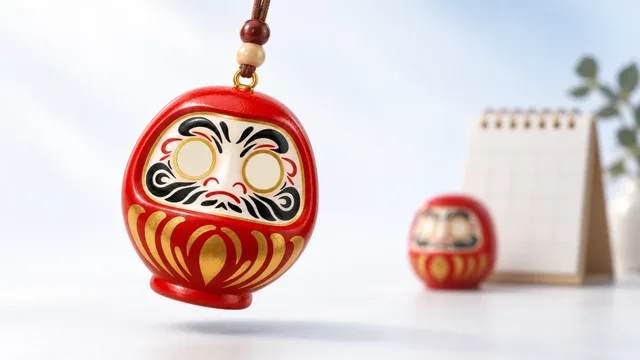
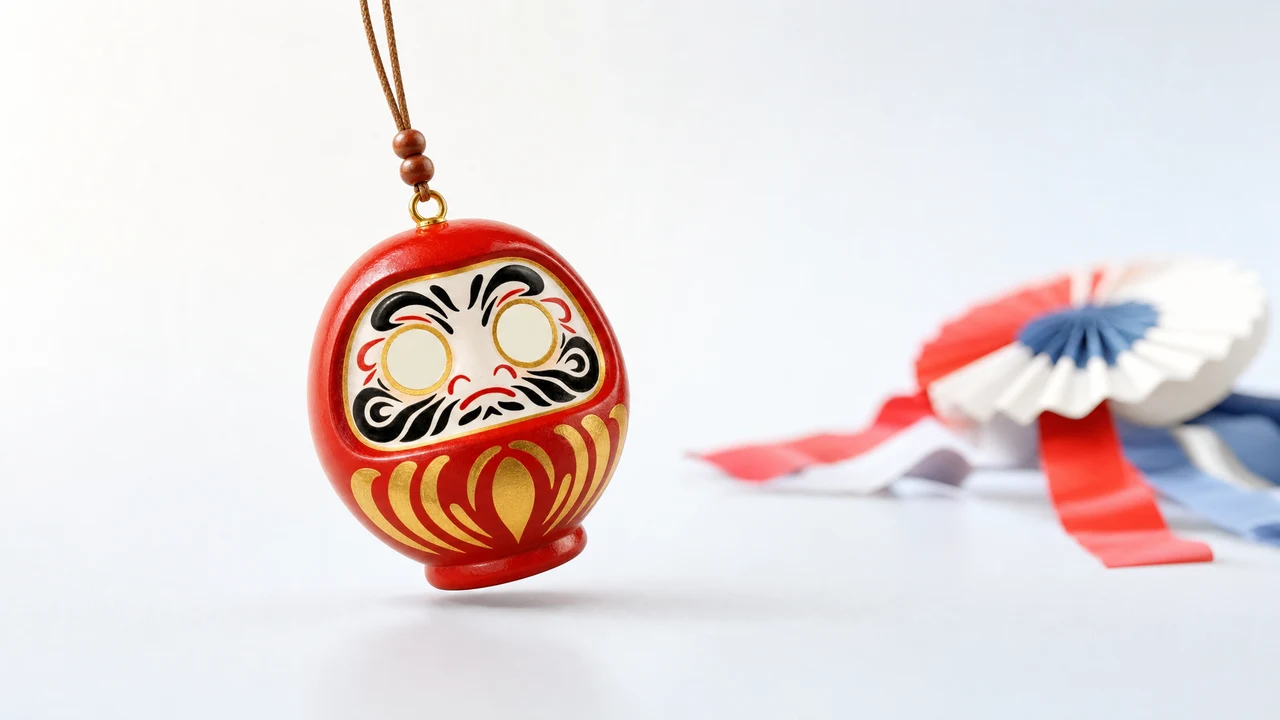
The best good luck charm for launch day is the daruma, because it is a goal charm rather than a passive one. You paint one eye when you set a goal and the other when you reach it.
For a launch, painting the second eye on ship day is a perfect close to a long arc. The doll has watched the whole build with one eye, and now it gets the other.
The full custom, which is genuinely useful for makers and teams, is in the daruma doll meaning. The daruma is really a goal you can see across the room the whole time you chase it.
Set the daruma up at kickoff, not on launch day. The power is in the months it sits there with one eye open, keeping the goal in the room.
Three launch-day rituals that work
You do not need anything elaborate. Here are three shapes a launch ritual can take, from solo to whole-team.
The solo maker's mark
- What it is: one quiet gesture, like painting the daruma's eye, as you flip the switch
- Why it works: it gives a lonely, high-adrenaline moment a clear close
- Best for: indie makers and one-person launches
The team countdown
- What it is: everyone on the call for the final click, then a shared cheer
- Why it works: it turns "someone deployed" into "we did this"
- Best for: small teams shipping together
The recurring charm
- What it is: the same charm summoned on every launch, big or small
- Why it works: repetition builds a tradition the team looks forward to
- Best for: teams who ship often and want a through-line
The team version is worth its own thought, and team ritual for launch day goes deeper on making a shared moment that does not feel forced.
How do you keep a launch ritual from feeling cheesy?
The trick is to keep it small, sincere and short. A ritual gets awkward when it is long, mandatory, or trying too hard to be fun.
Tie it to the real action, so it happens at the actual moment of shipping rather than in a separate "fun" meeting. Let it last seconds, not minutes.
And make it optional in spirit. A ritual people choose to join means something; one people are made to perform does not.
Match the charm to your team's taste. A studio that loves ceremony can go bigger; a dry engineering team might prefer a single dry gesture and a one-line message. Both are valid.
Launch day and deploy day are cousins
For software teams, the launch is often a deploy, and the same steadying logic applies to the moment you push to production. The nerves before "deploy to prod" are the smaller, more frequent sibling of launch-day nerves.
If your launches are really deploys, the companion piece on the deploy ritual covers a habit you can run on every push, not just the big day. And if launch day includes a live demo or talk, the calm you need overlaps with a lucky charm for a presentation or pitch.
Where should the launch charm live?
For most modern teams, launch day happens on screens, so that is where the charm belongs. A physical daruma on a shelf is lovely, but half the team may be remote.
Keep the whole thing light. The charm marks the day; the product still has to earn its keep, and you have done the hard part by getting it out the door.
What do you do after the launch button is pressed?
The moment after launch is oddly deflating for a lot of makers. Months of build compress into one click, and then there is nothing to do but watch.
A ritual gives that anti-climax a shape. Marking the moment on purpose stops the day from feeling like it slipped past while you refreshed a dashboard.
It also protects you from doom-watching. Staring at raw numbers in the first hour teaches you almost nothing except how to panic, so a deliberate close helps you step back.
Give yourself a small rule for the first hour. Fix real breakage, ignore vanity metrics, and let the ritual mark that you have handed the work over to the world.
Do not judge a launch by its first day. Early numbers are noisy and often meaningless, and a slow morning has sunk the confidence of many good products that went on to do fine.
How do you make a launch ritual into a tradition?
A single launch ritual is nice; a repeated one becomes part of who your team is. The way to get there is to keep it the same across launches, big and small.
Use the same charm and the same gesture every time. Familiarity is what turns a one-off into "the thing we do when we ship," which new team members then learn and look forward to.
Small launches count too. A tradition you only honour for the huge releases never really takes root, so mark the minor ones with the same short gesture.
Over a year, this builds a quiet through-line in the team's story. The daruma shelf fills with dolls whose eyes are both painted, and each one is a milestone you can point at.
That visible history is worth more than any single celebration. It tells a team, without a speech, that the things they finish matter and get marked.
There is a morale angle here that is easy to underrate. Teams that ship constantly can start to feel like nothing is ever finished, because the next thing is always waiting.
A small, repeated launch ritual pushes back on that feeling. Marking the finish line, even briefly, is how a team remembers it is making progress rather than just running in place.
What is a good luck charm for a product launch?
The Japanese daruma doll fits launches especially well because it is a goal charm. You paint one eye when you set the goal and the other on launch day, giving the moment a clear, meaningful close.
Do launch-day rituals actually help?
They help the team, not the metrics. A ritual steadies nerves, marks a milestone, and creates a shared memory. It changes how the day feels and is remembered, but it does not move numbers on its own.
How do I mark a launch without it feeling cheesy?
Keep it small, sincere and tied to the real moment of shipping. Let it last seconds, make joining it a choice rather than a rule, and match its tone to your team's taste.
What can a whole team do together on launch day?
Gather for the final click, count down, and share a short cheer or a single gesture like painting a daruma's eye. The point is turning "someone shipped" into "we did this," so everyone feels part of it.
Is a launch charm different from a deploy ritual?
They are cousins. A deploy ritual is the smaller habit you can run on every push, while a launch charm marks the bigger, rarer milestone. Both use the same idea of steadying people and marking a moment.
Can a launch charm change how the launch performs?
No. A charm is not a promise and cannot affect signups, sales or stability. It steadies the people involved and marks the day; the product's performance is still down to the work itself.
Book My Luck today
Book My Luck is a desktop decoration for macOS 14+ and Windows 10/11. The desktop outside the charm remains clickable. The current Mac and Windows downloads are version 1.0.32, signed by KAK DIGITAL LLC. On Mac, Charm Centre controls size, cord length, placement, displays and motion. Collections and controls can differ between Mac and Windows.
There is no calendar integration, booked-moment scheduler or native-app free trial. Explore the website demo and regional pricing. One key activates one computer at a time; activation and license refresh require internet. Preferences are local, but purchasing, activation and website analytics use online services described in the privacy policy.
Hang one for the moment that matters
Book My Luck hangs a rendered charm from your Mac or Windows screen, with rope physics and manual interaction. Check the current platform release and regional price before buying.
Get Book My Luck →