Book My Luck
Lucky Charm for Trading Day: Ritual, Not Strategy
A lucky charm for trading is a small ritual that steadies your nerves and reminds you to follow your own rules, nothing more. It cannot predict a price, move a market, or replace a plan, and anyone who says otherwise is selling something.
Most takes on this either mock the idea or oversell it. The honest middle is where it is useful: markets are stressful, stressed people break their own rules, and a charm is a tool against that break.
This is about calm and discipline, not returns. A charm gives no market edge, no signal, and no financial advice of any kind. Trade only what you can afford to lose and rely on your own research.
What can a charm do for a trader?
A charm gives you a fixed pause before the noise starts. You touch it, you breathe, and the urge to chase or panic loses a little of its grip.
That is the entire benefit. The market does not know or care that you have a scarab on your desk; your nervous system, however, does.
Traders lose far more to their own emotions than to a lack of information. A charm is a physical bookmark that says follow the plan, which is exactly the sentence most people forget when a position turns.
A lucky charm for trading works like a lucky pen before an exam. It steadies the person; it changes nothing about the paper in front of you.
Why does the scarab fit a trading day?
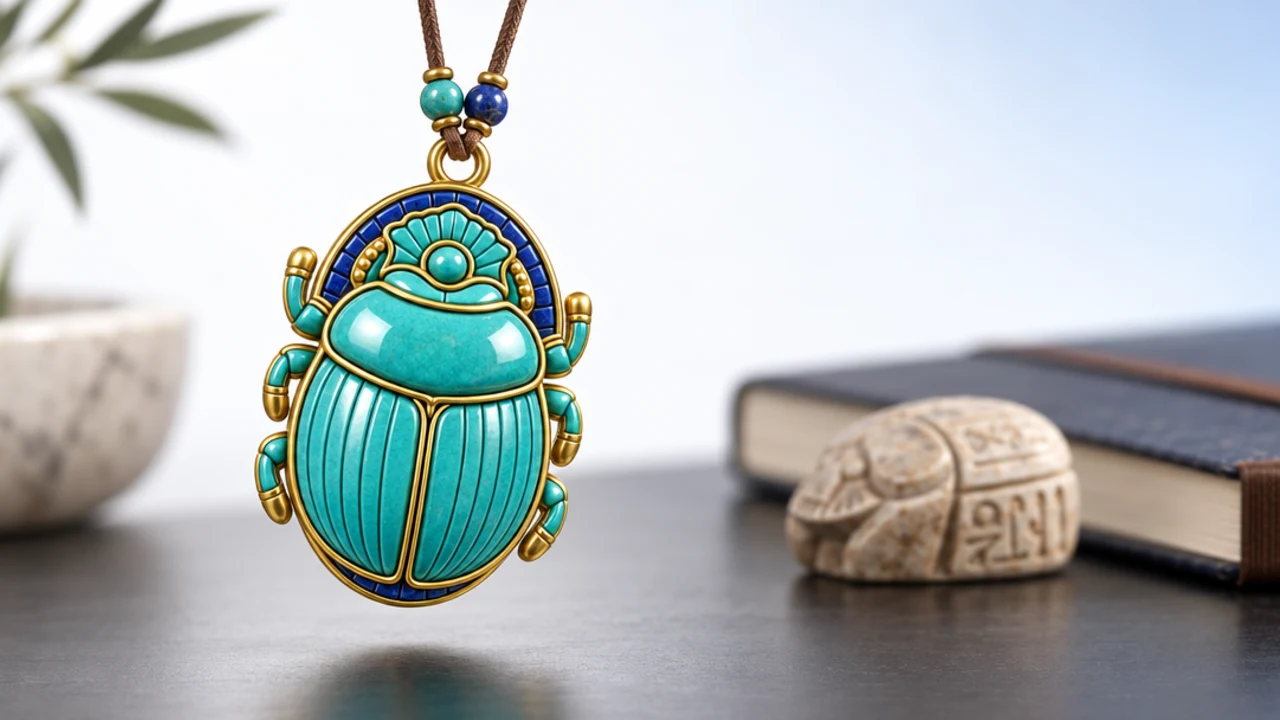
The scarab is an Ancient Egyptian amulet tied to the dung beetle, which rolls a ball across the ground much as the sun was imagined to roll across the sky. It became a symbol of renewal and of each day beginning again.
That is a fitting emblem for trading. Every session is a fresh start, and yesterday's win or loss should not decide today's decisions.
A scarab on the desk is a quiet reminder to reset. The last trade is closed; the next one deserves a clear head, not a grudge.
The scarab's meaning here is renewal and a daily reset, drawn from its real Egyptian origin. It carries no claim about money, and that is precisely why it suits a discipline ritual.
How do I build a trading-day ritual around a charm?
Keep it short and do it before the open, every day, in the same order. Consistency is what turns the object into a trusted switch.
A simple version looks like this.
- Touch or look at the charm.
- Take three slow breaths.
- Read your own rules aloud: entry, exit, and the maximum you will risk today.
The charm anchors the calm; the spoken rules load the discipline. Together they front-load the two things stress erases first.
Write your risk limit on a card and keep it under the charm. When you reach for one, you see the other, and the number is there before the temptation is.
This is the same family of habit as a deploy ritual before shipping code or a desk ritual before deep work. The stakes differ; the mechanism, a fixed cue that steadies you, is identical.
Which charms suit the trading desk?
The scarab is the natural pick, but a few others fit the mood of focus and steadiness. Each has a real story worth knowing.
Scarab
- Origin: Ancient Egypt.
- The idea: renewal and a fresh start each day.
- Why it fits: it frames every session as a clean slate, free of yesterday's result.
Pánchāng jié, the endless knot
- Origin: China, the Chinese endless knot.
- The idea: a single cord with no beginning or end, a symbol of continuity.
- Why it fits: it is a calming emblem for long-term thinking over a single frantic session.
Om, cast in brass
- Origin: India.
- The idea: the first sound, associated with steadiness and focus.
- Why it fits: it is a grounding object for a desk that needs a quiet centre.
Pick the one whose meaning steadies you. A charm you find genuinely calming is the only kind that works on your nerves.
Does a charm improve trading results?
Not directly, and honesty demands the plain answer: no charm affects prices or outcomes. What it can affect is your behaviour, and behaviour is where many traders leak money.
A calmer trader is more likely to honour a stop, size a position sensibly, and walk away after hitting a daily limit. Those disciplines, not the charm, are what protect an account.
So think of the charm as a discipline aid, in the same category as a checklist or a fixed routine. It supports good habits; it does not supply results.
Never treat a charm, a streak, or a "lucky" feeling as a reason to break your rules or size up. That is exactly the impulse a ritual is meant to guard against.
Where should the charm live?
On the desk, in your line of sight, so it is present the moment the session begins. The point is that it greets you before the first decision, not after.
The format is up to you. A carved stone and a screen charm both deliver the same steadying pause, which is the only thing a trading charm is for.
A short comparison of charm placements
| Placement | Best for | The catch |
|---|---|---|
| On the desk | A constant physical presence | Easy to stop noticing over time |
| On your Mac | A cue timed to the market open | Lives on the screen, not in hand |
| On a keyring | Carrying the same reset anywhere | Small and out of sight while you work |
No row is correct for everyone. Choose the placement you will actually register at the start of a session.
What a charm should never become
The danger with any trading ritual is that it drifts from calming you into steering you. A charm that starts whispering "this one feels right" has quietly become the opposite of discipline.
Keep the line clean. The charm marks the start and settles your hands; your written rules make every decision, and no feeling of luck overrides them.
If you ever notice yourself sizing up because the scarab "felt lucky" this morning, that is the signal to close the platform and step away. A ritual that steadies you is an asset, and a ritual that tempts you is a liability, so guard which one yours is.
What is a lucky charm for trading?
It is a small object and short ritual used to calm nerves and reinforce discipline before and during a session. It is not a strategy, a signal, or any form of financial advice, and it has no effect on prices.
Can a lucky charm improve my trading returns?
Only indirectly, by helping you stay calm and follow your own rules, which can reduce costly emotional mistakes. The charm itself does nothing to the market, so it is a behaviour aid rather than an edge.
Why is the scarab associated with trading rituals?
The scarab is an Egyptian symbol of renewal and daily rebirth, which suits a trader's need to treat each session as a fresh start. Its meaning is about resetting your mindset, not about money.
What is a good trading-day ritual?
A short, fixed sequence works best: touch the charm, take a few slow breaths, and read your entry, exit, and risk limit aloud before the open. Doing the same thing daily turns the charm into a reliable cue for discipline.
Should I change my position size because I feel lucky?
No. Feeling lucky is exactly the impulse a ritual is meant to check, and sizing up on a hunch is how disciplined traders get hurt. Let your rules, not your mood, decide size.
Can an app be my trading charm?
Yes. A screen charm can hang on your Mac and be timed to the market open, giving you the same steadying pause as a physical object without covering your charts.
Book My Luck is a one-time purchase with no subscription, and you can read the full pricing before deciding. It is a charm, not a promise: it will not trade for you, but it can help you trade like the calmer version of yourself.
Book My Luck today
Book My Luck is a desktop decoration for macOS 14+ and Windows 10/11. The desktop outside the charm remains clickable. The current Mac and Windows downloads are version 1.0.32, signed by KAK DIGITAL LLC. On Mac, Charm Centre controls size, cord length, placement, displays and motion. Collections and controls can differ between Mac and Windows.
There is no calendar integration, booked-moment scheduler or native-app free trial. Explore the website demo and regional pricing. One key activates one computer at a time; activation and license refresh require internet. Preferences are local, but purchasing, activation and website analytics use online services described in the privacy policy.
Hang one for the moment that matters
Book My Luck hangs a rendered charm from your Mac or Windows screen, with rope physics and manual interaction. Check the current platform release and regional price before buying.
Get Book My Luck →