Book My Luck
Lucky Charm for Kids' Exams (Gentle, Not Pressure)
A lucky charm for kids' exams should comfort a child and steady their nerves, never imply that a certain grade is expected. Kept gentle, a small charm gives a nervous child something friendly to hold onto rather than one more thing to live up to.
The risk with children is that a well-meant gift becomes pressure. A charm framed as "this will help you win" can add weight, so the framing matters as much as the object.
Should young children have a lucky charm for exams?
They can, as long as it stays light and low-stakes. A charm is a comfort, not a performance tool, and for a child that distinction is everything.
Children read our tone more than our words. A charm handed over with a calm smile says "you are okay," while the same charm handed over with a speech about results says something heavier.
So the answer is yes, with care. Keep it small, keep it friendly, and keep it about steadying nerves rather than chasing a score.
A charm is a charm, not a promise. For a child especially, it works the way a lucky pen or a bedtime routine works: it marks the moment and steadies them. It makes no claim on marks, and it should never be presented as if it does.
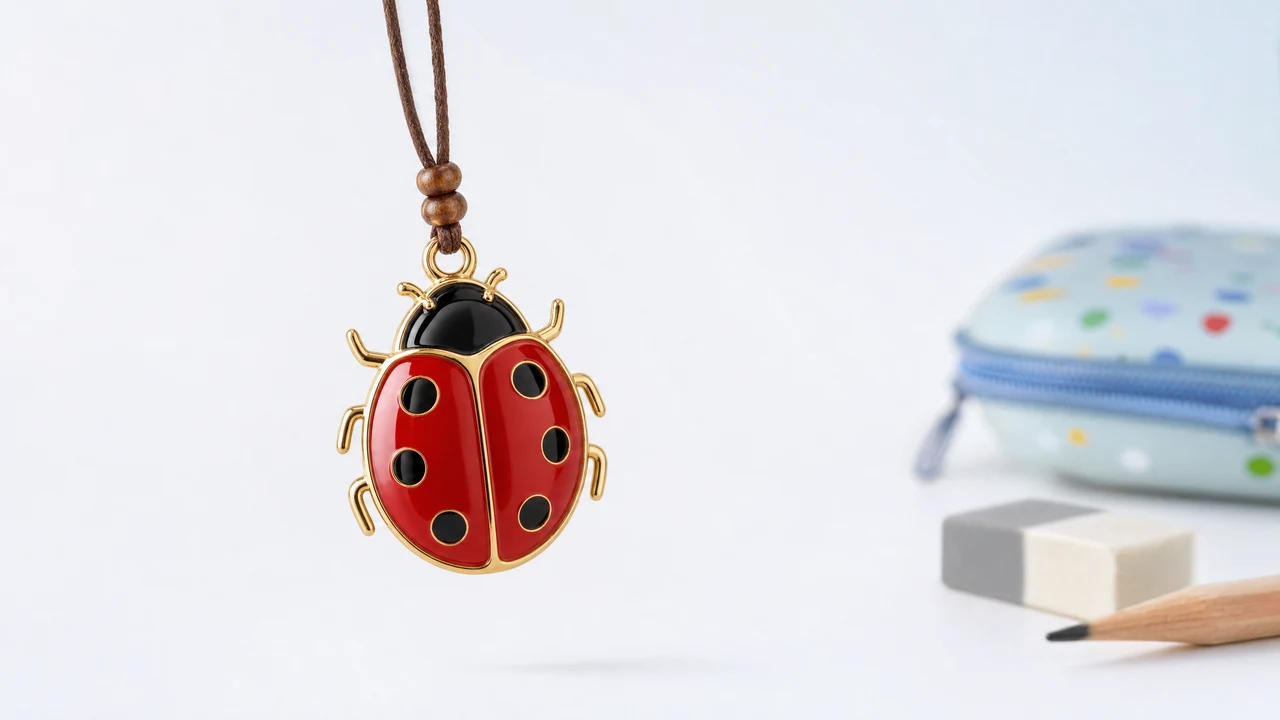
Why does a ladybug suit a child?
Because it is friendly, small, and carries a gentle bit of folklore. A ladybug landing is read across much of Europe as a small piece of good luck, and a child finds that easy to like.
There is nothing solemn about a ladybug. It is not a heavy religious object or a serious talisman, which makes it exactly right for a nervous eight-year-old.
The story is simple enough to tell in a sentence, which suits a child's attention. The ladybug meaning piece has the folklore if you want the full version to share.
Let the child pick the charm if you can. A ladybug, a small clover, or a friendly animal chosen by them carries more comfort than one you assigned, because it feels like theirs.
Charms and rituals that stay gentle
Here is a spread of low-pressure options, matched to how much a child can handle. The goal is comfort, and every one of these keeps the stakes low.
| Age feel | Charm or ritual | Why it stays gentle |
|---|---|---|
| Younger child | A friendly ladybug or a soft token | Cute, not solemn, easy to carry |
| Middle years | A small clover or a chosen keepsake | Theirs to keep, no heavy meaning |
| Older child | A short pre-exam ritual they run | Builds calm without a lecture |
The ritual line matters as much as the charm. A two-second habit before the paper, like a slow breath or touching the token, calms nerves better than any object on its own.
For the ritual side in more depth, the good luck rituals before an exam piece has calm, simple steps that suit children too.
How do I use a charm without adding pressure?
Frame it around effort and comfort, never around the grade. Say "this is to help you feel calm," not "this will help you get an A."
Keep your own nerves off the child. A parent who is visibly anxious about the result passes that on, charm or no charm, so the calm has to be real on your side too.
Never tie the charm to a reward or a consequence. "The charm only works if you study" or "prove the charm right" turns a comfort into a threat, which is the opposite of the point.
The words you pair with it matter. Short, warm, effort-focused lines land best, and the good luck message ideas piece has ones that suit a child before an exam.
For a small gift to go with it, the good luck gifts for exams round-up keeps everything under $20 and low-key.
Is a screen charm suitable for a child?
For an older child who studies at a Mac, it can be, kept light. Book My Luck is a small menu-bar app that hangs a friendly charm from the top of the screen, and it clicks straight through so it never blocks their work.
It is one idea among many, not the whole list. For younger children, a physical ladybug or a chosen keepsake is warmer and simpler.
The honest line holds, and with children it is the most important line of all. The charm steadies and comforts; it does not sit the exam, and no one should suggest it will. You can see the small one-time tiers on the pricing page if a screen charm suits an older student.
What matters more, the charm or the routine?
The routine, by a wide margin. A calm habit beats any object, and the charm is really just a friendly anchor for the habit.
A child who takes one slow breath, touches their token, and starts the paper has a tool they can use in any exam, with or without the charm. The object makes the habit easy to remember; the habit does the steadying.
So build the routine first and let the charm hang off it. A two-second act, repeated before every test and every mock, becomes something the child can lean on for years.
That framing also lowers the stakes on the object. If the charm is ever forgotten at home, the child still has the breath and the habit, which is exactly the resilience you want.
Practise the routine on ordinary days, not just before the real exam. A habit that only appears under pressure feels like an alarm; one the child already knows feels like a friend.
How do I keep my own nerves out of it?
Notice them first, then keep them off the child. A parent's worry is contagious, and no charm can undo a tense face and a clipped voice on exam morning.
Do your own steadying before you see them. A calm adult is the single biggest comfort a nervous child has, well ahead of any object on the desk.
Talk about effort and the day itself, not the result or what it means for the future. A child does not need to carry the weight of what a grade might decide.
If you can, make the morning ordinary. A normal breakfast and a light word do more for a child's nerves than any special ceremony, and the small charm can ride quietly alongside.
Watch how you talk about the exam in the days before, too. Casual dread at the dinner table seeps into a child faster than any direct speech, so keep the run-up calm and matter-of-fact.
And remember the exam is one day among many. A child who learns that a hard test is survivable, charm or no charm, carries something far more useful than a single good grade.
The charm, at its best, is a small friend that helped them through a scary morning. That is a warm memory to give a child, and it asks nothing of the result.
Years later, the grade will have faded and the feeling of being backed will remain. That is the real gift, and no object is required to give it, though a friendly little charm makes it easier to remember.
Should a child have a lucky charm for exams?
They can, as long as it stays a comfort rather than a performance tool. A small, friendly charm helps a nervous child feel steady, provided it is framed around calm and effort, never around a required grade.
What is a good luck charm for a young child?
Something friendly and light, like a ladybug, a small clover, or a soft keepsake they chose themselves. It should be cheerful and low-stakes, not a solemn or heavy object.
How do I give a child a charm without adding pressure?
Frame it around feeling calm, not around results. Say "this is to help you feel steady," keep your own nerves in check, and never tie the charm to a reward or a punishment.
Can a lucky charm help exam anxiety in kids?
It can offer comfort, the way a familiar routine does, by giving a child something friendly to focus on. It is not a treatment for anxiety, and a child struggling badly needs real support from adults, not just a charm.
Is a screen charm app okay for a teenager's studies?
For an older child who studies at a Mac, a light screen charm can suit them better than a trinket. Keep it optional and low-key, and make sure it never blocks their work.
What should I say to a child before an exam?
Keep it short, warm, and about effort. "You have done the work, go steady, one question at a time" comforts without loading the child with expectation.
Book My Luck today
Book My Luck is a desktop decoration for macOS 14+ and Windows 10/11. The desktop outside the charm remains clickable. The current Mac and Windows downloads are version 1.0.32, signed by KAK DIGITAL LLC. On Mac, Charm Centre controls size, cord length, placement, displays and motion. Collections and controls can differ between Mac and Windows.
There is no calendar integration, booked-moment scheduler or native-app free trial. Explore the website demo and regional pricing. One key activates one computer at a time; activation and license refresh require internet. Preferences are local, but purchasing, activation and website analytics use online services described in the privacy policy.
Hang one for the moment that matters
Book My Luck hangs a rendered charm from your Mac or Windows screen, with rope physics and manual interaction. Check the current platform release and regional price before buying.
Get Book My Luck →