Book My Luck
Good Luck Gifts for Exams (Under $20)
Good luck gifts for exams work best when they are small, personal, and cost under $20, because the point is to mark the moment rather than impress anyone. A charm they can keep on the desk, a warm note, or a tiny comfort item beats an expensive gadget every time.
The mistake most gift guides make is treating this like a birthday. An exam gift is not a reward; it is a steadying hand before a hard hour.
What makes a good exam gift under $20?
Three things. It should be personal, it should not add stress, and it should be something they can actually use in the moment.
Personal means it looks like you know them, not like you grabbed the nearest thing. A charm tied to their culture or a note in your own handwriting reads as care in a way a generic mug does not.
Low pressure matters more than people think. A gift that says "you will ace this" can land as weight, so aim for "I am thinking of you" instead.
An exam gift is a charm, not a promise. It works the way a lucky pen or a pre-game ritual works: it marks the moment, steadies the nerves, and gives them a story. It makes no claim on the grade, and it should never be framed as one.
Small good luck gifts that stay under $20
Here is a spread of ideas across the usual price bands, so you can match the gift to the relationship. None of these need a big budget to feel thoughtful.
| Price band | Gift idea | Why it works |
|---|---|---|
| Under $5 | A handwritten note or a lucky pen | The words and the object both carry the moment |
| $5 to $12 | A small physical charm or a pocket token | Something to hold before the paper starts |
| $12 to $20 | A comfort item like good tea or a study candle | Marks the desk as a calm place to work |
The through-line is that each one sits on the desk or in a pocket and does its small job quietly. A charm from their own tradition carries extra weight because it comes with a real story.
If you want the words to go with the object, the piece on good luck message ideas has lines you can borrow for exams and interviews.
Why does a charm work better than cash for an exam?
Because a charm is a cue, and cash is not. A physical cue you can see before the exam pulls your attention to the moment and gives your nerves somewhere to land.
Cash gets spent and forgotten by lunch. A small charm sits on the desk during the study weeks and shows up in the memory of the test itself.
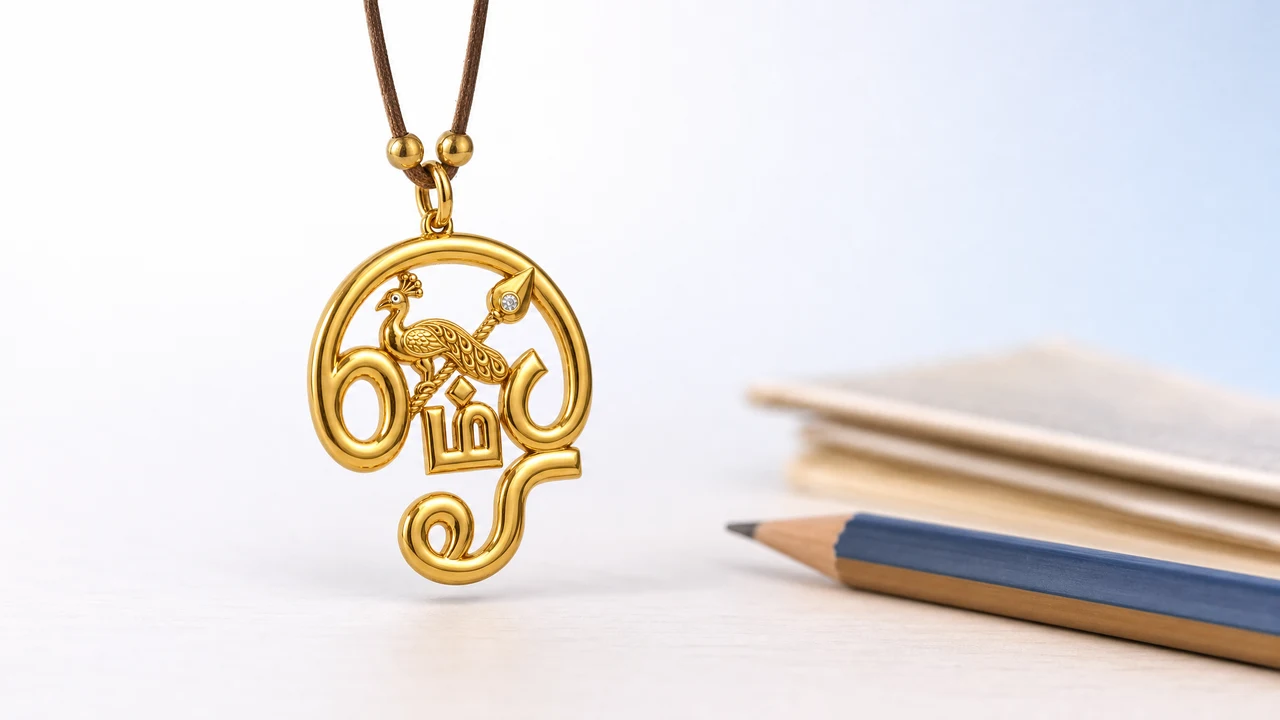
For a student in Tamil Nadu, a Murugan pendant carries this naturally. The vel, the spear of the Tamil deity of courage, is raised before a climb, and the ritual of raising it before a hard task is centuries old.
The Murugan vel meaning piece explains the story if you want to give it with the right words. Given with respect, a cultural charm is a gift; given as a novelty, it is not.
Pair the object with one sentence about why you chose it. "This is the vel, for courage before a climb" turns a small pendant into something they keep for years.
A charm that shows up on exam morning
There is one modern version of the desk charm worth naming, because it solves a small problem the physical ones do not. A physical charm sits on the desk, but it cannot come forward at the exact minute the exam begins.
It is one idea among many here, not the whole list. A note and a pocket token are just as valid, and cost less.
The honest case is the same as for any charm. It marks the moment and steadies the student; it does not sit the exam for them.
If the recipient lives far away, this also solves the shipping problem, since a digital charm can be sent by email. The piece on the digital good luck gift covers how that works for someone in another city or country.
How do I give an exam gift without adding pressure?
Keep the framing light and the timing early. Give it a day or two before, not the morning of, so it feels like support rather than a countdown.
Say less than you want to. A short, warm line does more than a paragraph about how much is riding on this.
For gifts aimed at younger students, the pressure point is even sharper, because a well-meant gift can feel like an expectation. The piece on a lucky charm for kids' exams is written around keeping it gentle.
Avoid gifts that imply the outcome, like a trophy or a "winner" mug. If the exam goes badly, the object becomes a small sting on the desk rather than a comfort.
Whatever you choose, the gift should outlive the exam. A note, a token, or a small charm becomes part of the study memory, and that is the real value.
If the Mac charm is the direction you like, you can see the two one-time tiers on the pricing page. It is a small purchase, priced as a token rather than a splurge.
What if I do not know their study routine?
Then pick something that fits any desk and any subject. A neutral, useful token works whether they study on paper, on a laptop, or half on each.
A good pen, a small charm, or a comfort item like tea does not need to know how they revise. It sits on the desk and does its job regardless.
Avoid gifts that assume a method. A gadget for one kind of studying can miss entirely if the student works another way.
When in doubt, lean on the note. A warm, specific line carries the gift even when the object is simple, and it never clashes with how they actually work.
If you truly cannot decide, a handwritten card with a single small charm is close to foolproof. It is personal, low-pressure, and fits any student's desk.
Do lucky charms actually help students?
They help in the way any small ritual helps, which is real but modest. A charm gives the nerves somewhere to land, and a calmer student thinks more clearly than a panicked one.
That is not the same as claiming a charm raises marks. The work raises marks; the charm just steadies the hand that does the work.
For a student, that steadying can matter at the margins. A slow breath and a glance at a familiar token before the paper starts can pull someone out of a spiral.
The custom around the object matters too. A small ritual, like touching the charm and taking one breath, turns the gift into a habit the student can lean on again.
Never promise a result. Telling a child "this charm will get you an A" sets them up to blame the charm, or themselves, if the exam is hard. Keep it about calm, not outcomes.
What is a good exam gift for under $20?
A small charm, a handwritten note, a lucky pen, or a comfort item like good tea. The best ones are personal and low-pressure, something the student keeps on the desk during study weeks rather than an expensive gadget.
Is it strange to give a lucky charm for an exam?
Not at all. A charm works as a cue and a comfort, the same way a lucky pen or a pre-game ritual does. Give it with a short, warm line and it reads as care, not superstition.
What should I write on an exam good luck card?
Keep it short and warm, and avoid piling on pressure. Something like "I am proud of the work you put in, whatever happens tomorrow" lands better than "you have to ace this."
Can I send an exam gift to someone in another city?
Yes. A note posted early works, and a digital charm sent by email arrives instantly with no shipping. That is useful when the student is far away or you have left it late.
What is a good cultural charm for a student?
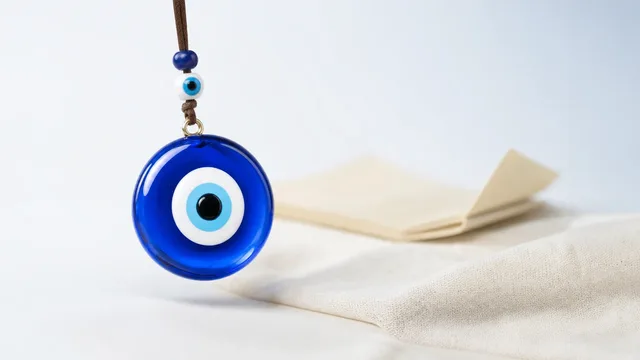
Match it to their background and give it with the real story. A Murugan vel for courage, a Daruma for a goal set, or a small evil eye for protection all work when described with respect rather than as a novelty.
How early should I give an exam gift?
A day or two before, not the morning of. Early timing makes it feel like steady support, while a last-minute gift can add to the countdown nerves.
Book My Luck today
Book My Luck is a desktop decoration for macOS 14+ and Windows 10/11. The desktop outside the charm remains clickable. The current Mac and Windows downloads are version 1.0.32, signed by KAK DIGITAL LLC. On Mac, Charm Centre controls size, cord length, placement, displays and motion. Collections and controls can differ between Mac and Windows.
There is no calendar integration, booked-moment scheduler or native-app free trial. Explore the website demo and regional pricing. One key activates one computer at a time; activation and license refresh require internet. Preferences are local, but purchasing, activation and website analytics use online services described in the privacy policy.
Hang one for the moment that matters
Book My Luck hangs a rendered charm from your Mac or Windows screen, with rope physics and manual interaction. Check the current platform release and regional price before buying.
Get Book My Luck →